
🚀 宇宙の記憶・カレンダー検索
🚀 象徴的な写真:
APOD第1回
🚀 創造の柱
🚀 スピリット火星着陸
🚀 ハッブル超深宇宙
🚀 地球へようこそ|ブルー・マーブル
🚀 エンケラドス
🚀 ベテルギウス
🚀 火星着陸
🚀 青い夕焼け
🚀 冥王星のハート
🚀 皆既日食
🚀 アースライズ再構築
🚀 ブラックホール
🚀 ウェッブ初画像
🚀 アポロ11着陸
APOD30周年(2025年6月16日)
ブラックホールに近づきすぎた
Too Close to a Black Hole
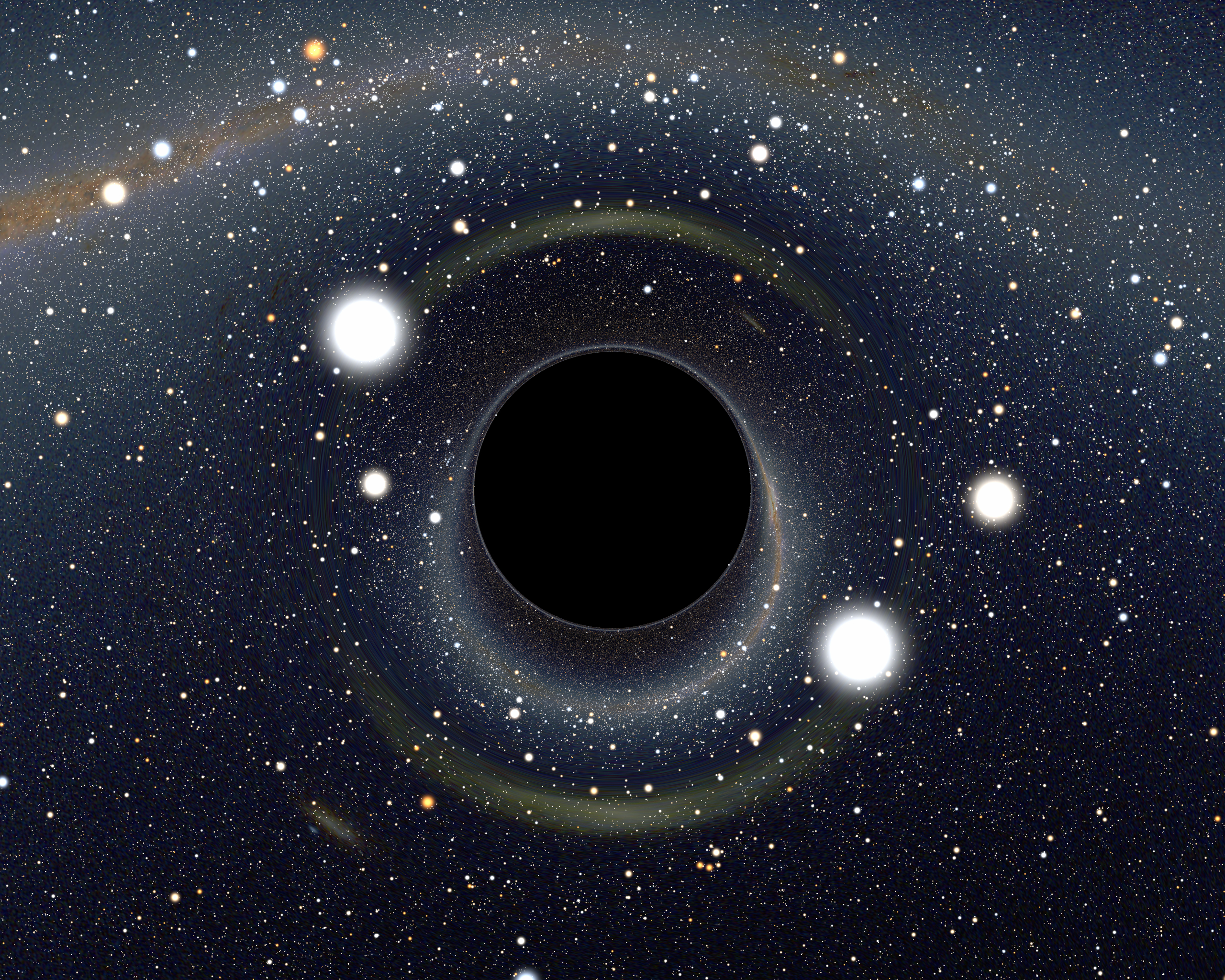
ブラックホールに近づいたら、どんな景色が見えるでしょうか? 上の画像は、その奇妙な光景を強調したコンピューター生成画像です。ブラックホールの重力は非常に強いため、光がブラックホールに向かって大きく曲がり、非常に珍しい視覚的な歪みが生じます。通常のフレームでは、すべての星に少なくとも2つの明るい像が浮かび上がります。ブラックホールの両側にそれぞれ1つずつです。ブラックホールの近くでは、空全体を見ることができます。あらゆる方向からの光が曲がって戻ってきます。元の背景マップは、2MASS赤外線全天サーベイから取得され、ヘンリー・ドレイパーカタログの星が重ねられています。ブラックホールは物質の最も密度の高い状態と考えられており、連星系や球状星団、銀河、クエーサーの中心にブラックホールが存在するという間接的な証拠があります。
原文(English)
What would you see if you went right up to a black hole? Above is a computer generated image highlighting how strange things would look. The black hole has such strong gravity that light is noticeably bent towards it - causing some very unusual visual distortions. Every star in the normal frame has at least two bright images - one on each side of the black hole. Near the black hole, you can see the whole sky - light from every direction is bent around and comes back to you. The original background map was taken from the 2MASS infrared sky survey, with stars from the Henry Draper catalog superposed. Black holes are thought to be the densest state of matter, and there is indirect evidence for their presence in stellar binary systems and the centers of globular clusters, galaxies, and quasars.
\ この感動を宇宙仲間にシェア /
宇宙をXでシェア
© Alain Riazuelo / APOD