
🚀 宇宙の記憶・カレンダー検索
🚀 象徴的な写真:
APOD第1回
🚀 創造の柱
🚀 スピリット火星着陸
🚀 ハッブル超深宇宙
🚀 地球へようこそ|ブルー・マーブル
🚀 エンケラドス
🚀 ベテルギウス
🚀 火星着陸
🚀 青い夕焼け
🚀 冥王星のハート
🚀 皆既日食
🚀 アースライズ再構築
🚀 ブラックホール
🚀 ウェッブ初画像
🚀 アポロ11着陸
APOD30周年(2025年6月16日)
テイマレの岩絵と星の軌跡
Teimareh Petroglyphs and Star Trails
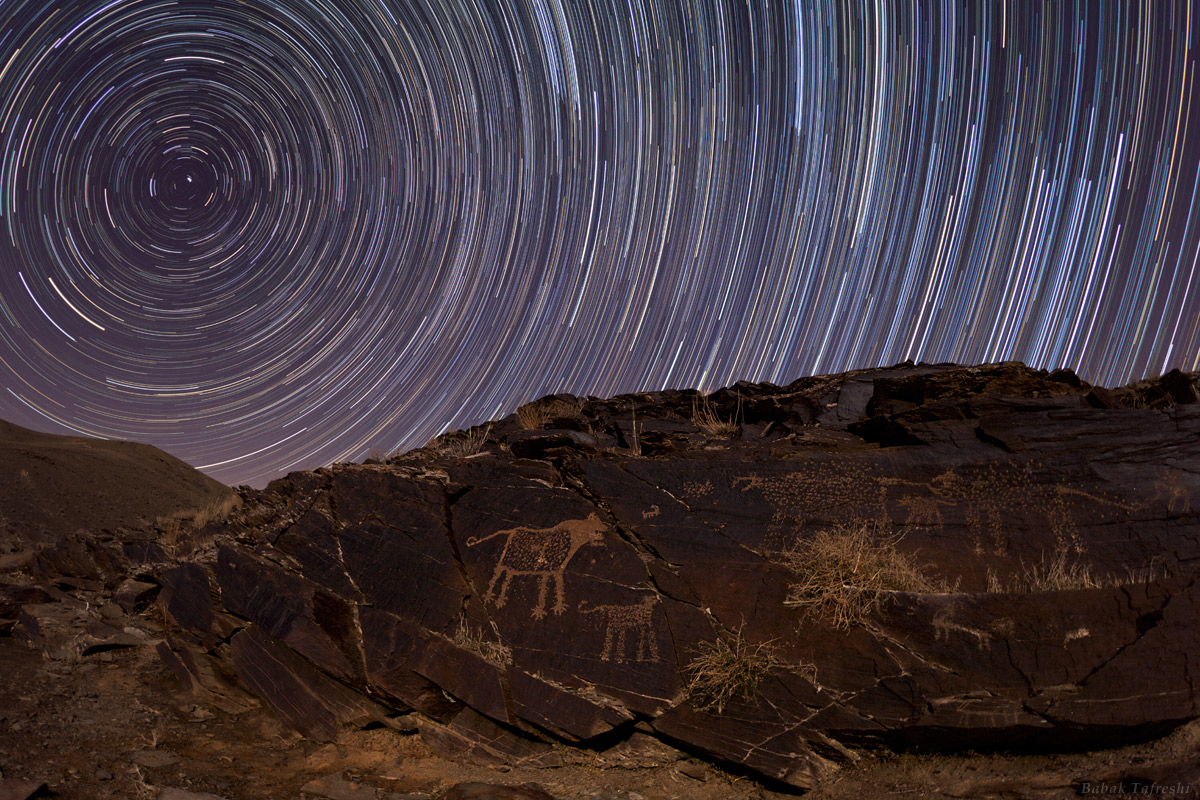
岩に刻まれたこれらの古代の岩絵は、イラン中央部のザグロス山脈にあるテイマレ渓谷に豊富に存在します。これらは、6,000年以上前に中東の渓谷で見つかった狩猟者と動物の物語を、先史時代の芸術家によって刻んだものと考えられます。上空の夜空には、現代のデジタルカメラで長時間合成撮影された地球の自転によって刻まれた星の軌跡があります。左側の星の軌跡の弧の中心は、地球の自転軸を宇宙に延長した北天の極(NCP)です。北極星であるポラリスは、NCPに最も近い明るく短いずんぐりとした軌跡を残します。しかし、これらの岩絵が刻まれたとき、ポラリスは夜空を長い弧を描いていたはずです。地球の自転軸はコマのように歳差運動をするため、6000年前、北極星はりゅう座とおおぐま座の境界付近に位置しており、現在の地球の空における位置から約30度ずれていた。
原文(English)
graved in rock, these ancient petroglyphs are abundant in the Teimareh valley, located in the Zagros Mountains of central Iran. They likely tell a tale of hunters and animals found in the middle eastern valley 6,000 years ago or more, etched by artists in a prehistoric age. In the night sky above are star trails etched by the rotation of planet Earth during the long composite exposure made with a modern digital camera. On the left, the center of the star trail arcs is the North Celestial Pole (NCP), the extension of Earth's axis into space. Polaris, the North Star, leaves the bright, short, stubby trail closest to the NCP. But when these petroglyphs were carved, Polaris would have made a long arc through the night. Since the Earth's rotation axis precesses like a wobbling top, 6,000 years ago the NCP was near the border of the constellations Draco and Ursa Major, some 30 degrees from its current location in planet Earth's sky.
\ この感動を宇宙仲間にシェア /
宇宙をXでシェア
© Babak Tafreshi / APOD