
🚀 宇宙の記憶・カレンダー検索
🚀 象徴的な写真:
APOD第1回
🚀 創造の柱
🚀 スピリット火星着陸
🚀 ハッブル超深宇宙
🚀 地球へようこそ|ブルー・マーブル
🚀 エンケラドス
🚀 ベテルギウス
🚀 火星着陸
🚀 青い夕焼け
🚀 冥王星のハート
🚀 皆既日食
🚀 アースライズ再構築
🚀 ブラックホール
🚀 ウェッブ初画像
🚀 アポロ11着陸
APOD30周年(2025年6月16日)
オリオン星雲:ハッブル宇宙望遠鏡による眺め
Orion Nebula: The Hubble View
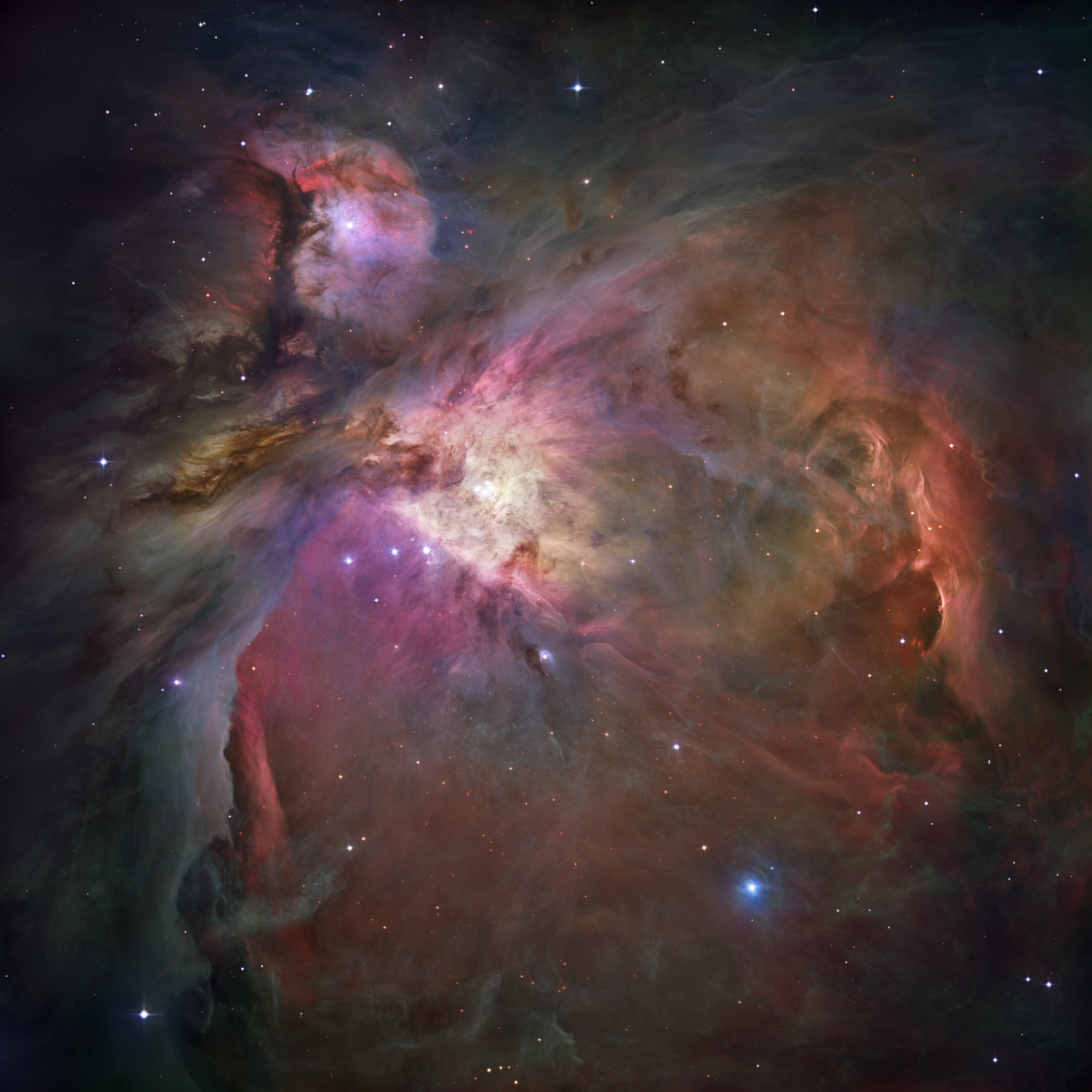
オリオン星雲ほど想像力を掻き立てる宇宙の景観は他にないでしょう。M42としても知られるこの星雲は、わずか1,500光年離れた巨大な星間分子雲の端で、輝くガスが高温の若い星々を取り囲んでいます。オリオン星雲は、星の誕生を研究する絶好の機会を提供します。その理由の一つは、オリオン星雲が最も近い大規模な星形成領域であること、そしてもう一つは、星雲の活発な星々が、本来なら視界を遮るはずのガスや塵の雲を吹き飛ばしているため、星の誕生と進化の様々な段階を間近に見ることができるからです。このオリオン星雲の詳細な画像は、ハッブル宇宙望遠鏡の先進観測カメラ(ACS)とヨーロッパ南天天文台のラ・シヤ2.2メートル望遠鏡のデータを用いて作成された、これまでで最も鮮明な画像です。このモザイク画像は、フル解像度で10億ピクセルを含み、約3,000個の星を明らかにしています。APODコレクション:M42:オリオン星雲
原文(English)
Few cosmic vistas excite the imagination like the Orion Nebula. Also known as M42, the nebula's glowing gas surrounds hot young stars at the edge of an immense interstellar molecular cloud only 1,500 light-years away. The Orion Nebula offers one of the best opportunities to study how stars are born partly because it is the nearest large star-forming region, but also because the nebula's energetic stars have blown away obscuring gas and dust clouds that would otherwise block our view - providing an intimate look at a range of ongoing stages of starbirth and evolution. This detailed image of the Orion Nebula is the sharpest ever, constructed using data from the Hubble Space Telescope's Advanced Camera for Surveys and the European Southern Observatory's La Silla 2.2 meter telescope. The mosaic contains a billion pixels at full resolution and reveals about 3,000 stars. APOD Collection: M42: The Orion Nebula
\ この感動を宇宙仲間にシェア /
宇宙をXでシェア
© NASA / APOD