
🚀 宇宙の記憶・カレンダー検索
🚀 象徴的な写真:
APOD第1回
🚀 創造の柱
🚀 スピリット火星着陸
🚀 ハッブル超深宇宙
🚀 地球へようこそ|ブルー・マーブル
🚀 エンケラドス
🚀 ベテルギウス
🚀 火星着陸
🚀 青い夕焼け
🚀 冥王星のハート
🚀 皆既日食
🚀 アースライズ再構築
🚀 ブラックホール
🚀 ウェッブ初画像
🚀 アポロ11着陸
APOD30周年(2025年6月16日)
M72:球状星団
M72: A Globular Cluster of Stars
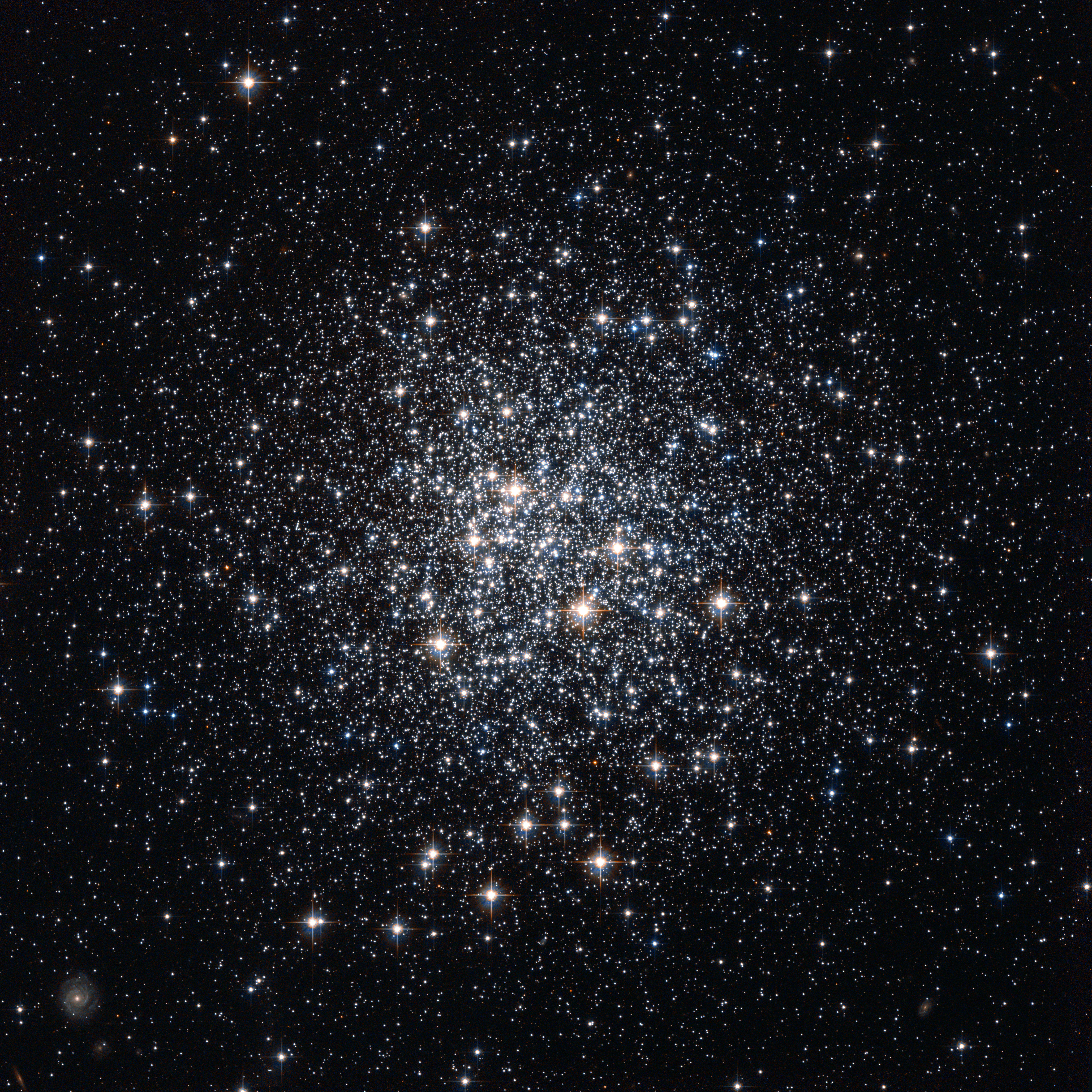
かつて天の川銀河は球状星団に支配されていました。銀河が最初に形成された頃、おそらく数千もの球状星団が銀河を漂っていたでしょう。現在、残っているのは200個未満です。多くの球状星団は、幾億年もの間、互いに、あるいは銀河中心との度重なる衝突によって破壊されてきました。生き残った残骸は、地球のどの化石よりも古く、銀河の他のどの構造よりも古く、宇宙そのものの年齢を決定づけるものです。天の川銀河には、若い球状星団はほとんど、あるいは全く存在しません。なぜなら、新たな球状星団が形成される条件が整っていないからです。上の写真はハッブル宇宙望遠鏡が撮影したもので、M72の約10万個の星が写っています。M72は直径約50光年、地球から約5万光年離れたところに位置し、小型望遠鏡でみずがめ座の方向に見ることができます。美しい画像:Facebook Sky
原文(English)
Globular clusters once ruled the Milky Way. Back in the old days, back when our Galaxy first formed, perhaps thousands of globular clusters roamed our Galaxy. Today, there are less than 200 left. Many globular clusters were destroyed over the eons by repeated fateful encounters with each other or the Galactic center. Surviving relics are older than any Earth fossil, older than any other structures in our Galaxy, and limit the universe itself in raw age. There are few, if any, young globular clusters in our Milky Way Galaxy because conditions are not ripe for more to form. Pictured above by the Hubble Space Telescope are about 100,000 of M72's stars. M72, which spans about 50 light years and lies about 50,000 light years away, can be seen with a small telescope toward the constellation of the Water Bearer (Aquarius). Beautiful Images: Facebook Sky
\ この感動を宇宙仲間にシェア /
宇宙をXでシェア
© NASA / APOD