
🚀 宇宙の記憶・カレンダー検索
🚀 象徴的な写真:
APOD第1回
🚀 創造の柱
🚀 スピリット火星着陸
🚀 ハッブル超深宇宙
🚀 地球へようこそ|ブルー・マーブル
🚀 エンケラドス
🚀 ベテルギウス
🚀 火星着陸
🚀 青い夕焼け
🚀 冥王星のハート
🚀 皆既日食
🚀 アースライズ再構築
🚀 ブラックホール
🚀 ウェッブ初画像
🚀 アポロ11着陸
APOD30周年(2025年6月16日)
ロゼッタ探査機が彗星が2つの成分から構成されていることを明らかに
Spacecraft Rosetta Shows Comet has Two Components
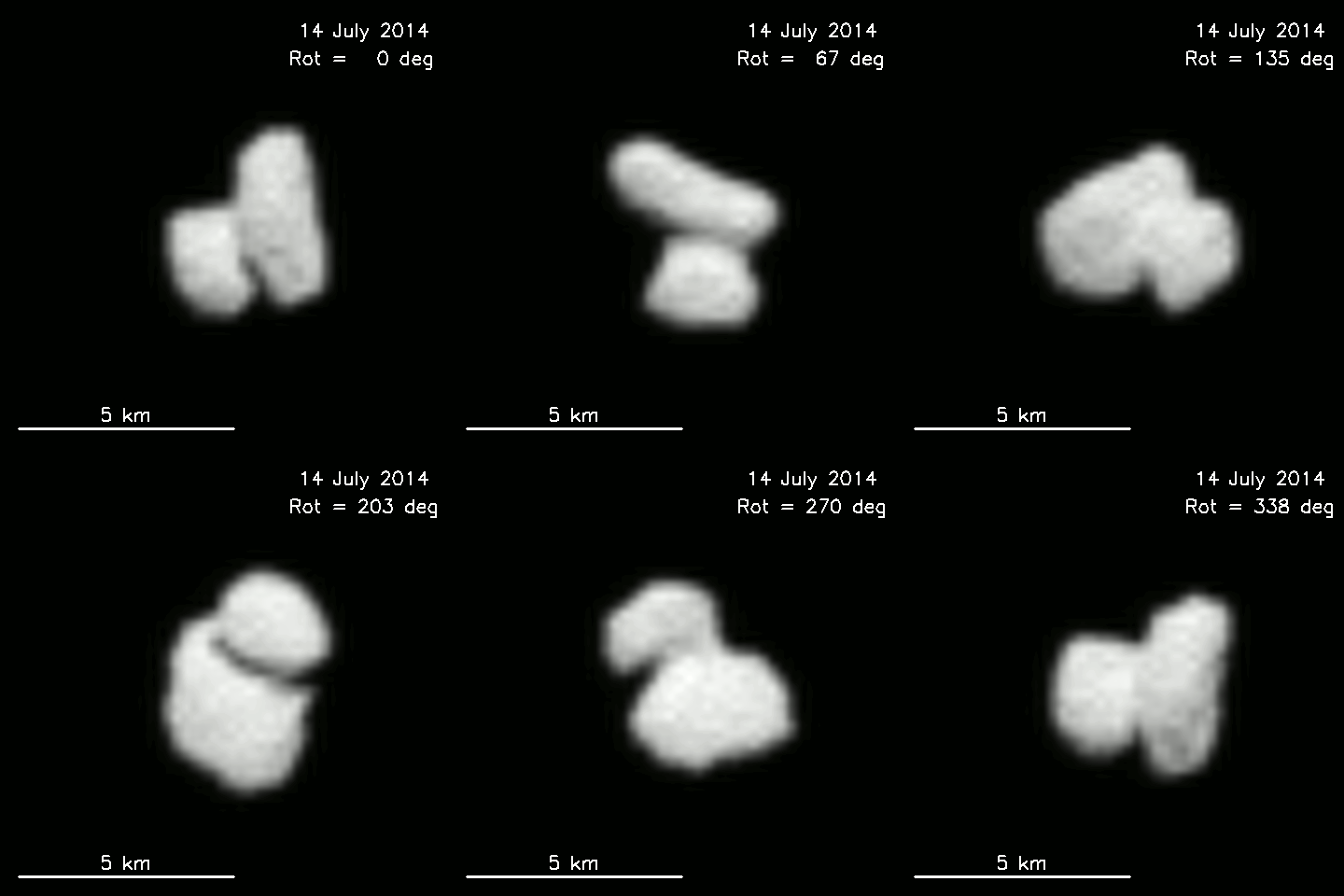
なぜこの彗星の核は2つの成分を持つのか? 彗星67P/チュリュモフ・ゲラシメンコが二重核を持つという驚くべき発見は、ESAの無人惑星間探査機ロゼッタが古代の彗星の核に接近を続けていた先週後半に明らかになった。二重核がどのように形成されたかについての推測としては、現在、チュリュモフ・ゲラシメンコ彗星は実際には2つの彗星の合体の結果である、彗星は潮汐力によって引き裂かれた瓦礫の緩い塊である、彗星上の氷の蒸発が非対称であった、または彗星が何らかの爆発現象を経験した、などがある。上の写真は、彗星の珍しい5kmサイズの彗星核が数時間にわたって回転している様子を捉えたもので、各フレームは20分間隔で撮影されている。ロゼッタ探査機は来月初めにチュリュモフ・ゲラシメンコ彗星の核を周回する軌道に入り、可能であれば年末までに探査機を着陸させる予定であるため、より鮮明な画像、そして願わくばより洗練された理論が得られると期待されている。
原文(English)
Why does this comet's nucleus have two components? The surprising discovery that Comet 67P/Churyumov�Gerasimenko has a double nucleus came late last week as ESA's robotic interplanetary spacecraft Rosetta continued its approach toward the ancient comet's core. Speculative ideas on how the double core was created include, currently, that Comet Churyumov�Gerasimenko is actually the result of the merger of two comets, that the comet is a loose pile of rubble pulled apart by tidal forces, that ice evaporation on the comet has been asymmetric, or that the comet has undergone some sort of explosive event. Pictured above, the comet's unusual 5-km sized comet nucleus is seen rotating over the course of a few hours, with each frame taken 20-minutes apart. Better images -- and hopefully more refined theories -- are expected as Rosetta is on track to enter orbit around Comet Churyumov�Gerasimenko's nucleus early next month, and by the end of the year, if possible, land a probe on it.
\ この感動を宇宙仲間にシェア /
宇宙をXでシェア
© NASA / APOD