
🚀 宇宙の記憶・カレンダー検索
🚀 象徴的な写真:
APOD第1回
🚀 創造の柱
🚀 スピリット火星着陸
🚀 ハッブル超深宇宙
🚀 地球へようこそ|ブルー・マーブル
🚀 エンケラドス
🚀 ベテルギウス
🚀 火星着陸
🚀 青い夕焼け
🚀 冥王星のハート
🚀 皆既日食
🚀 アースライズ再構築
🚀 ブラックホール
🚀 ウェッブ初画像
🚀 アポロ11着陸
APOD30周年(2025年6月16日)
ホロメーター:空間と時間を覗く顕微鏡
Holometer: A Microscope into Space and Time
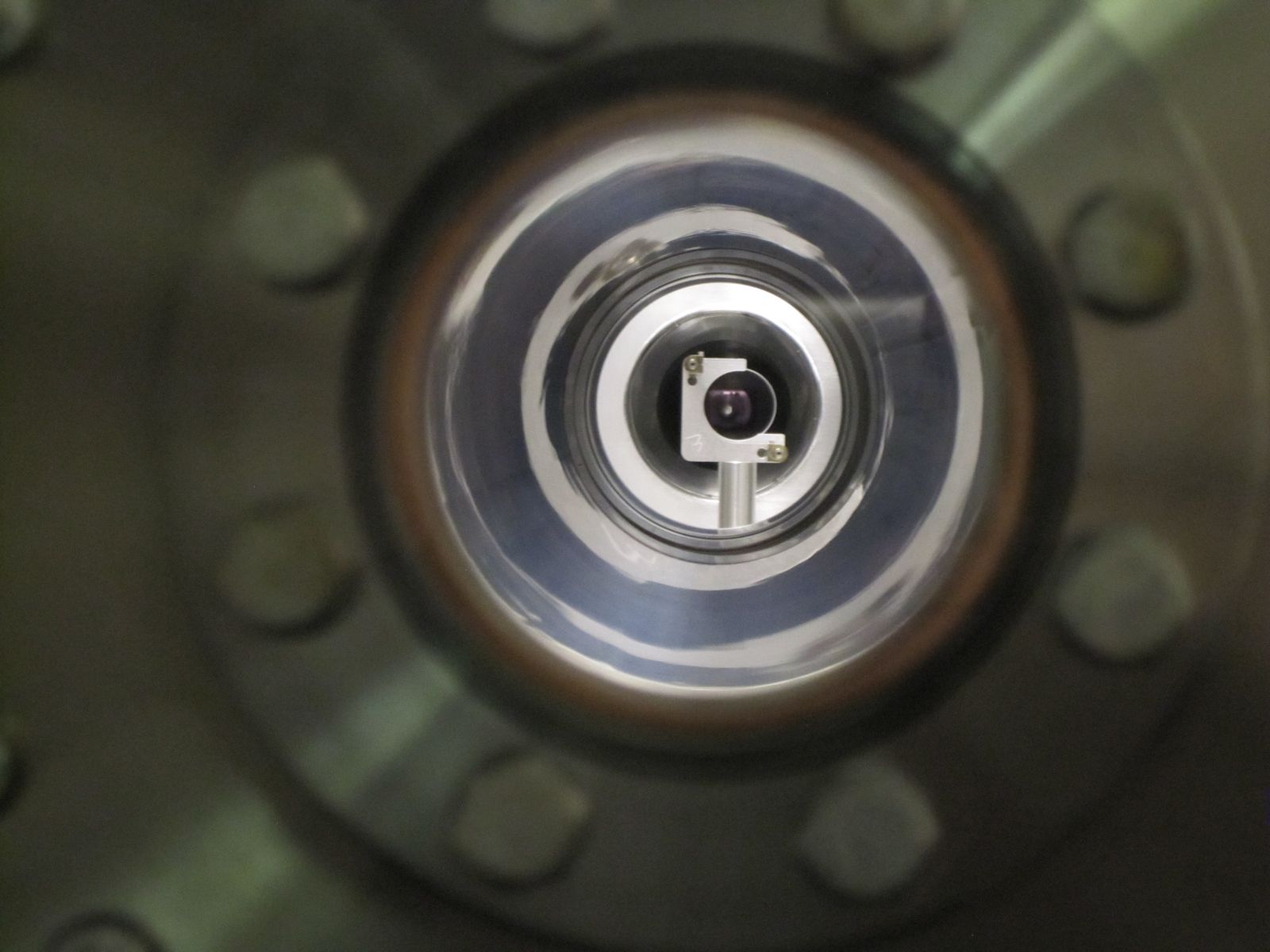
極めて小さなスケールでは、空間と時間はどれほど異なるのでしょうか?通常は気づかない量子効果が支配的になる可能性のある、極めて小さなプランクスケールという未知の領域を探るため、米国イリノイ州シカゴ近郊のフェルミ国立加速器研究所(フェルミラボ)で、フェルミラボ・ホロメーターと呼ばれる新開発の装置が稼働を開始しました。この装置は、鏡を2方向にわずかに同時に揺らすことで、常に最小値を超える基本的なタイプのホログラフィックノイズが明らかになるかどうかを検証します。上の写真は、ホロメーター試作機の端面ミラーの1つです。ホログラフィックノイズの発見は確かに画期的なものですが、そのようなノイズが特定の実験室の長さスケールに依存するという事実は、時空研究家の一部を驚かせるでしょう。その理由の1つは、アインシュタインの特殊相対性理論のローレンツ不変性仮説です。この仮説は、すべての長さスケールは、相対的に運動する観測者から見ると収縮して見えるはずであり、極めて小さなプランク長でさえも収縮して見えるはずだと述べています。それでも、この実験は他に類を見ないものであり、多くの人がその結果に興味を持っています。天体物理学者向け:天体物理学ソースコードライブラリで900以上のコードを閲覧できます
原文(English)
How different are space and time at very small scales? To explore the unfamiliar domain of the miniscule Planck scale -- where normally unnoticeable quantum effects might become dominant -- a newly developed instrument called the Fermilab Holometer has begun operating at the Fermi National Accelerator Laboratory (Fermilab) near Chicago, Illinois, USA. The instrument seeks to determine if slight but simultaneous jiggles of a mirror in two directions expose a fundamental type of holographic noise that always exceeds a minimum amount. Pictured above is one of the end mirrors of a Holometer prototype. Although the discovery of holographic noise would surely be groundbreaking, the dependence of such noise on a specific laboratory length scale would surprise some spacetime enthusiasts. One reason for this is the Lorentz Invariance postulate of Einstein's special relativity, which states that all length scales should appear contracted to a relatively moving observer -- even the diminutive Planck length. Still, the experiment is unique and many are curious what the results will show. Astrophysicists: Browse 900+ codes in the Astrophysics Source Code Library
\ この感動を宇宙仲間にシェア /
宇宙をXでシェア
© NASA / APOD