
🚀 宇宙の記憶・カレンダー検索
🚀 象徴的な写真:
APOD第1回
🚀 創造の柱
🚀 スピリット火星着陸
🚀 ハッブル超深宇宙
🚀 地球へようこそ|ブルー・マーブル
🚀 エンケラドス
🚀 ベテルギウス
🚀 火星着陸
🚀 青い夕焼け
🚀 冥王星のハート
🚀 皆既日食
🚀 アースライズ再構築
🚀 ブラックホール
🚀 ウェッブ初画像
🚀 アポロ11着陸
APOD30周年(2025年6月16日)
宇宙ステーションの検出器が説明のつかない陽電子過剰を検出
Space Station Detector Finds Unexplained Positron Excess
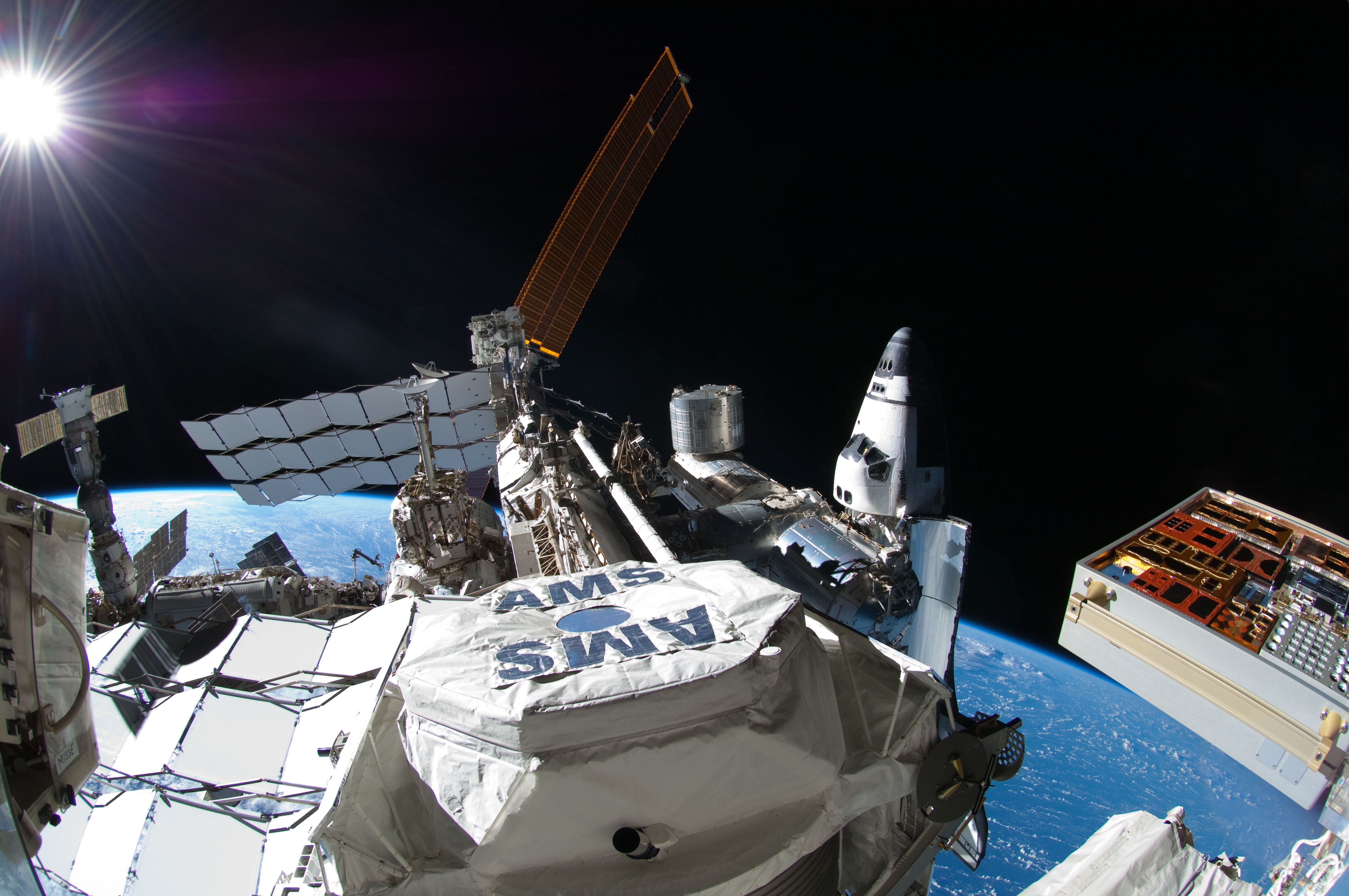
これらの高エネルギー陽電子は一体どこから来たのでしょうか?国際宇宙ステーション(ISS)に搭載されたアルファ磁気スペクトロメーター(AMS-02)は、2011年以来、高エネルギー電子と陽電子の衝突頻度を綿密に記録してきました。長年にわたるデータの蓄積の結果、検出された最高エネルギー領域において、予想をはるかに上回る陽電子が存在することが明らかになりました。この過剰分は、遠く離れた未検出の暗黒物質粒子の消滅という、非常に興味深く深遠な起源を持つ可能性があります。しかし、パルサーなどの天体源がこの説明のつかない不一致を生み出している可能性も考えられます。このテーマは、現在も活発な研究分野となっています。写真には、ISSに設置された直後のAMSが写っており、右端には米国のスペースシャトル、左端にはロシアのソユーズ宇宙船がドッキングしています。背景には、世界各国が暮らす青い地球が見えます。APODをフォローするには、Facebook、Google Plus、またはTwitterをご覧ください。
原文(English)
Where did all these high energy positrons come from? The Alpha Magnetic Spectrometer (AMS-02) onboard the International Space Station (ISS) has been meticulously recording how often it is struck by both high energy electrons and positrons since 2011. After accumulating years of data, it has now become clear that there are significantly more positrons than expected at the highest energies detected. The excess may have a very exciting and profound origin -- the annihilation of distant but previously undetected dark matter particles. However, it is also possible that astronomical sources such as pulsars are creating the unexplained discrepancy. The topic remains a very active area of research. Pictured here, the AMS is visible on the ISS just after being installed, with a US Space Shuttle docked on the far right, a Russian Soyuz capsule docked on the far left, and the blue Earth that houses all nations visible across the background. Follow APOD on: Facebook, Google Plus, or Twitter
\ この感動を宇宙仲間にシェア /
宇宙をXでシェア
© NASA / APOD