
🚀 宇宙の記憶・カレンダー検索
🚀 象徴的な写真:
APOD第1回
🚀 創造の柱
🚀 スピリット火星着陸
🚀 ハッブル超深宇宙
🚀 地球へようこそ|ブルー・マーブル
🚀 エンケラドス
🚀 ベテルギウス
🚀 火星着陸
🚀 青い夕焼け
🚀 冥王星のハート
🚀 皆既日食
🚀 アースライズ再構築
🚀 ブラックホール
🚀 ウェッブ初画像
🚀 アポロ11着陸
APOD30周年(2025年6月16日)
太陽黒点と日食
Sunspots and Solar Eclipse
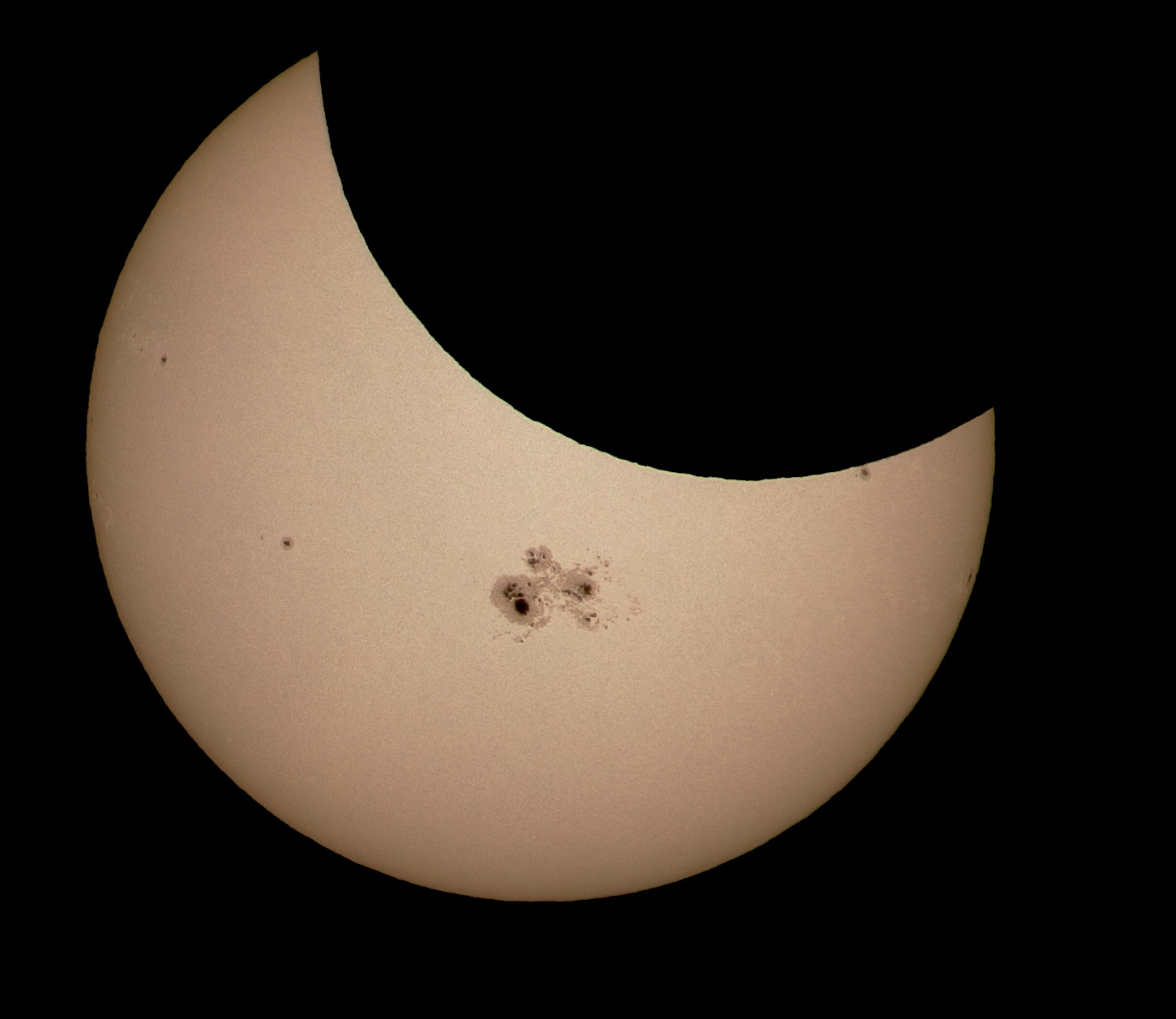
新月は巨大な黒点群AR 2192に加わり、木曜日に待望された部分日食の間、明るい太陽円盤を暗くした。北米の大部分から見えるこの月は、カリフォルニア州サンタクルーズで日食最大時に撮影された超望遠写真に写っている。木星ほどの大きさの注目すべきAR 2192自体は、太陽の中心付近と湾曲した月の縁の下の目立つ部分を暗くしている。黒点群は今後数日間でゆっくりと太陽を横切って見えなくなるため、その活動を予測するのは難しい。しかし、日食のタイミングは予測しやすい。次の日食は2015年3月20日の皆既日食である。
原文(English)
A New Moon joined giant sunspot group AR 2192 to dim the bright solar disk during Thursday's much anticipated partial solar eclipse. Visible from much of North America, the Moon's broad silhouette is captured in this extreme telephoto snapshot near eclipse maximum from Santa Cruz, California. About the size of Jupiter, the remarkable AR 2192 itself darkens a noticeable fraction of the Sun, near center and below the curved lunar limb. As the sunspot group slowly rotates across the Sun and out of view in the coming days its activity is difficult to forecast. But the timing of solar eclipses is easier to predict. The next will be a total solar eclipse on March 20, 2015.
\ この感動を宇宙仲間にシェア /
宇宙をXでシェア
© Michael Bolte (UCSC) / APOD