
🚀 宇宙の記憶・カレンダー検索
🚀 象徴的な写真:
APOD第1回
🚀 創造の柱
🚀 スピリット火星着陸
🚀 ハッブル超深宇宙
🚀 地球へようこそ|ブルー・マーブル
🚀 エンケラドス
🚀 ベテルギウス
🚀 火星着陸
🚀 青い夕焼け
🚀 冥王星のハート
🚀 皆既日食
🚀 アースライズ再構築
🚀 ブラックホール
🚀 ウェッブ初画像
🚀 アポロ11着陸
APOD30周年(2025年6月16日)
NGC 4762:銀河の端
NGC 4762: A Galaxy on the Edge
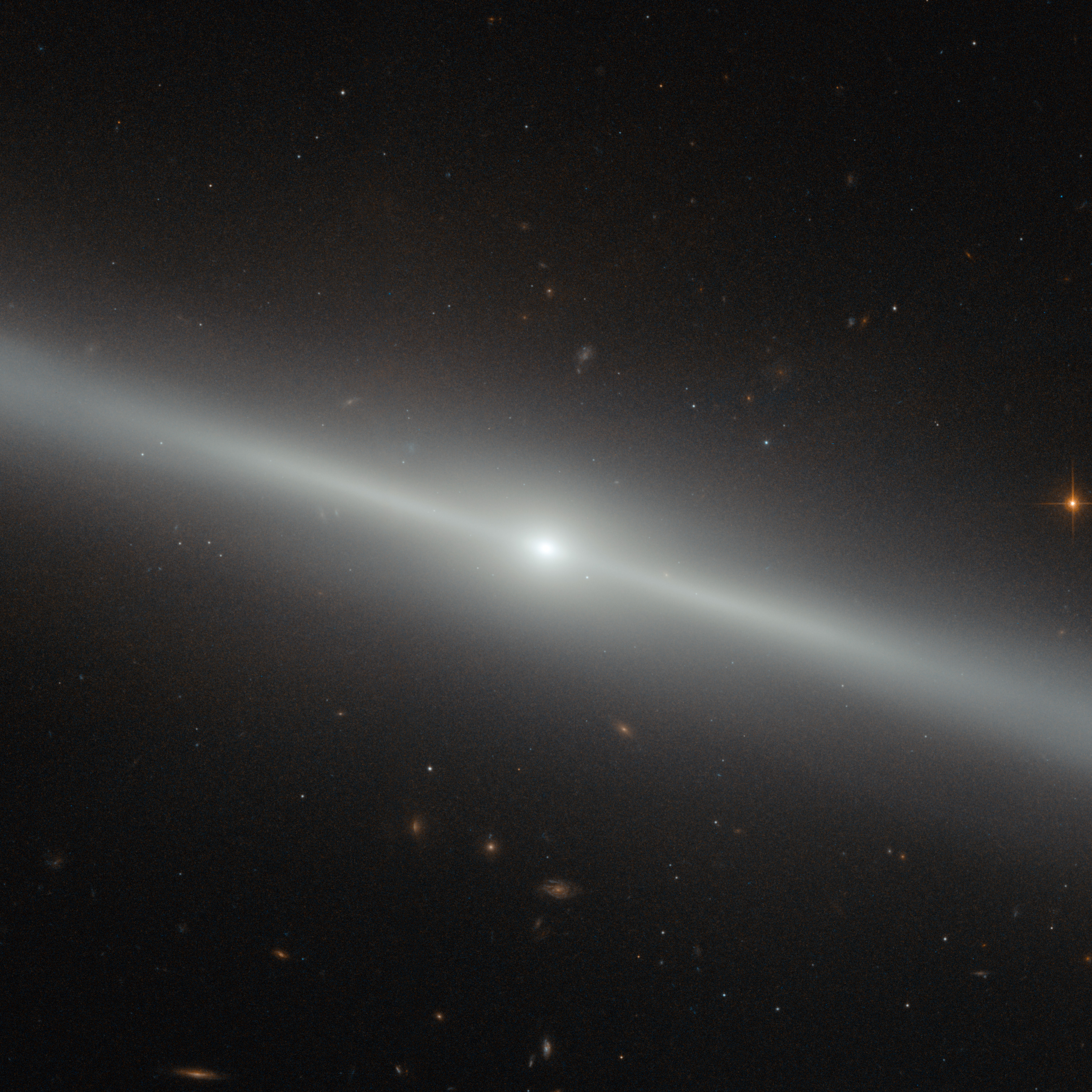
なぜ空に明るい線があるのでしょうか? 上に示されているのは、円盤銀河をほぼ真横から見たものです。ハッブル宇宙望遠鏡で撮影されたこの画像は、円盤銀河がいかに薄いかを視覚的に鮮やかに示しています。近くのおとめ座銀河団にある銀河NGC 4762は非常に薄いため、どのような種類の円盤銀河であるかを判断するのは困難です。目に見えるダストレーンがないことから、低ダストレンズ状銀河であると考えられますが、上から見た場合、渦巻き構造が明らかになる可能性もあります。この珍しい星の線は、端から端まで約10万光年に及びます。NGC 4762の中心付近にはわずかに星が膨らんでおり、遠くには多くの背景銀河が見えます。このように薄く見える銀河は、地球が(ほぼ)その薄い銀河円盤の延長面に位置しているため、非常にまれです。実際にこれほど薄い銀河は比較的よく見られます。例えば、私たちの銀河系である天の川銀河も、これくらいの薄さだと考えられています。天体物理学者の皆様へ:天体物理学ソースコードライブラリにある900以上のコードをご覧ください。
原文(English)
Why is there a bright line on the sky? What is pictured above is actually a disk galaxy being seen almost perfectly edge on. The image from the Hubble Space Telescope is a spectacular visual reminder of just how thin disk galaxies can be. NGC 4762, a galaxy in the nearby Virgo Cluster of Galaxies, is so thin that it is actually difficult to determine what type of disk galaxy it is. Its lack of a visible dust lane indicates that it is a low-dust lenticular galaxy, although it is still possible that a view from on top would reveal spiral structure. The unusual stellar line spans about 100,000 light years from end to end. Near NGC 4762's center is a slight bulge of stars, while many background galaxies are visible far in the distance. Galaxies that appear this thin are rare mostly because our Earth must reside (nearly) in the extrapolated planes of their thin galactic disks. Galaxies that actually are this thin are relatively common -- for example our own Milky Way Galaxy is thought to be about this thin. Astrophysicists: Browse 900+ codes in the Astrophysics Source Code Library
\ この感動を宇宙仲間にシェア /
宇宙をXでシェア
© NASA / APOD