
🚀 宇宙の記憶・カレンダー検索
🚀 象徴的な写真:
APOD第1回
🚀 創造の柱
🚀 スピリット火星着陸
🚀 ハッブル超深宇宙
🚀 地球へようこそ|ブルー・マーブル
🚀 エンケラドス
🚀 ベテルギウス
🚀 火星着陸
🚀 青い夕焼け
🚀 冥王星のハート
🚀 皆既日食
🚀 アースライズ再構築
🚀 ブラックホール
🚀 ウェッブ初画像
🚀 アポロ11着陸
APOD30周年(2025年6月16日)
赤外線と可視光で見るアンドロメダ銀河
The Infrared Visible Andromeda
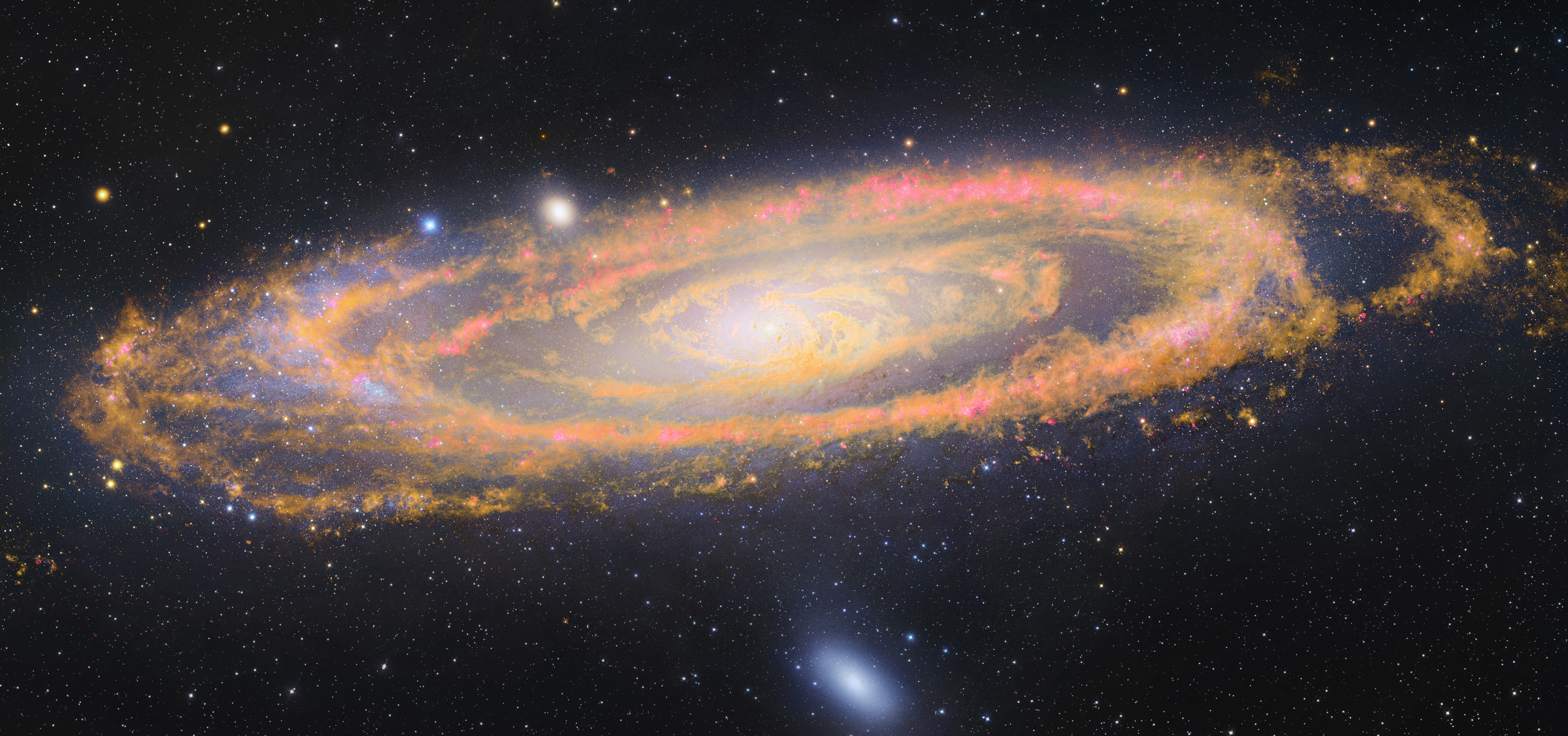
この驚くべき合成カラー画像は、可視光と赤外線天文学画像データのアーカイブから作成されました。視野は、わずか250万光年離れた巨大な渦巻銀河アンドロメダ銀河(M31)を網羅しています。実際、アンドロメダ銀河は、私たちの天の川銀河の2倍以上の直径を持ち、近傍で最大の銀河です。アンドロメダ銀河の明るい若い青い星々は、その大きく広がる渦巻き腕に沿って分布しており、宇宙および地上からの可視光データでは、星形成領域の特徴的な赤みがかった輝きが捉えられています。しかし、スピッツァー宇宙望遠鏡からの赤外線データも、この詳細な合成画像の赤と緑のカラーチャンネルに直接合成されており、銀河の中心に向かって渦巻く若い星々によって温められた、でこぼこした塵の帯を強調しています。可視光波長では見えないこの温かい塵は、オレンジ色を帯びています。フレーム内には、2つの小さな伴銀河、M110(下)とM32(上)も含まれています。今夜:ふたご座流星群を観賞しよう
原文(English)
This remarkable synthetic color composite image was assembled from archives of visible light and infrared astronomy image data. The field of view spans the Andromeda Galaxy (M31), a massive spiral a mere 2.5 million light-years away. In fact, with over twice the diameter of our own Milky Way, Andromeda is the largest nearby galaxy. Andromeda's population of bright young blue stars lie along its sweeping spiral arms, with the telltale reddish glow of star forming regions traced in space- and ground-based visible light data. But infrared data from the Spitzer Space Telescope, also blended directly into the detailed composite's red and green color channels, highlight the lumpy dust lanes warmed by the young stars as they wind ever closer to the galaxy's core. Otherwise invisible at optical wavelengths, the warm dust takes on orange hues. Two smaller companion galaxies, M110 (below) and M32 (above) are also included in the frame. Tonight: Watch the Geminids Meteor Shower
\ この感動を宇宙仲間にシェア /
宇宙をXでシェア
© Robert Gendler / APOD