
🚀 宇宙の記憶・カレンダー検索
🚀 象徴的な写真:
APOD第1回
🚀 創造の柱
🚀 スピリット火星着陸
🚀 ハッブル超深宇宙
🚀 地球へようこそ|ブルー・マーブル
🚀 エンケラドス
🚀 ベテルギウス
🚀 火星着陸
🚀 青い夕焼け
🚀 冥王星のハート
🚀 皆既日食
🚀 アースライズ再構築
🚀 ブラックホール
🚀 ウェッブ初画像
🚀 アポロ11着陸
APOD30周年(2025年6月16日)
球状星団の前に浮かぶラブジョイ彗星
Comet Lovejoy before a Globular Star Cluster
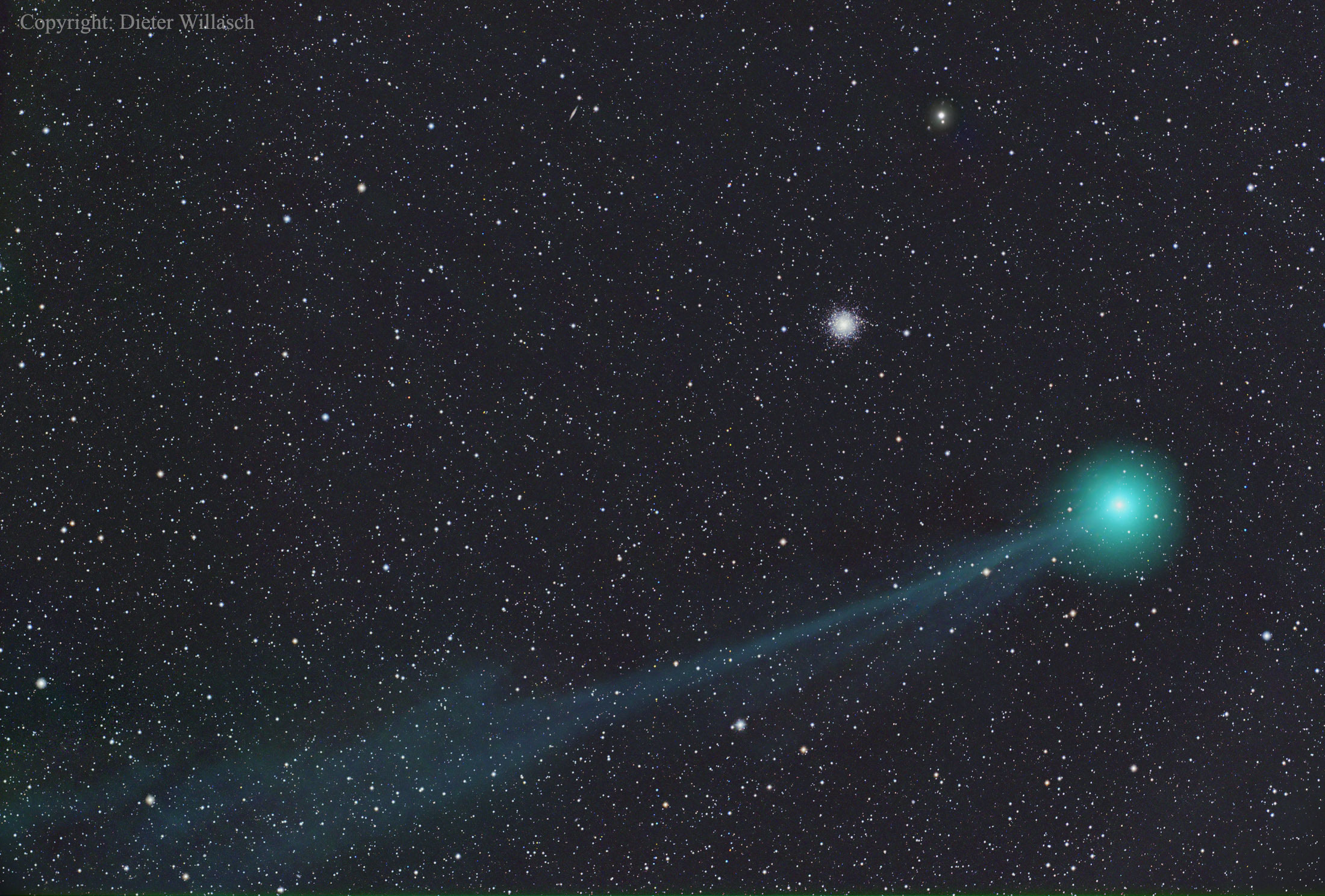
ラブジョイ彗星が肉眼で見えるようになりました。彗星を見るには、日没後1時間ほど外に出て、オリオン座の三つ星の右側のぼんやりとした部分を探してください。双眼鏡と星図があると便利です。ここに掲載されているのは、3日前に撮影されたC/2014 Q2(ラブジョイ)彗星で、球状星団M79のほぼ手前を通過しています。M79は、彗星の緑色のコマの少し上と左にある明るい点として見えます。ラブジョイ彗星の核は巨大な汚れた氷山で、太陽に近づくにつれて、長く複雑なイオンの尾にガスを放出し、画像全体に広がっています。この彗星は、1月中に北半球の観測者にとってさらに見つけやすくなると予想されています。なぜなら、彗星はより早く昇り、うまくいけばさらに明るくなるからです。
原文(English)
Comet Lovejoy has become visible to the unaided eye. To see the comet, just go outside an hour or so after sunset and look for a fuzzy patch to the right of Orion's belt. Binoculars and a star chart may help. Pictured here, Comet C/2014 Q2 (Lovejoy) was captured three days ago passing nearly in front of M79, the globular star cluster visible as the bright spot slightly above and to the left of the comet's green-hued coma. The nucleus of Comet Lovejoy is a giant dirty iceberg that is shedding gas into a long and intricate ion tail, extending across the image, as it nears the Sun. The comet is expected to become even easier to spot for northern observers during January, as it is rises earlier and, hopefully, continues to brighten.
\ この感動を宇宙仲間にシェア /
宇宙をXでシェア
© Dieter Willasch / APOD