
🚀 宇宙の記憶・カレンダー検索
🚀 象徴的な写真:
APOD第1回
🚀 創造の柱
🚀 スピリット火星着陸
🚀 ハッブル超深宇宙
🚀 地球へようこそ|ブルー・マーブル
🚀 エンケラドス
🚀 ベテルギウス
🚀 火星着陸
🚀 青い夕焼け
🚀 冥王星のハート
🚀 皆既日食
🚀 アースライズ再構築
🚀 ブラックホール
🚀 ウェッブ初画像
🚀 アポロ11着陸
APOD30周年(2025年6月16日)
オリオン座の中心で
At the Heart of Orion
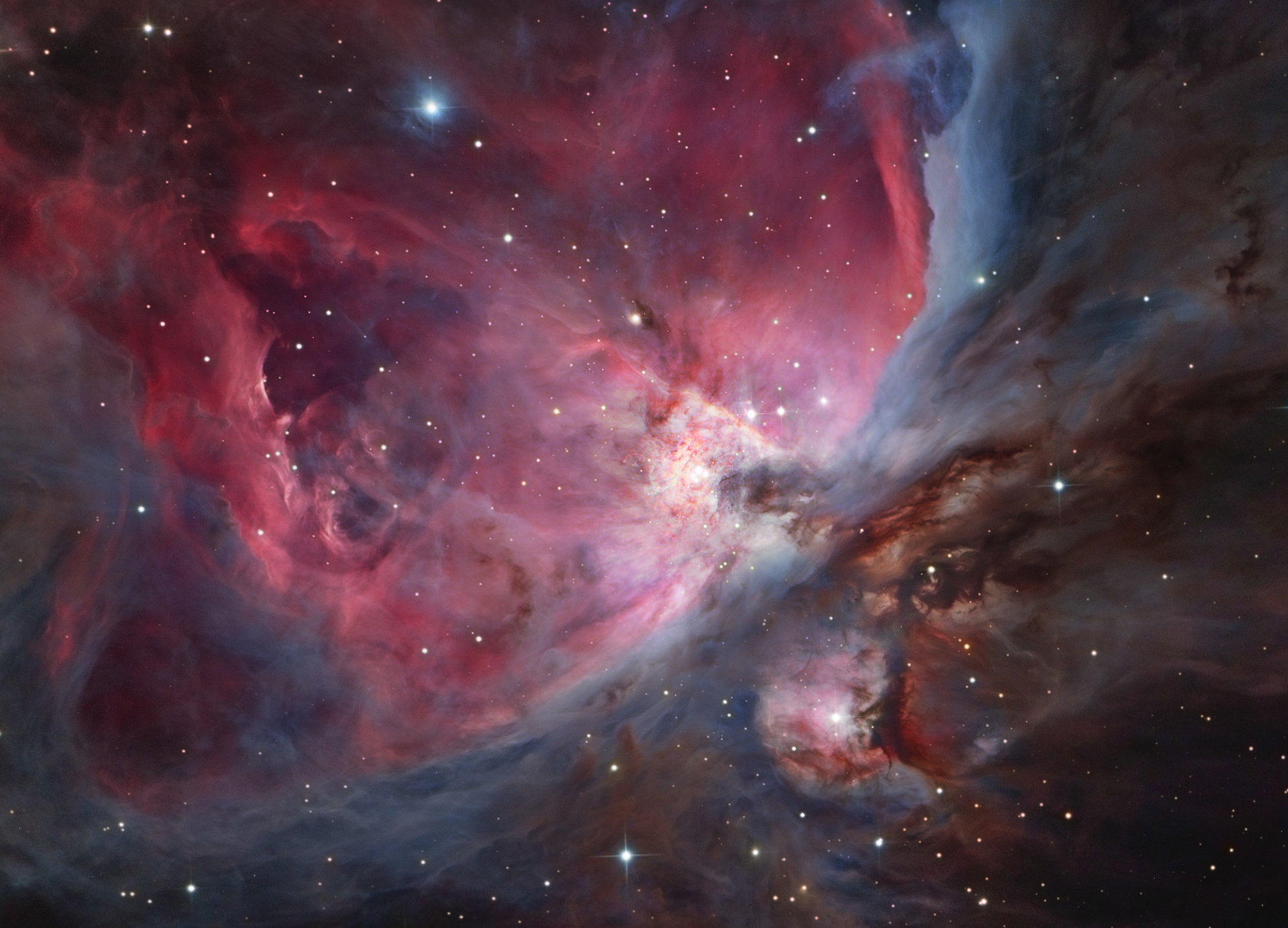
この鮮明な宇宙像の中心付近、オリオン星雲の中心部には、トラペジウムと呼ばれる4つの高温で質量の大きな星があります。半径約1.5光年の領域に密集して存在するこれらの星は、密度の高いオリオン星雲星団の中心部を支配しています。トラペジウムの星々、特に最も明るい星であるシータ1オリオンCからの紫外線電離放射が、この複雑な星形成領域の可視光全体を支えています。約300万年前のオリオン星雲星団は、若い頃はさらにコンパクトで、力学的研究によると、初期の頃に暴走した恒星衝突によって太陽の100倍以上の質量を持つブラックホールが形成された可能性があるとされています。星団内にブラックホールが存在するとすれば、トラペジウムの星々の高速移動が説明できるかもしれません。オリオン星雲は地球から約1500光年離れており、地球に最も近い既知のブラックホールとなります。
原文(English)
Near the center of this sharp cosmic portrait, at the heart of the Orion Nebula, are four hot, massive stars known as the Trapezium. Tightly gathered within a region about 1.5 light-years in radius, they dominate the core of the dense Orion Nebula Star Cluster. Ultraviolet ionizing radiation from the Trapezium stars, mostly from the brightest star Theta-1 Orionis C powers the complex star forming region's entire visible glow. About three million years old, the Orion Nebula Cluster was even more compact in its younger years and a dynamical study indicates that runaway stellar collisions at an earlier age may have formed a black hole with more than 100 times the mass of the Sun. The presence of a black hole within the cluster could explain the observed high velocities of the Trapezium stars. The Orion Nebula's distance of some 1,500 light-years would make it the closest known black hole to planet Earth.
\ この感動を宇宙仲間にシェア /
宇宙をXでシェア
© László Francsics / APOD