
🚀 宇宙の記憶・カレンダー検索
🚀 象徴的な写真:
APOD第1回
🚀 創造の柱
🚀 スピリット火星着陸
🚀 ハッブル超深宇宙
🚀 地球へようこそ|ブルー・マーブル
🚀 エンケラドス
🚀 ベテルギウス
🚀 火星着陸
🚀 青い夕焼け
🚀 冥王星のハート
🚀 皆既日食
🚀 アースライズ再構築
🚀 ブラックホール
🚀 ウェッブ初画像
🚀 アポロ11着陸
APOD30周年(2025年6月16日)
海王星の2時間前
Two Hours Before Neptune
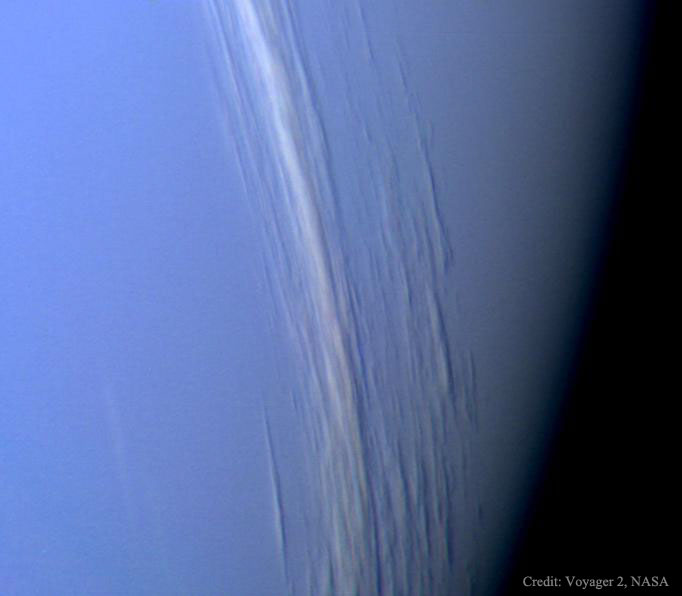
1989年、海王星に最接近する2時間前、ボイジャー2号探査機はこの写真を撮影しました。海王星の大気圏上層部に浮かぶ、長く淡い色の巻雲が初めてはっきりと写っています。これらの雲の影は、下層の雲にも見られます。海王星の大気の大部分は水素とヘリウムで構成されており、これらは目に見えません。そのため、海王星の青色は、赤色の光を優先的に吸収する少量のメタンによるものです。海王星は太陽系で最も風が強く、突風は時速2000キロメートルに達します。天王星と海王星の雲頂下の高温高密度な環境では、ダイヤモンドが生成される可能性があると推測されています。それから26年後、NASAのニューホライズンズ探査機は、今年7月に冥王星を通過する最初の探査機となる予定です。Almost Hyperspace: Random APOD Generator
原文(English)
Two hours before closest approach to Neptune in 1989, the Voyager 2 robot spacecraft snapped this picture. Clearly visible for the first time were long light-colored cirrus-type clouds floating high in Neptune's atmosphere. Shadows of these clouds can even be seen on lower cloud decks. Most of Neptune's atmosphere is made of hydrogen and helium, which is invisible. Neptune's blue color therefore comes from smaller amounts of atmospheric methane, which preferentially absorbs red light. Neptune has the fastest winds in the Solar System, with gusts reaching 2000 kilometers per hour. Speculation holds that diamonds may be created in the dense hot conditions that exist under the cloud tops of Uranus and Neptune. Twenty-six years later, NASA's New Horizons is poised to be the first spacecraft to zoom past Pluto this July. Almost Hyperspace: Random APOD Generator
\ この感動を宇宙仲間にシェア /
宇宙をXでシェア
© NASA / APOD