
🚀 宇宙の記憶・カレンダー検索
🚀 象徴的な写真:
APOD第1回
🚀 創造の柱
🚀 スピリット火星着陸
🚀 ハッブル超深宇宙
🚀 地球へようこそ|ブルー・マーブル
🚀 エンケラドス
🚀 ベテルギウス
🚀 火星着陸
🚀 青い夕焼け
🚀 冥王星のハート
🚀 皆既日食
🚀 アースライズ再構築
🚀 ブラックホール
🚀 ウェッブ初画像
🚀 アポロ11着陸
APOD30周年(2025年6月16日)
ハッブル宇宙望遠鏡によるリング銀河AM 0644-741
Ring Galaxy AM 0644-741 from Hubble
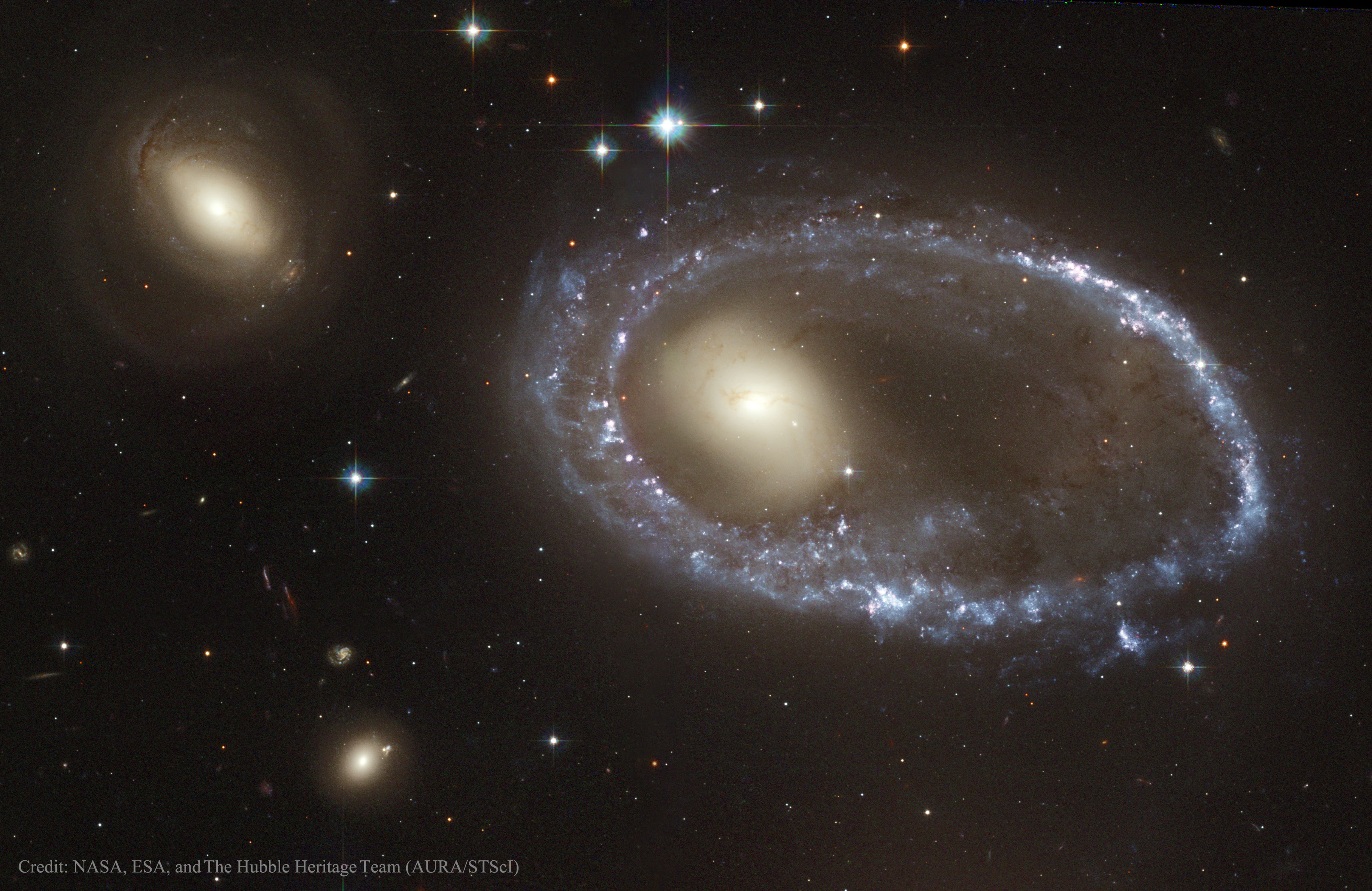
銀河がリング状になるのはなぜでしょうか?右側に写っている青い銀河の縁は、直径15万光年の巨大なリング状構造で、新しく形成された極めて明るく巨大な星々で構成されています。この銀河、AM 0644-741はリング銀河として知られており、巨大な銀河の衝突によって形成されました。銀河が衝突すると、互いにすり抜けていきます。個々の星が接触することはほとんどありません。リング状の形状は、小さな侵入銀河全体が大きな銀河を通過することによって生じる重力による破壊の結果です。このとき、星間ガスと塵が凝縮し、衝突点から池の水面に広がる波紋のように星形成の波が広がります。侵入銀河はハッブル宇宙望遠鏡が撮影した画像のフレームのすぐ外側にあります。この画像は、1990年のハッブル宇宙望遠鏡打ち上げ記念日を祝して撮影されたものです。環状銀河AM 0644-741は、地球から約3億光年離れた場所に位置しています。
原文(English)
How could a galaxy become shaped like a ring? The rim of the blue galaxy pictured on the right is an immense ring-like structure 150,000 light years in diameter composed of newly formed, extremely bright, massive stars. That galaxy, AM 0644-741, is known as a ring galaxy and was caused by an immense galaxy collision. When galaxies collide, they pass through each other -- their individual stars rarely come into contact. The ring-like shape is the result of the gravitational disruption caused by an entire small intruder galaxy passing through a large one. When this happens, interstellar gas and dust become condensed, causing a wave of star formation to move out from the impact point like a ripple across the surface of a pond. The intruder galaxy is just outside of the frame taken by the Hubble Space Telescope. This featured image was taken to commemorate the anniversary of Hubble's launch in 1990. Ring galaxy AM 0644-741 lies about 300 million light years away.
\ この感動を宇宙仲間にシェア /
宇宙をXでシェア
© NASA / APOD