
🚀 宇宙の記憶・カレンダー検索
🚀 象徴的な写真:
APOD第1回
🚀 創造の柱
🚀 スピリット火星着陸
🚀 ハッブル超深宇宙
🚀 地球へようこそ|ブルー・マーブル
🚀 エンケラドス
🚀 ベテルギウス
🚀 火星着陸
🚀 青い夕焼け
🚀 冥王星のハート
🚀 皆既日食
🚀 アースライズ再構築
🚀 ブラックホール
🚀 ウェッブ初画像
🚀 アポロ11着陸
APOD30周年(2025年6月16日)
MyCn18:砂時計型の惑星状星雲
MyCn18: An Hourglass Planetary Nebula
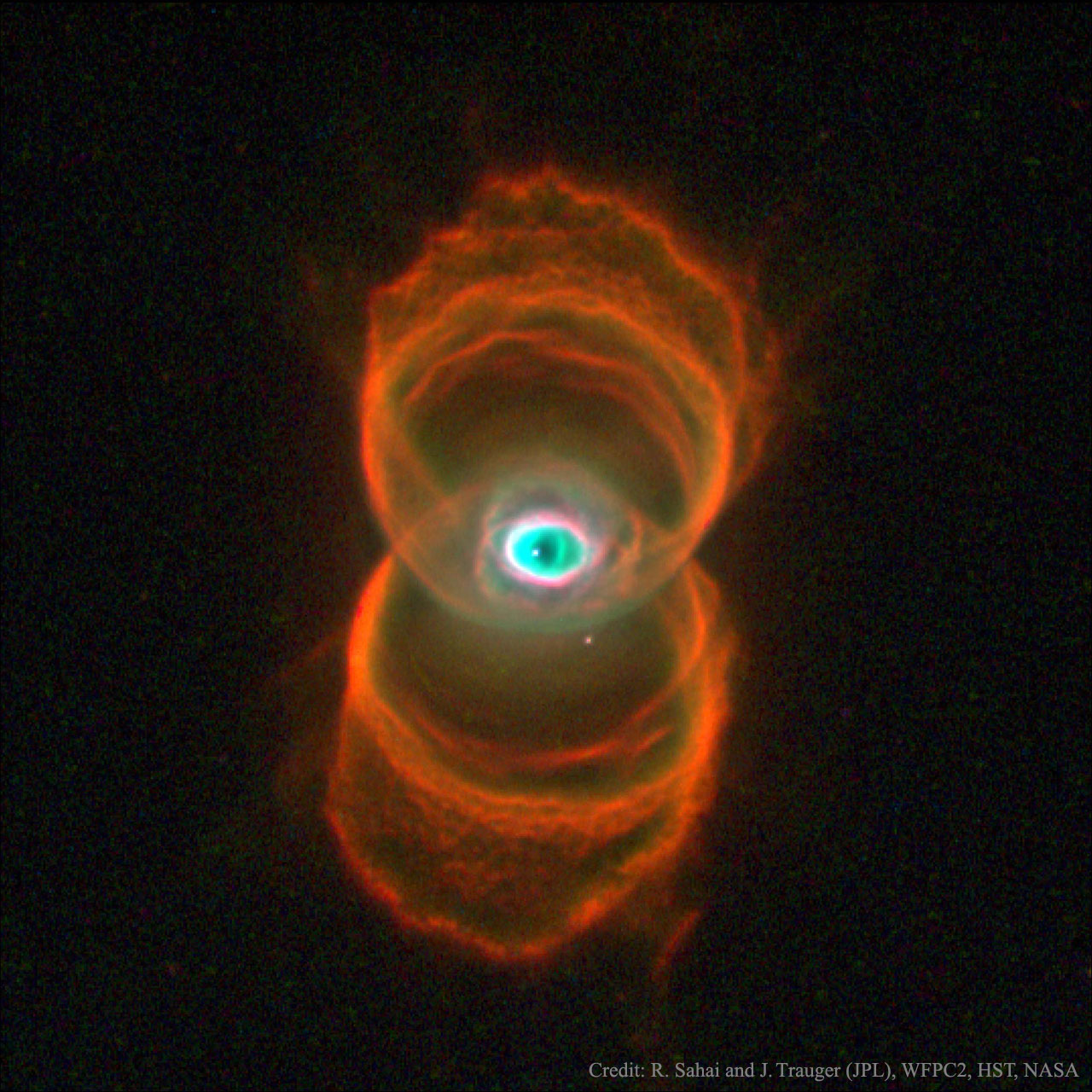
この砂時計型の惑星状星雲の中心星にとって、残された時間はわずかです。核燃料を使い果たした太陽のような星の生涯の短くも壮観な終焉期は、外層が放出され、中心部が冷えていく白色矮星となることで訪れます。1995年、天文学者たちはハッブル宇宙望遠鏡(HST)を用いて、上の画像を含む一連の惑星状星雲の画像を撮影しました。ここでは、色鮮やかな輝くガス(窒素は赤、水素は緑、酸素は青)の繊細な環が、砂時計の薄い壁を縁取っています。HST画像の比類なき鮮明さにより、星雲放出過程の驚くべき詳細が明らかになり、惑星状星雲の複雑な形状と対称性に関する未解決の謎を解明するのに役立っています。
原文(English)
The sands of time are running out for the central star of this hourglass-shaped planetary nebula. With its nuclear fuel exhausted, this brief, spectacular, closing phase of a Sun-like star's life occurs as its outer layers are ejected - its core becoming a cooling, fading white dwarf. In 1995, astronomers used the Hubble Space Telescope (HST) to make a series of images of planetary nebulae, including the one above. Here, delicate rings of colorful glowing gas (nitrogen-red, hydrogen-green, and oxygen-blue) outline the tenuous walls of the hourglass. The unprecedented sharpness of the HST images has revealed surprising details of the nebula ejection process that are helping to resolve the outstanding mysteries of the complex shapes and symmetries of planetary nebulas.
\ この感動を宇宙仲間にシェア /
宇宙をXでシェア
© NASA / APOD