
🚀 宇宙の記憶・カレンダー検索
🚀 象徴的な写真:
APOD第1回
🚀 創造の柱
🚀 スピリット火星着陸
🚀 ハッブル超深宇宙
🚀 地球へようこそ|ブルー・マーブル
🚀 エンケラドス
🚀 ベテルギウス
🚀 火星着陸
🚀 青い夕焼け
🚀 冥王星のハート
🚀 皆既日食
🚀 アースライズ再構築
🚀 ブラックホール
🚀 ウェッブ初画像
🚀 アポロ11着陸
APOD30周年(2025年6月16日)
NGC 6240:合体する銀河
NGC 6240: Merging Galaxies
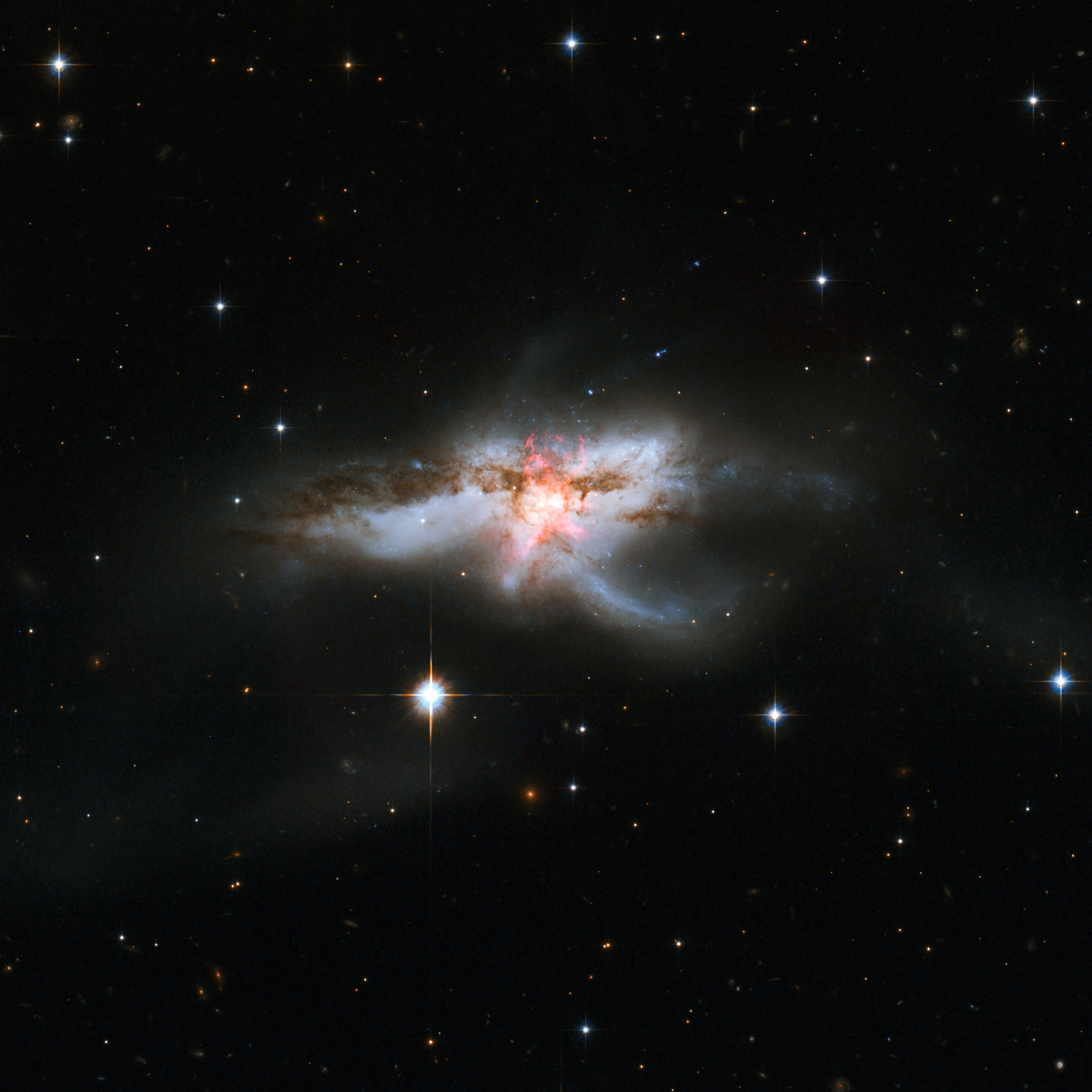
NGC 6240は、宇宙規模の大惨事が終焉を迎える様子を間近で捉えた貴重な機会を提供します。この巨大な銀河同士の衝突は、へびつかい座の方向、地球からわずか4億光年先で起こっています。合体する銀河からは、星、ガス、塵からなる歪んだ潮汐尾が噴出し、激しい星形成が急速に進行します。元の銀河の中心にある2つの超大質量ブラックホールも合体し、さらに巨大なブラックホールへと進化し、やがて残るのはたった1つの大きな銀河だけになります。この劇的な画像は、ハッブル宇宙望遠鏡のACSカメラとWPC3カメラによる狭帯域および近赤外線から可視光までの広帯域データを合成したもので、NGC 6240の推定距離である30万光年以上にわたる範囲を捉えています。
原文(English)
NGC 6240 offers a rare, nearby glimpse of a cosmic catastrophe in its final throes. The titanic galaxy-galaxy collision takes place a mere 400 million light-years away in the constellation Ophiuchus. The merging galaxies spew distorted tidal tails of stars, gas, and dust and undergo fast and furious bursts of star formation. The two supermassive black holes in the original galactic cores will also coalesce into a single, even more massive black hole and soon, only one large galaxy will remain. This dramatic image of the scene is a composite of narrowband and near-infrared to visible broadband data from Hubble's ACS and WPC3 cameras, a view that spans over 300,000 light-years at the estimated distance of NGC 6240.
\ この感動を宇宙仲間にシェア /
宇宙をXでシェア
© NASA / APOD