
🚀 宇宙の記憶・カレンダー検索
🚀 象徴的な写真:
APOD第1回
🚀 創造の柱
🚀 スピリット火星着陸
🚀 ハッブル超深宇宙
🚀 地球へようこそ|ブルー・マーブル
🚀 エンケラドス
🚀 ベテルギウス
🚀 火星着陸
🚀 青い夕焼け
🚀 冥王星のハート
🚀 皆既日食
🚀 アースライズ再構築
🚀 ブラックホール
🚀 ウェッブ初画像
🚀 アポロ11着陸
APOD30周年(2025年6月16日)
NGC 2419:銀河間放浪者
NGC 2419: Intergalactic Wanderer
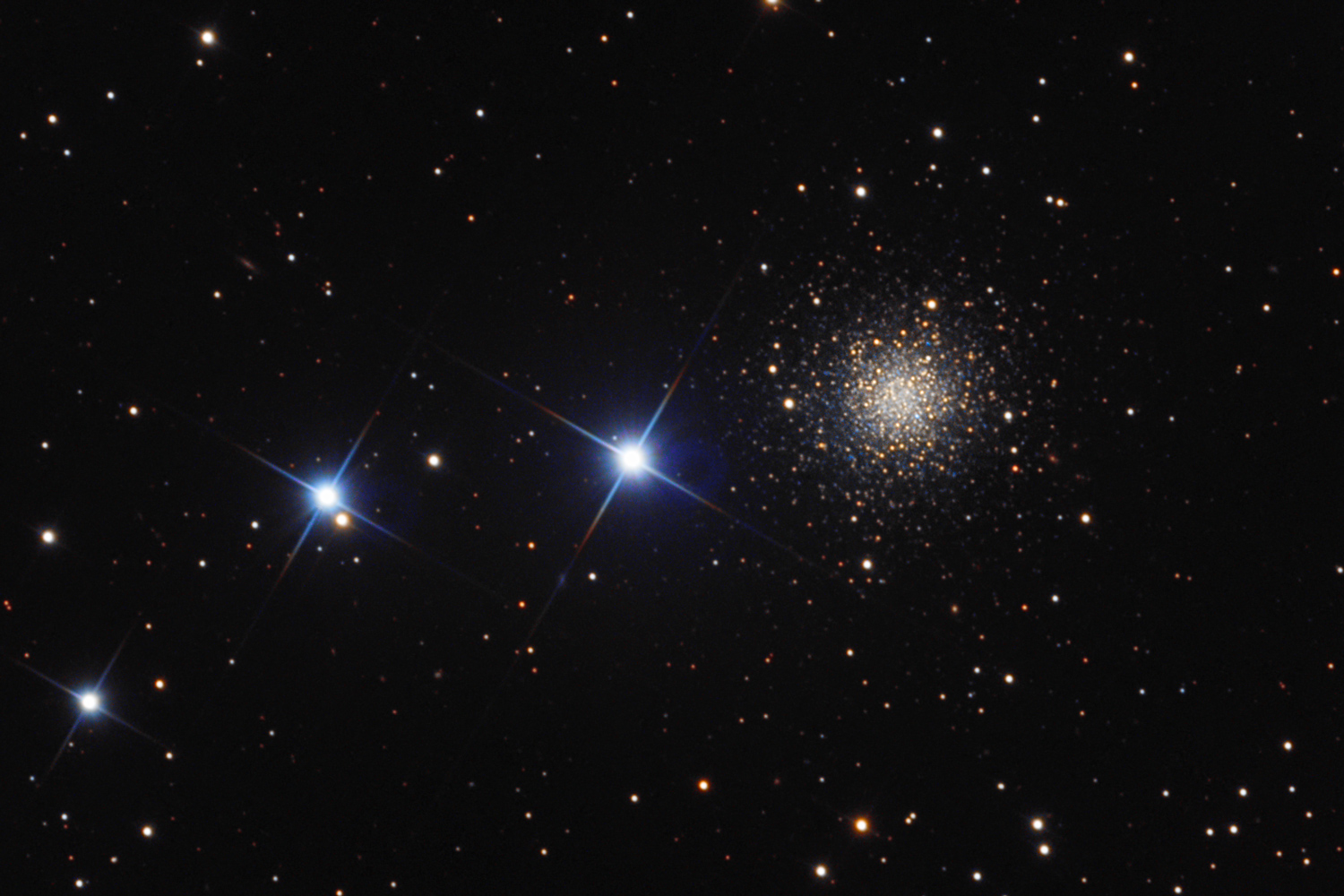
この思慮深い望遠鏡画像には、3つの天体が際立って写っています。これは、ほとんど人目に触れないやまねこ座の方向を捉えたものです。最も明るい2つの天体(とがった形をしたもの)は、近くにある恒星です。3つ目は、約30万光年離れた遠方の球状星団NGC 2419です。NGC 2419は「銀河間放浪者」と呼ばれることもありますが、天の川銀河の伴銀河である大マゼラン雲までの距離がわずか約16万光年であることを考えると、適切な名称と言えるでしょう。オメガ・ケンタウリのような他の大きな球状星団とほぼ同じように、NGC 2419自体も本来は明るいのですが、非常に遠いため暗く見えます。NGC 2419は、例えば天の川銀河に捕らえられ、破壊された小さな銀河の残骸など、銀河系外起源である可能性もあります。しかし、その極めて遠い距離ゆえに、天の川銀河のハローに存在する他の球状星団との特性を研究したり比較したりすることが困難である。
原文(English)
Three objects stand out in this thoughtful telescopic image, a view toward the mostly stealthy constellation Lynx. The two brightest (the spiky ones) are nearby stars. The third is the remote globular star cluster NGC 2419, at distance of nearly 300,000 light-years. NGC 2419 is sometimes called "the Intergalactic Wanderer", an appropriate title considering that the distance to the Milky Way's satellite galaxy, the Large Magellanic Cloud, is only about 160,000 light-years. Roughly similar to other large globular star clusters like Omega Centauri, NGC 2419 is itself intrinsically bright, but appears faint because it is so far away. NGC 2419 may really have an extragalactic origin as, for example, the remains of a small galaxy captured and disrupted by the Milky Way. But its extreme distance makes it difficult to study and compare its properties with other globular clusters that roam the halo of our Milky Way galaxy.
\ この感動を宇宙仲間にシェア /
宇宙をXでシェア
© Bob Franke / APOD