
🚀 宇宙の記憶・カレンダー検索
🚀 象徴的な写真:
APOD第1回
🚀 創造の柱
🚀 スピリット火星着陸
🚀 ハッブル超深宇宙
🚀 地球へようこそ|ブルー・マーブル
🚀 エンケラドス
🚀 ベテルギウス
🚀 火星着陸
🚀 青い夕焼け
🚀 冥王星のハート
🚀 皆既日食
🚀 アースライズ再構築
🚀 ブラックホール
🚀 ウェッブ初画像
🚀 アポロ11着陸
APOD30周年(2025年6月16日)
メデューサ星雲
The Medusa Nebula
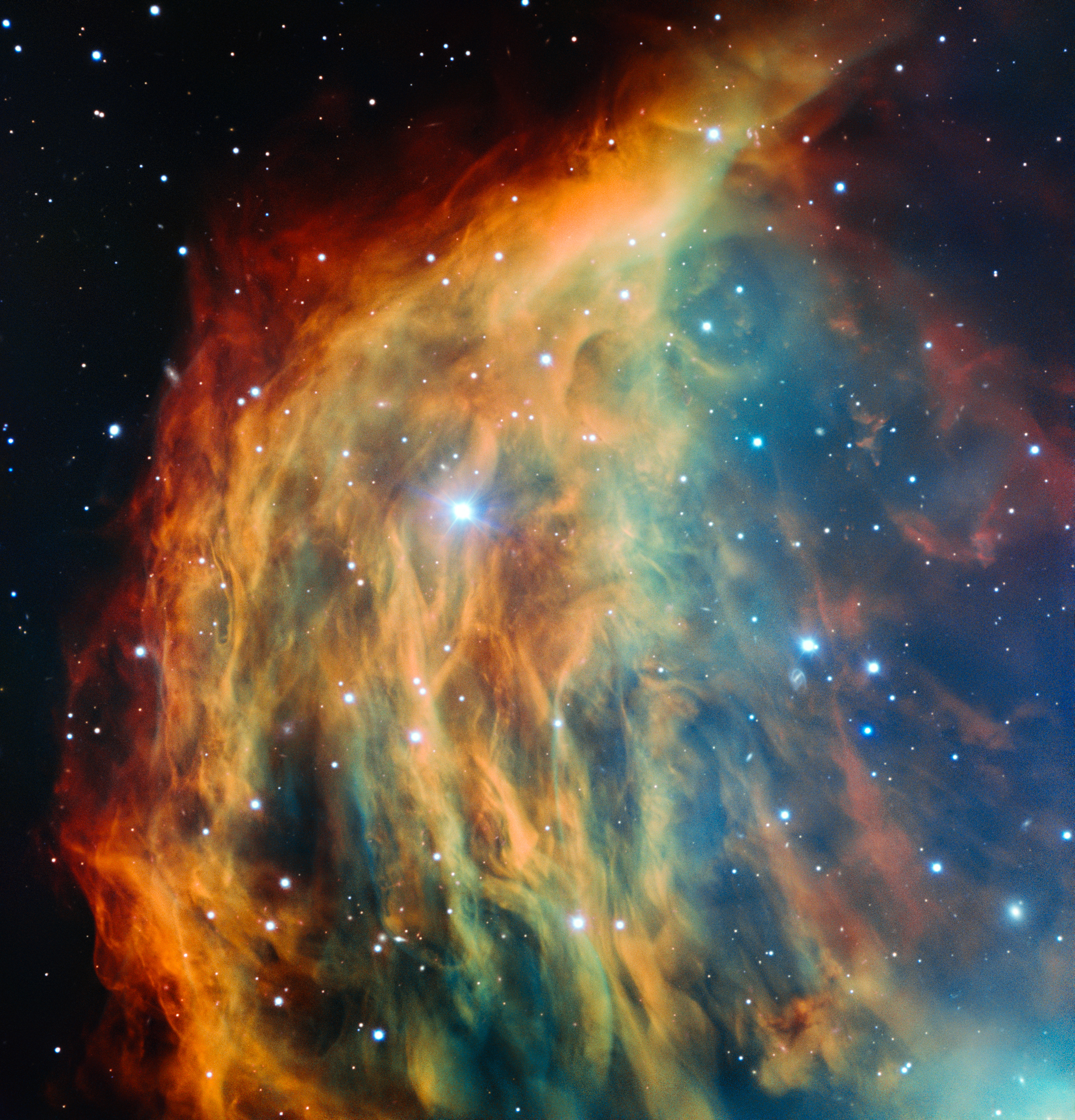
編み込まれた蛇行する輝くガスのフィラメントが、この星雲の通称であるメデューサ星雲を連想させます。アベル21としても知られるこのメデューサ星雲は、ふたご座の南端に沿って約1500光年離れたところにある古い惑星状星雲です。神話上の同名の人物のように、この星雲は劇的な変容と関連付けられています。惑星状星雲段階は、太陽のような低質量星が赤色巨星から高温の白色矮星へと変容し、その過程で外層を剥ぎ取る、進化の最終段階を表しています。高温の星からの紫外線放射が星雲の輝きを生み出しています。この望遠鏡による近接画像では、無関係の明るい前景の星が中心付近にありますが、メデューサ星雲の変容中の中心星は、実際には中心より下、フレームの右側にある暗い星です。メデューサ星雲の直径は4光年以上と推定されています。
原文(English)
Braided, serpentine filaments of glowing gas suggest this nebula's popular name, The Medusa Nebula. Also known as Abell 21, this Medusa is an old planetary nebula some 1,500 light-years away along the southern border of the constellation Gemini. Like its mythological namesake, the nebula is associated with a dramatic transformation. The planetary nebula phase represents a final stage in the evolution of low mass stars like the sun, as they transform themselves from red giants to hot white dwarf stars and in the process shrug off their outer layers. Ultraviolet radiation from the hot star powers the nebular glow. An unrelated, bright, foreground star is near center in this close-up, telescopic view, while the Medusa's transforming central star is actually the dimmer star below center and toward the right-hand part of the frame. The Medusa Nebula is estimated to be over 4 light-years across.
\ この感動を宇宙仲間にシェア /
宇宙をXでシェア
© European Southern Observatory / APOD