
🚀 宇宙の記憶・カレンダー検索
🚀 象徴的な写真:
APOD第1回
🚀 創造の柱
🚀 スピリット火星着陸
🚀 ハッブル超深宇宙
🚀 地球へようこそ|ブルー・マーブル
🚀 エンケラドス
🚀 ベテルギウス
🚀 火星着陸
🚀 青い夕焼け
🚀 冥王星のハート
🚀 皆既日食
🚀 アースライズ再構築
🚀 ブラックホール
🚀 ウェッブ初画像
🚀 アポロ11着陸
APOD30周年(2025年6月16日)
満月、地球全体
Full Moon, Full Earth
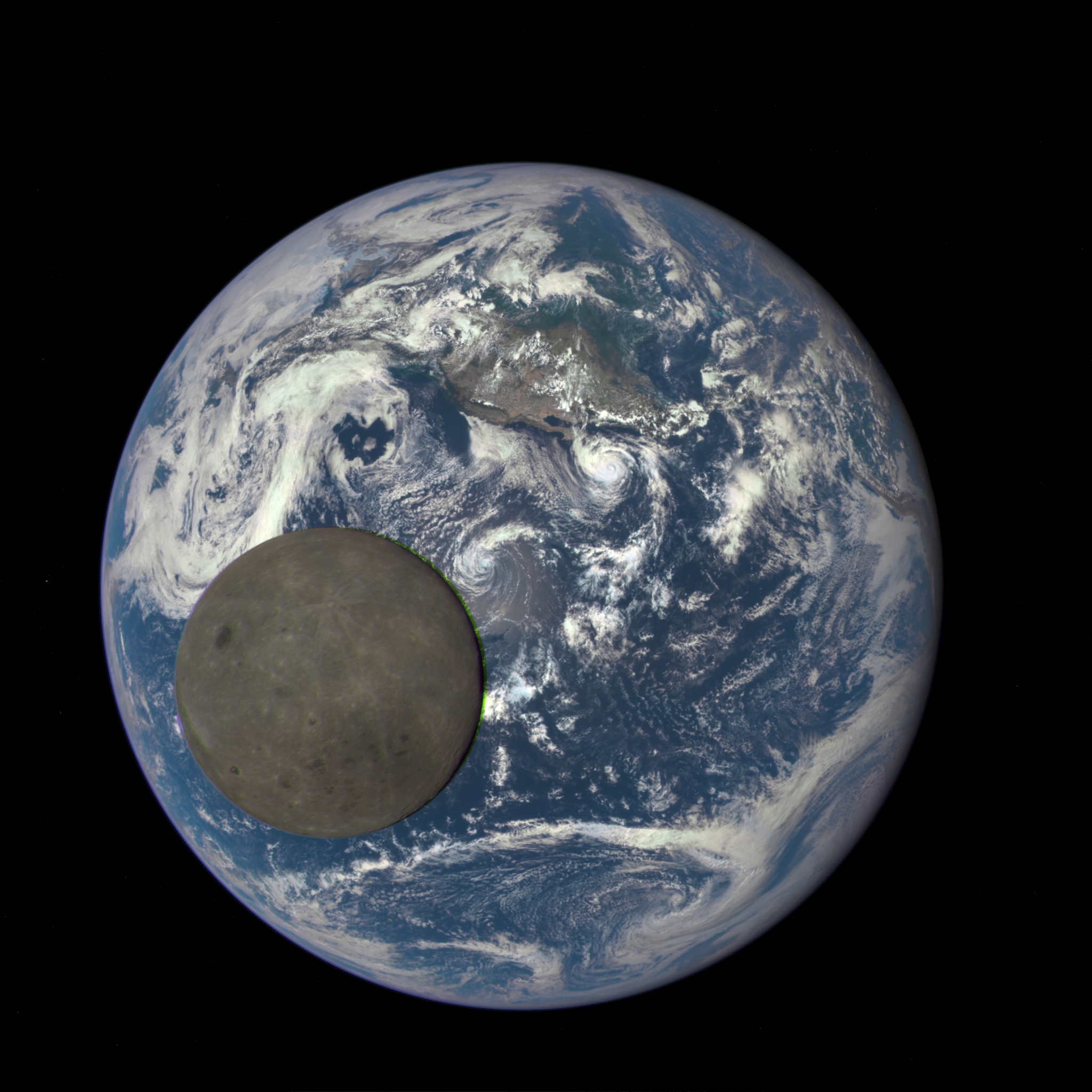
7月16日は新月でした。地球の表面に面している月面は影になっていました。しかし、その日、地球から100万マイル離れた深宇宙気候観測衛星(DSCOVR)の地球多色撮像カメラ(EPIC)は、満月のように見える月が満月の地球の前を横切る様子を捉えました。実際には、月の軌道の外側、地球と太陽の間にある衛星の位置から見ると、完全に照らされている月の半球は、あまり知られていない裏側です。宇宙時代の幕開け以来知られるようになった裏側には、月の常に地球に面している半球に広がる暗い月の海がほとんどありません。左上にある裏側のモスクワ海(Mare Moscoviense)の小さな暗い点だけがはっきりと見えます。地球の北極は11時の位置にあり、ハリケーン・ドロレスが襲った北アメリカ大陸は中央付近にあります。月の縁付近にはわずかな色の変化が見られますが、これはカメラが異なるカラーフィルターを通して連続して撮影した複数の画像を合成する際に、月が視野内を移動することによって生じるアーティファクトです。DSCOVRは、宇宙天気予報のために地球と太陽風を監視している際に、月に約2回、月の軌道面を横切る際に、月と地球が一緒に写った同様の画像を撮影することができます。
原文(English)
The Moon was new on July 16. Its familiar nearside facing the surface of planet Earth was in shadow. But on that date a million miles away, the Deep Space Climate Observatory (DSCOVR) spacecraft's Earth Polychromatic Imaging Camera (EPIC) captured this view of an apparently Full Moon crossing in front of a Full Earth. In fact, seen from the spacecraft's position beyond the Moon's orbit and between Earth and Sun, the fully illuminated lunar hemisphere is the less familiar farside. Only known since the dawn of the space age, the farside is mostly devoid of dark lunar maria that sprawl across the Moon's perpetual Earth-facing hemisphere. Only the small dark spot of the farside's Mare Moscoviense (Sea of Moscow) is clear, at the upper left. Planet Earth's north pole is near 11 o'clock, with the North America visited by Hurricane Dolores near center. Slight color shifts are visible around the lunar edge, an artifact of the Moon's motion through the field caused by combining the camera's separate exposures taken in quick succession through different color filters. While monitoring the Earth and solar wind for space weather forcasts, about twice a year DSCOVR can capture similar images of Moon and Earth together as it crosses the orbital plane of the Moon.
\ この感動を宇宙仲間にシェア /
宇宙をXでシェア
© NASA / APOD