
🚀 宇宙の記憶・カレンダー検索
🚀 象徴的な写真:
APOD第1回
🚀 創造の柱
🚀 スピリット火星着陸
🚀 ハッブル超深宇宙
🚀 地球へようこそ|ブルー・マーブル
🚀 エンケラドス
🚀 ベテルギウス
🚀 火星着陸
🚀 青い夕焼け
🚀 冥王星のハート
🚀 皆既日食
🚀 アースライズ再構築
🚀 ブラックホール
🚀 ウェッブ初画像
🚀 アポロ11着陸
APOD30周年(2025年6月16日)
レーニア山上空の流星と天の川
Meteors and Milky Way over Mount Rainier
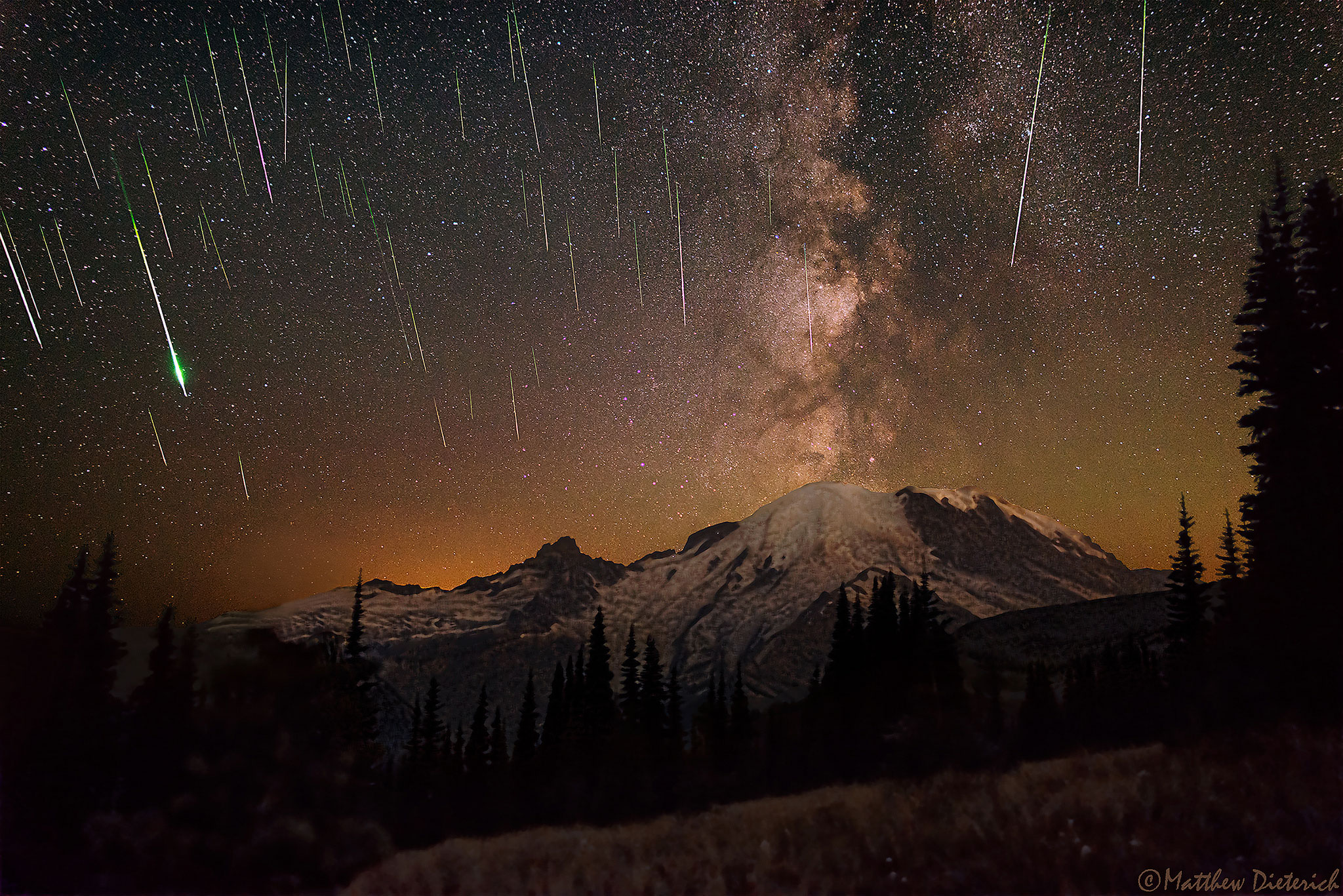
見た目とは裏腹に、空が落ちてくるわけではありません。しかし、2週間前には、彗星の塵の微粒子が地球に降り注いでいました。ここに掲載されているのは、アメリカ合衆国ワシントン州のレーニア山上空で撮影されたペルセウス座流星群です。この画像は2時間のタイムラプス動画から作成され、20個以上の流星が捉えられています。左側の画像では、そのうちの1つが劇的に明るくなっています。流星群は通常1秒未満しか続きませんが、カメラは地球の大気圏で崩壊する際の色の変化を捉えることができました。ここで最初に見られる緑色は、地球の大気中の原子によって流星から剥ぎ取られた少量のマグネシウム原子が光っていることを示している可能性があります。さらに、レーニア山の雪に覆われた山頂の真後ろから、天の川銀河の中心帯が同時に昇っている様子も撮影されています。11月中旬には、別の彗星の破片が地球に衝突するしし座流星群が見られると予想されています。APODのFacebookページ(英語またはスペイン語)もご覧ください。
原文(English)
Despite appearances, the sky is not falling. Two weeks ago, however, tiny bits of comet dust were. Featured here is the Perseids meteor shower as captured over Mt. Rainier, Washington, USA. The image was created from a two-hour time lapse video, snaring over 20 meteors, including one that brightened dramatically on the image left. Although each meteor train typically lasts less than a second, the camera was able to capture their color progressions as they disintegrated in the Earth's atmosphere. Here an initial green tint may be indicative of small amounts of glowing magnesium atoms that were knocked off the meteor by atoms in the Earth's atmosphere. To cap things off, the central band of our Milky Way Galaxy was simultaneously photographed rising straight up behind the snow-covered peak of Mt. Rainier. Another good meteor shower is expected in mid-November when debris from a different comet intersects Earth as the Leonids. Follow APOD on Facebook: in English or Spanish
\ この感動を宇宙仲間にシェア /
宇宙をXでシェア
© Matthew Dieterich / APOD