
🚀 宇宙の記憶・カレンダー検索
🚀 象徴的な写真:
APOD第1回
🚀 創造の柱
🚀 スピリット火星着陸
🚀 ハッブル超深宇宙
🚀 地球へようこそ|ブルー・マーブル
🚀 エンケラドス
🚀 ベテルギウス
🚀 火星着陸
🚀 青い夕焼け
🚀 冥王星のハート
🚀 皆既日食
🚀 アースライズ再構築
🚀 ブラックホール
🚀 ウェッブ初画像
🚀 アポロ11着陸
APOD30周年(2025年6月16日)
フレアと銀河
The Flare and the Galaxy
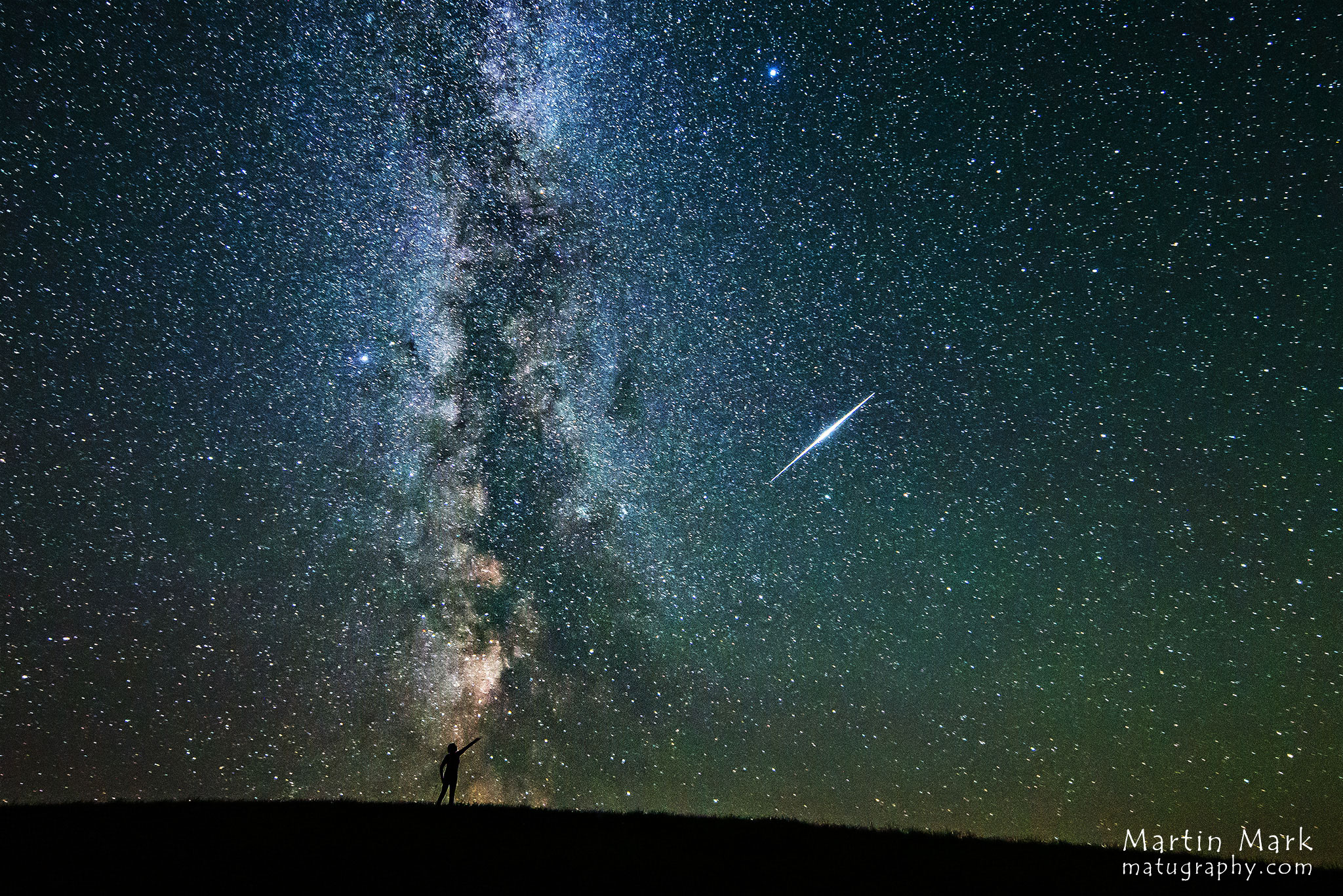
この人物は稲妻を投げているのでしょうか?いいえ。見た目とは裏腹に、この人物は実際には明るいイリジウムフレアの方向を指差しています。イリジウムフレアとは、地球を周回する通信衛星からの太陽光の瞬間的な反射現象です。イリジウム衛星が周回するにつれて、反射アンテナが観測者と太陽の間に整列し、夜空のどの星よりも明るい閃光を生み出します。イリジウムフレアは通常数秒間続き、ほとんどの流星よりも長く続きます。また、流星とは異なり、フレアは対称的で予測可能です。今回取り上げたフレアはイリジウム衛星15号によるもので、先週エストニア南部上空で発生しました。この綿密に計画された画像では、背景には壮大な夜空が広がり、天の川銀河の中心帯が画像の中央を垂直に走っています。回顧:今日のAPODの歴史
原文(English)
Is this person throwing a lightning bolt? No. Despite appearances, this person is actually pointing in the direction of a bright Iridium flare, a momentary reflection of sunlight off of a communications satellite in orbit around the Earth. As the Iridium satellite orbits, reflective antennas became aligned between the observer and the Sun to create a flash brighter than any star in the night sky. Iridium flares typically last several seconds, longer than most meteors. Also unlike meteors, the flares are symmetric and predictable. The featured flare involved Iridium satellite 15 and occurred over southern Estonia last week. In this well-planned image, a spectacular night sky appears in the background, complete with the central band of our Milky Way Galaxy running vertically up the image center. Retrospective: Today in APOD History
\ この感動を宇宙仲間にシェア /
宇宙をXでシェア
© Martin Mark / APOD