
🚀 宇宙の記憶・カレンダー検索
🚀 象徴的な写真:
APOD第1回
🚀 創造の柱
🚀 スピリット火星着陸
🚀 ハッブル超深宇宙
🚀 地球へようこそ|ブルー・マーブル
🚀 エンケラドス
🚀 ベテルギウス
🚀 火星着陸
🚀 青い夕焼け
🚀 冥王星のハート
🚀 皆既日食
🚀 アースライズ再構築
🚀 ブラックホール
🚀 ウェッブ初画像
🚀 アポロ11着陸
APOD30周年(2025年6月16日)
季節的な筋状痕跡は、火星に最近まで水が流れていたことを示唆している。
Seasonal Streaks Point to Recent Flowing Water on Mars
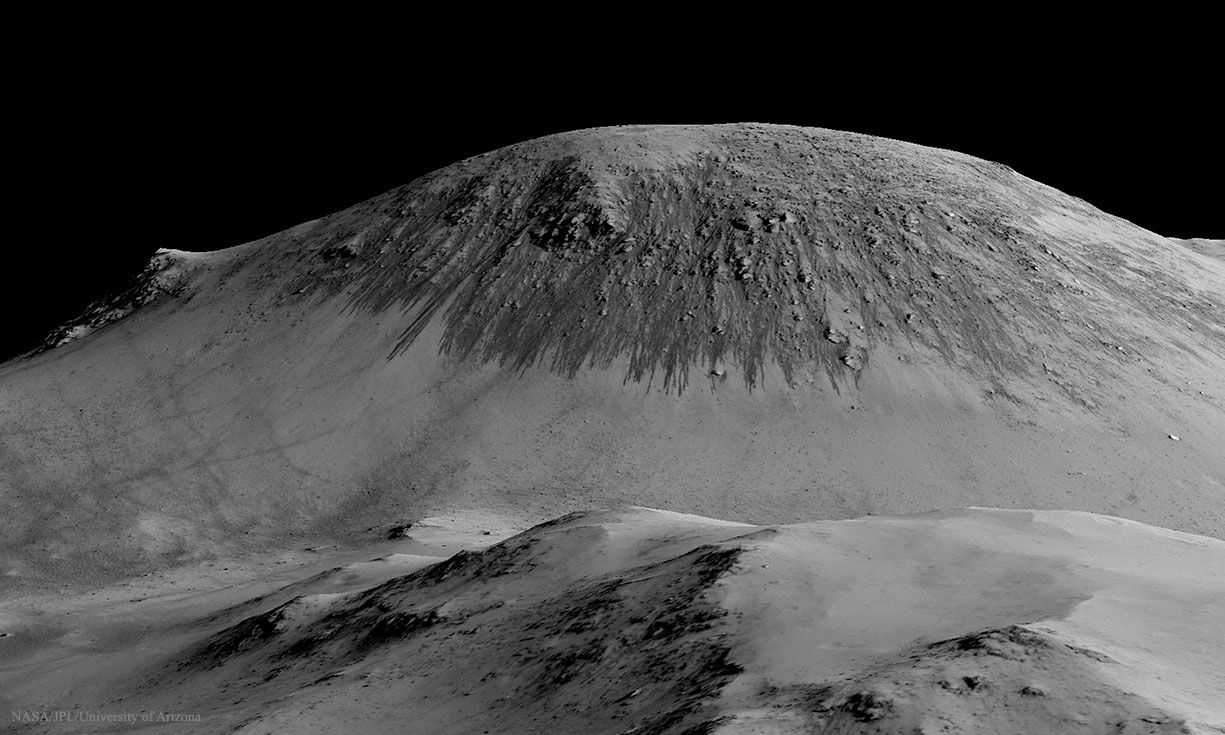
火星に見られるこれらの変化する筋状の模様は、一体何によって作られているのでしょうか? 繰り返し斜面線(RSL)と呼ばれるこれらの暗い模様は、丘やクレーターの斜面から始まりますが、通常は底まで伸びていません。さらに珍しいのは、これらの筋状の模様が季節によって変化し、暖かい時期には新しく現れて成長し、冬には消えてしまうことです。最近の化学分析を含む多くの研究の結果、これらの筋状の模様は、流れながら蒸発する塩水が新たに発生することによって作られているという有力な仮説が浮上しました。塩水の供給源はまだ不明ですが、火星の大気からの凝縮と地下貯水池の2つの可能性が考えられます。興味深い推論としては、これらの塩水の流れが塩分濃度が高すぎなければ、現在でも火星で微生物の生命を維持できる可能性があるということです。ホロウィッツ・クレーター内の丘を捉えた特集画像は、2006年から火星からデータを送り続けている探査機マーズ・リコネッサンス・オービターに搭載された機器によって調査されたものです。回顧:今日のAPODの歴史
原文(English)
What creates these changing streaks on Mars? Called Recurring Slope Linea (RSL), these dark features start on the slopes of hills and craters but don't usually extend to the bottom. What's even more unusual is that these streaks appear to change with the season, appearing fresh and growing during warm weather and disappearing during the winter. After much study, including a recent chemical analyses, a leading hypothesis has emerged that these streaks are likely created by new occurrences of liquid salty water that evaporates as it flows. The source for the briny water is still unclear, with two possibilities being condensation from the Martian atmosphere and underground reservoirs. An exciting inference is that if these briny flows are not too salty, they may be able to support microbial life on Mars even today. The featured image of a hill inside Horowitz Crater was investigated by instruments aboard the robotic Mars Reconnaissance Orbiter that has been returning data from Mars since 2006. Retrospective: Today in APOD History
\ この感動を宇宙仲間にシェア /
宇宙をXでシェア
© NASA / APOD