
🚀 宇宙の記憶・カレンダー検索
🚀 象徴的な写真:
APOD第1回
🚀 創造の柱
🚀 スピリット火星着陸
🚀 ハッブル超深宇宙
🚀 地球へようこそ|ブルー・マーブル
🚀 エンケラドス
🚀 ベテルギウス
🚀 火星着陸
🚀 青い夕焼け
🚀 冥王星のハート
🚀 皆既日食
🚀 アースライズ再構築
🚀 ブラックホール
🚀 ウェッブ初画像
🚀 アポロ11着陸
APOD30周年(2025年6月16日)
ペルセウスの星屑
Stardust in Perseus
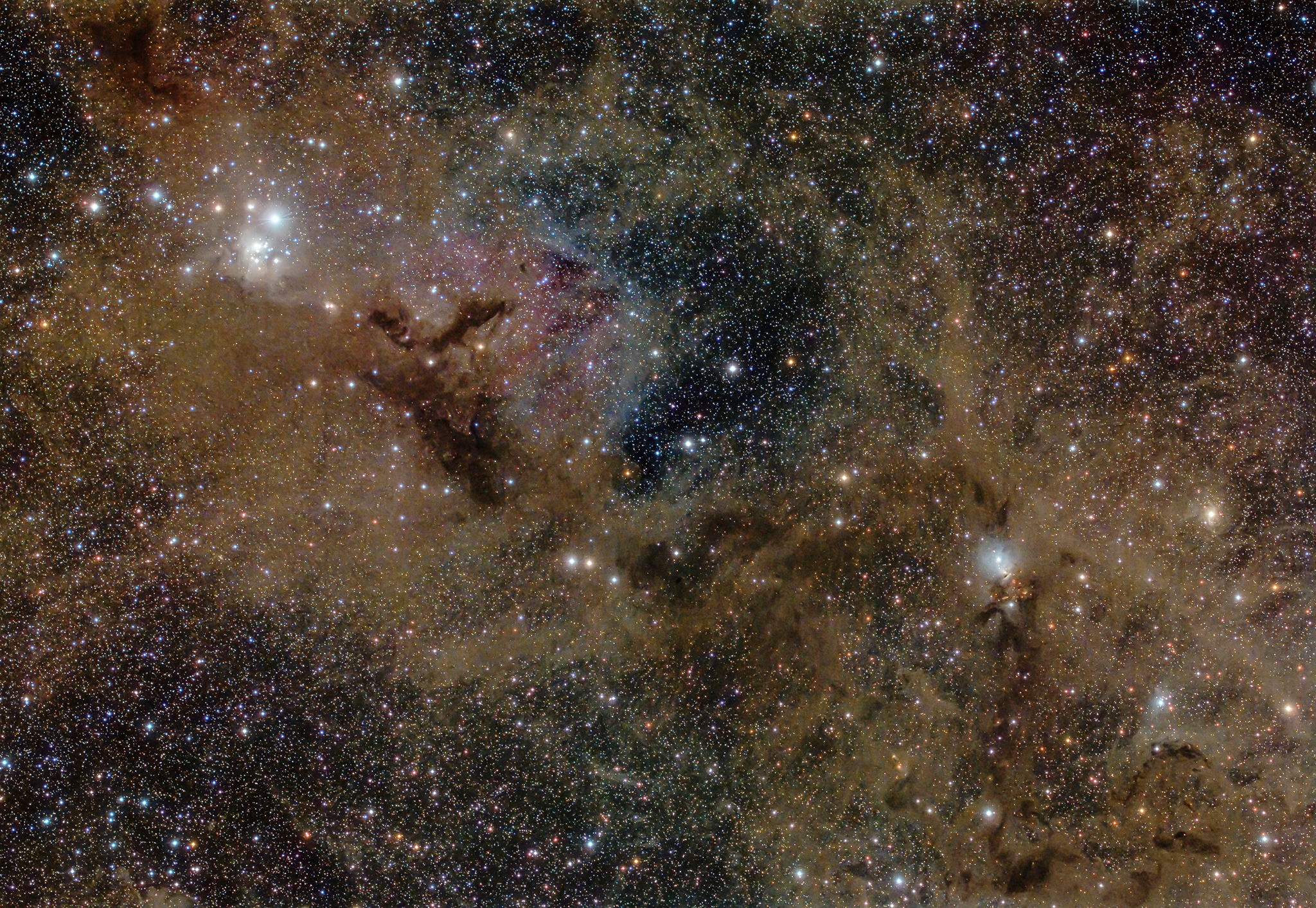
この宇宙の塵、ガス、星の広がりは、英雄的なペルセウス座の空の約6度を占めています。美しい空の風景の左上には、興味深い若い星団IC 348と、その隣にあるフライングゴースト星雲があります。右側には、別の活発な星形成領域NGC 1333が、約850光年離れた巨大なペルセウス分子雲の外縁で、暗く塵の多い触手でつながっています。視野の周りには、水素ガスのかすかな赤みがかった輝きとともに、他の塵の星雲が散らばっています。実際、宇宙の塵は、新しく形成された星や若い恒星状天体、つまり原始星を、光学望遠鏡の探査から隠してしまう傾向があります。原始星は、自己重力によって収縮し、塵の分子雲に埋め込まれた高密度の核から形成されます。分子雲の推定距離では、この視野はほぼ90光年に及びます。
原文(English)
This cosmic expanse of dust, gas, and stars covers some 6 degrees on the sky in the heroic constellation Perseus. At upper left in the gorgeous skyscape is the intriguing young star cluster IC 348 and neighboring Flying Ghost Nebula. At right, another active star forming region NGC 1333 is connected by dark and dusty tendrils on the outskirts of the giant Perseus Molecular Cloud, about 850 light-years away. Other dusty nebulae are scattered around the field of view, along with the faint reddish glow of hydrogen gas. In fact, the cosmic dust tends to hide the newly formed stars and young stellar objects or protostars from prying optical telescopes. Collapsing due to self-gravity, the protostars form from the dense cores embedded in the dusty molecular cloud. At the molecular cloud's estimated distance, this field of view would span almost 90 light-years.
\ この感動を宇宙仲間にシェア /
宇宙をXでシェア
© Lynn Hilborn / APOD