
🚀 宇宙の記憶・カレンダー検索
🚀 象徴的な写真:
APOD第1回
🚀 創造の柱
🚀 スピリット火星着陸
🚀 ハッブル超深宇宙
🚀 地球へようこそ|ブルー・マーブル
🚀 エンケラドス
🚀 ベテルギウス
🚀 火星着陸
🚀 青い夕焼け
🚀 冥王星のハート
🚀 皆既日食
🚀 アースライズ再構築
🚀 ブラックホール
🚀 ウェッブ初画像
🚀 アポロ11着陸
APOD30周年(2025年6月16日)
スターバースト銀河メシエ94
Starburst Galaxy Messier 94
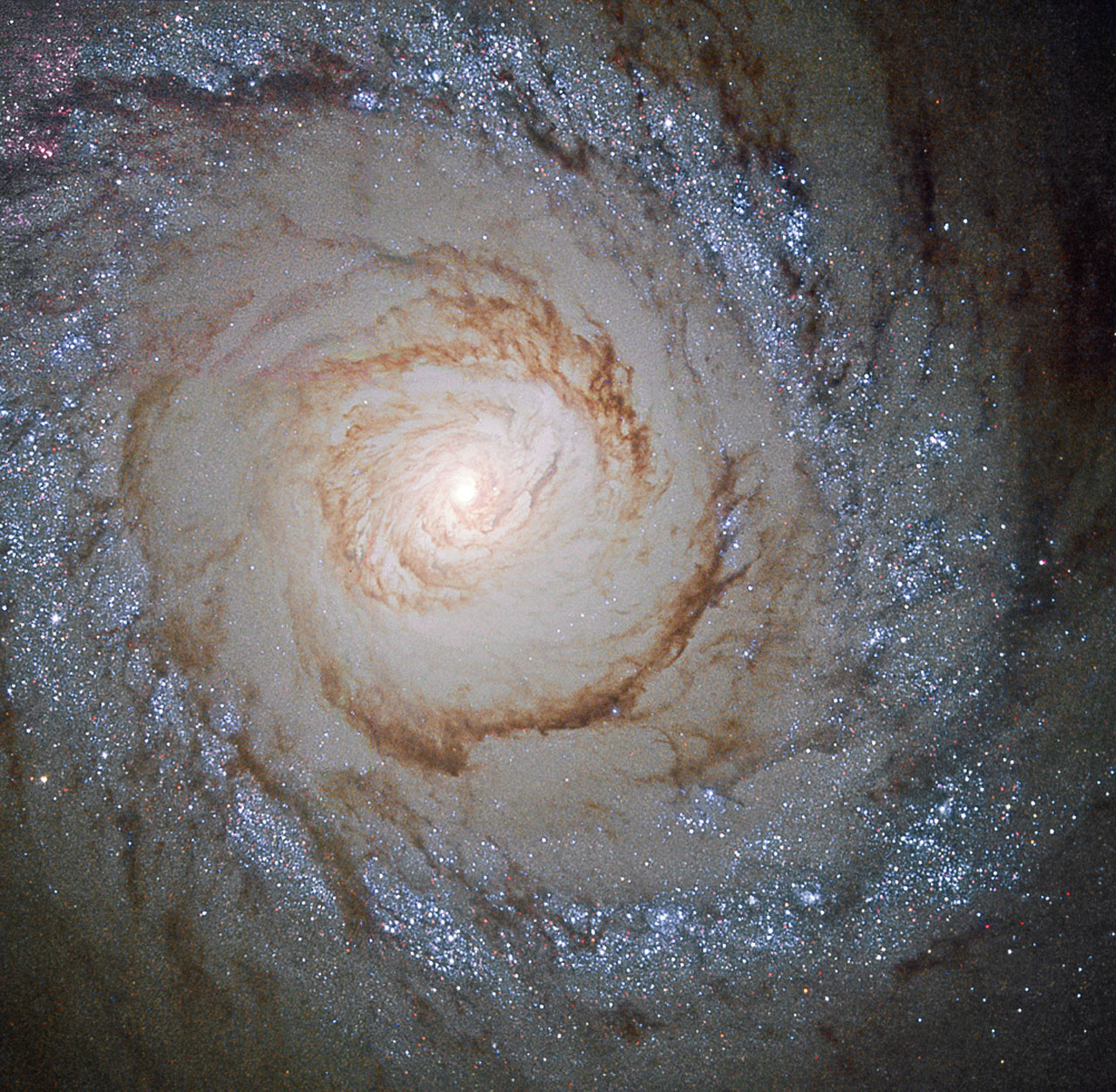
美しい島のような宇宙、メシエ94は、北天のりょうけん座に位置し、地球からわずか1500万光年の距離にあります。地上の天文学者にとって人気の観測対象であるこの正面を向いた渦巻銀河は、直径約3万光年で、渦状腕が広大な円盤の外縁部を横切っています。しかし、ハッブル宇宙望遠鏡のこの視野は、M94の中心領域を約7000光年にわたって捉えています。鮮明なクローズアップ画像では、銀河のコンパクトで明るい核と目立つ内側の塵の帯が、若い大質量星の見事な青みがかった環に囲まれている様子が確認できます。この環にある大質量星はすべて1000万年未満である可能性が高く、銀河が明確な急速な星形成の時代を経験したことを示しています。その結果、小さくて明るい中心核はセイファート型活動銀河の典型的な特徴である一方、M94はスターバースト銀河としても知られています。M94は比較的地球に近いため、天文学者はこの銀河で星形成が活発化した理由を詳細に調べることができます。
原文(English)
Beautiful island universe Messier 94 lies a mere 15 million light-years distant in the northern constellation of the hunting dogs, Canes Venatici. A popular target for earth-based astronomers, the face-on spiral galaxy is about 30,000 light-years across, with spiral arms sweeping through the outskirts of its broad disk. But this Hubble Space Telescope field of view spans about 7,000 light-years or so across M94's central region. The sharp close-up examines the galaxy's compact, bright nucleus and prominent inner dust lanes, surrounded by a remarkable bluish ring of young, massive stars. The massive stars in the ring are all likely less than 10 million years old, indicating the galaxy experienced a well-defined era of rapid star formation. As a result, while the small, bright nucleus is typical of the Seyfert class of active galaxies, M94 is also known as a starburst galaxy. Because M94 is relatively nearby, astronomers can explore in detail reasons for the galaxy's burst of star formation.
\ この感動を宇宙仲間にシェア /
宇宙をXでシェア
© NASA / APOD