
🚀 宇宙の記憶・カレンダー検索
🚀 象徴的な写真:
APOD第1回
🚀 創造の柱
🚀 スピリット火星着陸
🚀 ハッブル超深宇宙
🚀 地球へようこそ|ブルー・マーブル
🚀 エンケラドス
🚀 ベテルギウス
🚀 火星着陸
🚀 青い夕焼け
🚀 冥王星のハート
🚀 皆既日食
🚀 アースライズ再構築
🚀 ブラックホール
🚀 ウェッブ初画像
🚀 アポロ11着陸
APOD30周年(2025年6月16日)
ヴェローナ・ルペス:太陽系で最も高い崖
Verona Rupes: Tallest Known Cliff in the Solar System
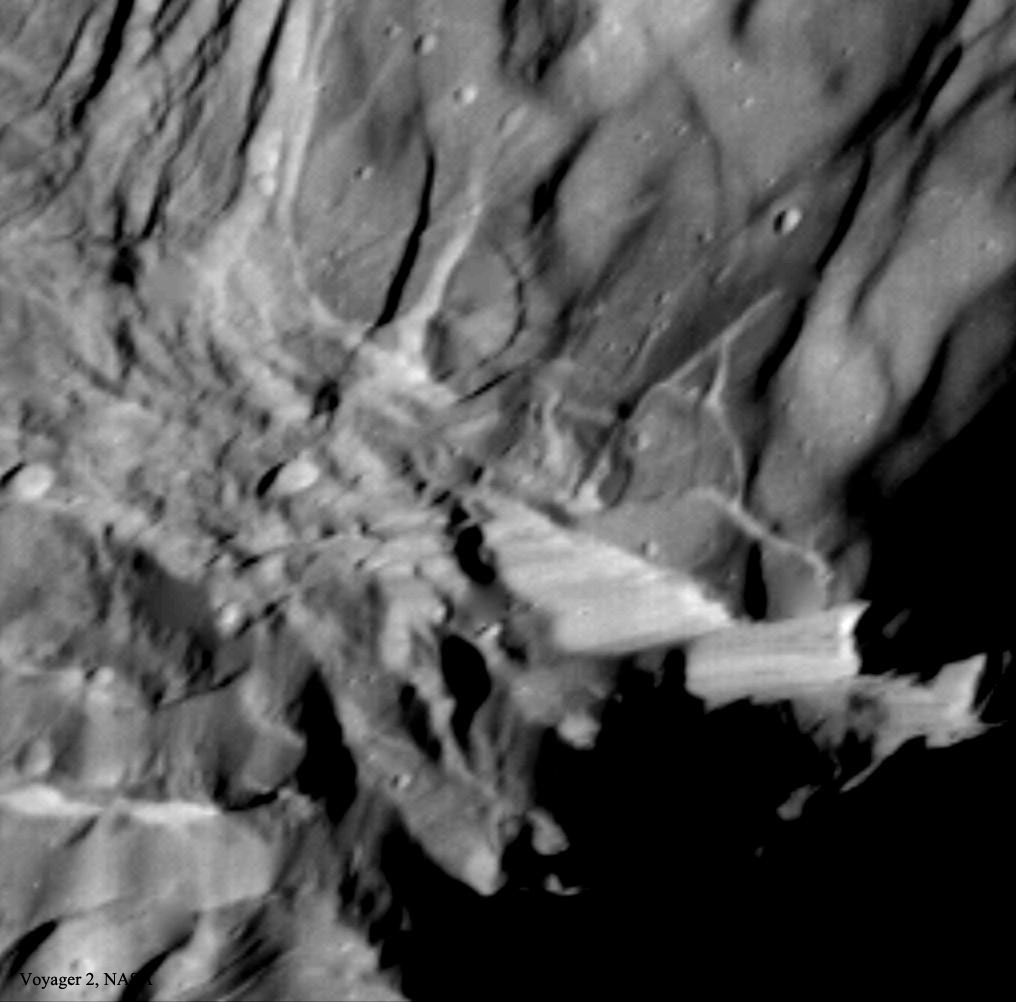
太陽系で最も高い崖から飛び降りても生き残れるでしょうか? おそらく可能です。天王星の衛星ミランダにあるヴェローナ・ルペスは、深さ20キロメートルと推定されており、地球のグランドキャニオンの10倍の深さです。ミランダの重力が低いことを考えると、スリルを求める冒険家が頂上から落下するのに約12分かかり、レースカー並みの速度、時速約200キロメートルで底に到達します。それでも、適切なエアバッグによる保護があれば、落下しても生き残れるかもしれません。ヴェローナ・ルペスの特集画像は、1986年に通過したボイジャー2号探査機によって撮影されました。この巨大な崖がどのように形成されたかは不明ですが、大きな衝突や地殻変動に関連している可能性があります。
原文(English)
Could you survive a jump off the tallest cliff in the Solar System? Quite possibly. Verona Rupes on Uranus' moon Miranda is estimated to be 20 kilometers deep -- ten times the depth of the Earth's Grand Canyon. Given Miranda's low gravity, it would take about 12 minutes for a thrill-seeking adventurer to fall from the top, reaching the bottom at the speed of a racecar -- about 200 kilometers per hour. Even so, the fall might be survivable given proper airbag protection. The featured image of Verona Rupes was captured by the passing Voyager 2 robotic spacecraft in 1986. How the giant cliff was created remains unknown, but is possibly related to a large impact or tectonic surface motion.
\ この感動を宇宙仲間にシェア /
宇宙をXでシェア
© NASA / APOD