
🚀 宇宙の記憶・カレンダー検索
🚀 象徴的な写真:
APOD第1回
🚀 創造の柱
🚀 スピリット火星着陸
🚀 ハッブル超深宇宙
🚀 地球へようこそ|ブルー・マーブル
🚀 エンケラドス
🚀 ベテルギウス
🚀 火星着陸
🚀 青い夕焼け
🚀 冥王星のハート
🚀 皆既日食
🚀 アースライズ再構築
🚀 ブラックホール
🚀 ウェッブ初画像
🚀 アポロ11着陸
APOD30周年(2025年6月16日)
高画質で見るラグーン星雲
The Lagoon Nebula in High Definition
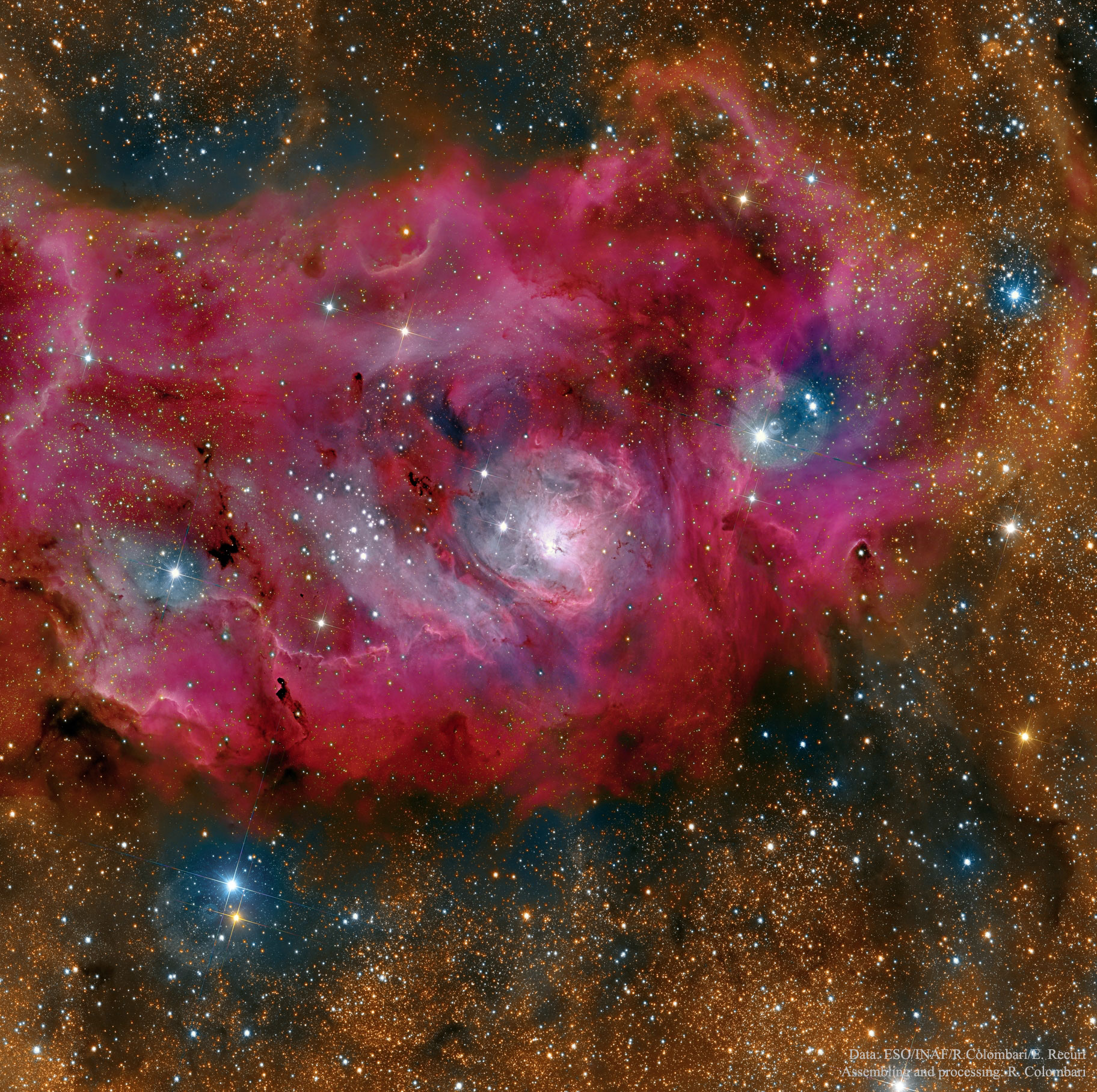
ラグーン星雲では星々がガスや塵と戦っていますが、写真家たちは勝利を収めています。M8としても知られるこの写真映えする星雲は、いて座の方向で双眼鏡なしでも見ることができます。星形成の激しい過程は、色だけでなく混沌とした様相も生み出します。赤く輝くガスは、高エネルギーの星の光が星間水素ガスに衝突することによって生じます。M8を網目状に覆う暗い塵のフィラメントは、低温の巨星の大気や超新星爆発の残骸の中で生成されました。今日私たちが見ているM8からの光は、約5000年前に発せられたものです。光がM8のこの部分を横断するのに約50年かかります。この画像を構成するために使用されたデータは、ESOのVLTサーベイ望遠鏡(VST)の広視野カメラOmegaCamで撮影されました。無料ダウンロード:APOD 2017カレンダー:NASA画像
原文(English)
Stars are battling gas and dust in the Lagoon Nebula but the photographers are winning. Also known as M8, this photogenic nebula is visible even without binoculars towards the constellation of Sagittarius. The energetic processes of star formation create not only the colors but the chaos. The red-glowing gas results from high-energy starlight striking interstellar hydrogen gas. The dark dust filaments that lace M8 were created in the atmospheres of cool giant stars and in the debris from supernovae explosions. The light from M8 we see today left about 5,000 years ago. Light takes about 50 years to cross this section of M8. Data used to compose this image was taken with the wide-field camera OmegaCam of the ESO's VLT Survey Telescope (VST). Free Download: APOD 2017 Calendar: NASA Images
\ この感動を宇宙仲間にシェア /
宇宙をXでシェア
© R. Colombari / APOD