
🚀 宇宙の記憶・カレンダー検索
🚀 象徴的な写真:
APOD第1回
🚀 創造の柱
🚀 スピリット火星着陸
🚀 ハッブル超深宇宙
🚀 地球へようこそ|ブルー・マーブル
🚀 エンケラドス
🚀 ベテルギウス
🚀 火星着陸
🚀 青い夕焼け
🚀 冥王星のハート
🚀 皆既日食
🚀 アースライズ再構築
🚀 ブラックホール
🚀 ウェッブ初画像
🚀 アポロ11着陸
APOD30周年(2025年6月16日)
NGC 6357:星空のワンダーランド
NGC 6357: Stellar Wonderland
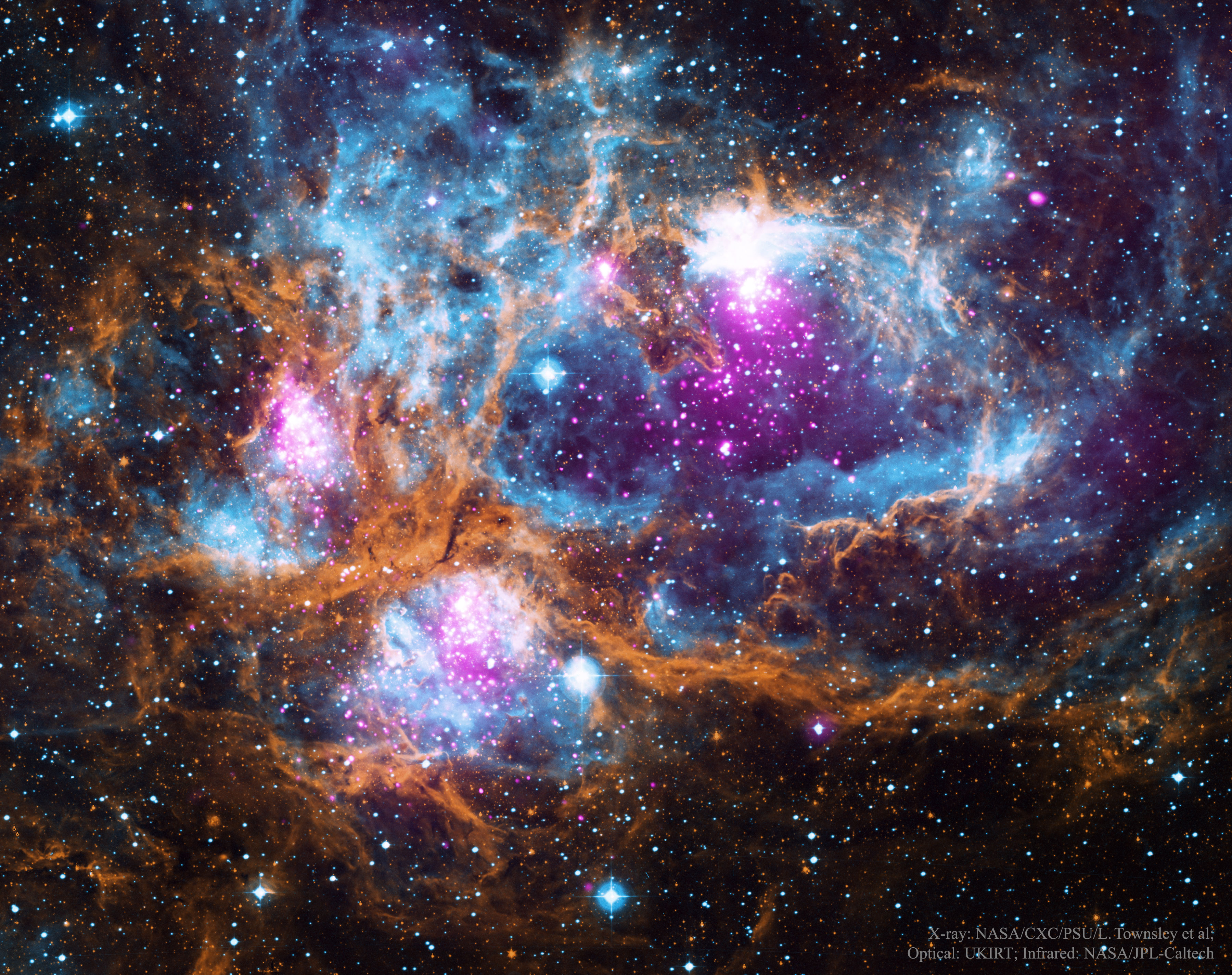
理由は不明ですが、NGC 6357 ではこれまで発見された中で最も質量が大きい星がいくつか形成されています。この複雑な星形成のワンダーランドは、巨大な星団の巨大な空洞を取り囲む無数の塵とガスのフィラメントで構成されています。複雑なパターンは、星間風、放射圧、磁場、重力の複雑な相互作用によって引き起こされます。掲載されている画像には、スーパーコスモス スカイ サーベイの一環としてハワイの UKIRT 望遠鏡で撮影された可視光 (青) だけでなく、NASA のスピッツァー宇宙望遠鏡 (オレンジ) からの赤外線と、NASA のチャンドラ X 線観測衛星 (ピンク) からの X 線も含まれています。NGC 6357 は、約 100 光年にわたって広がり、さそり座の方向に約 5,500 光年離れています。NGC 6357 で現在見られる最も質量が大きい星は、1,000 万年以内に爆発するでしょう。
原文(English)
For reasons unknown, NGC 6357 is forming some of the most massive stars ever discovered. This complex wonderland of star formation consists of numerous filaments of dust and gas surrounding huge cavities of massive star clusters. The intricate patterns are caused by complex interactions between interstellar winds, radiation pressures, magnetic fields, and gravity. The featured image includes not only visible light taken by the UKIRT Telescope in Hawaii (blue) as part of the SuperCosmos Sky Surveys, but infrared light from NASA's orbiting Spitzer Space Telescope (orange) and X-ray light from NASA's orbiting Chandra X-ray Observatory (pink). NGC 6357 spans about 100 light years and lies about 5,500 light years away toward the constellation of the Scorpion. Within 10 million years, the most massive stars currently seen in NGC 6357 will have exploded.
\ この感動を宇宙仲間にシェア /
宇宙をXでシェア
© NASA / APOD