
🚀 宇宙の記憶・カレンダー検索
🚀 象徴的な写真:
APOD第1回
🚀 創造の柱
🚀 スピリット火星着陸
🚀 ハッブル超深宇宙
🚀 地球へようこそ|ブルー・マーブル
🚀 エンケラドス
🚀 ベテルギウス
🚀 火星着陸
🚀 青い夕焼け
🚀 冥王星のハート
🚀 皆既日食
🚀 アースライズ再構築
🚀 ブラックホール
🚀 ウェッブ初画像
🚀 アポロ11着陸
APOD30周年(2025年6月16日)
月の裏側
Lunar Farside
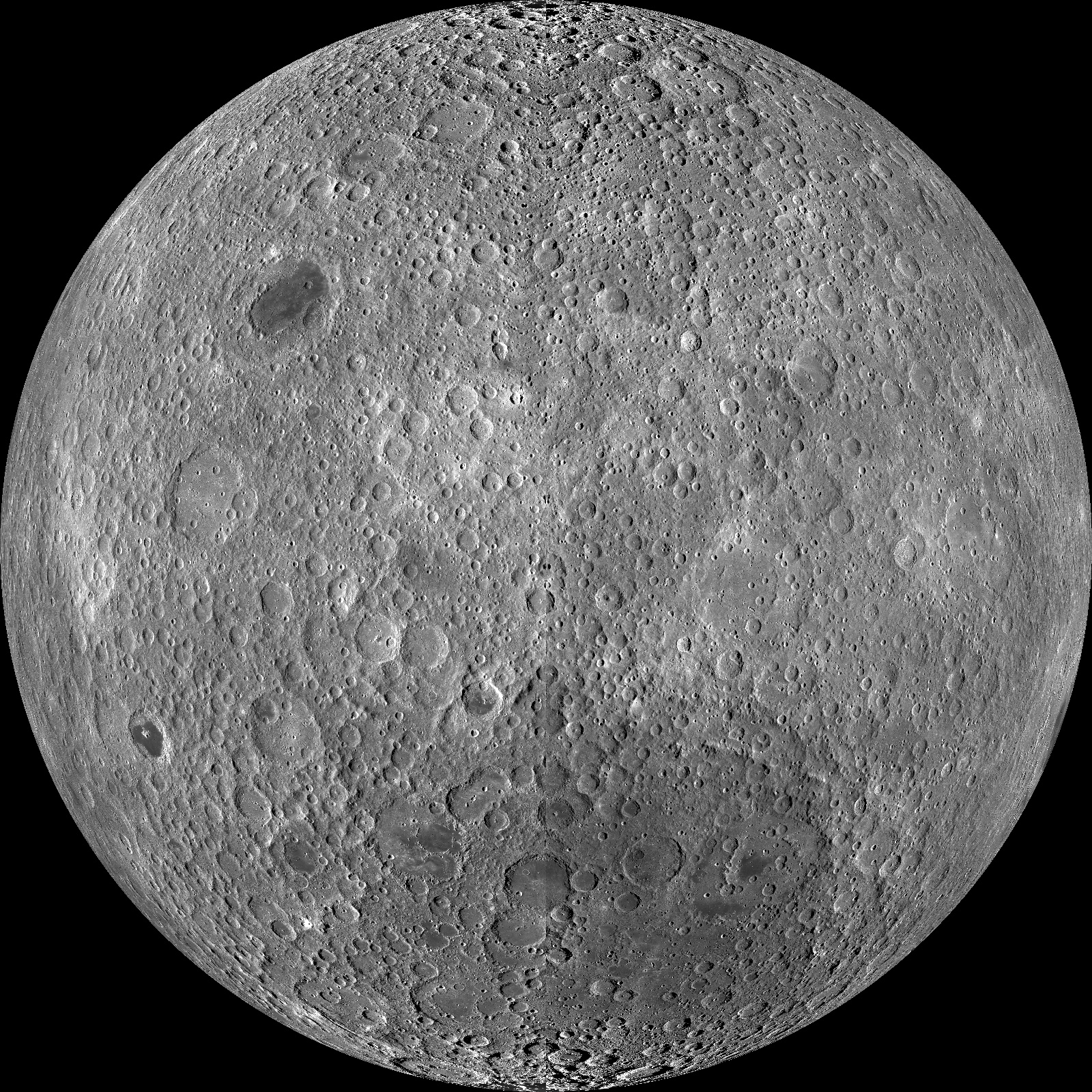
潮汐固定された同期回転によって、月は常に地球の住人から見慣れた表側を見える。しかし、月の軌道上からは、月の裏側も見慣れたものになる。実際、この鮮明な画像は、月周回探査機ルナー・リコネッサンス・オービターの広角カメラで撮影されたモザイク画像で、月の裏側を中心に捉えている。2009年11月から2011年2月にかけて撮影された1万5000枚以上の画像からなるグローバルモザイク画像の一部で、最高解像度版では1ピクセルあたり100メートルのスケールで特徴がわかる。驚くべきことに、裏側の荒々しく傷ついた表面は、滑らかで暗い月の海に覆われた表側とは大きく異なって見える。その理由として考えられるのは、裏側の地殻が厚いため、内部の溶融物質が表面に流れ出て滑らかな月の海を形成するのが難しいということだ。
原文(English)
Tidally locked in synchronous rotation, the Moon always presents its familiar nearside to denizens of planet Earth. From lunar orbit, the Moon's farside can become familiar, though. In fact this sharp picture, a mosaic from the Lunar Reconnaissance Orbiter's wide angle camera, is centered on the lunar farside. Part of a global mosaic of over 15,000 images acquired between November 2009 and February 2011, the highest resolution version shows features at a scale of 100 meters per pixel. Surprisingly, the rough and battered surface of the farside looks very different from the nearside covered with smooth dark lunar maria. The likely explanation is that the farside crust is thicker, making it harder for molten material from the interior to flow to the surface and form the smooth maria.
\ この感動を宇宙仲間にシェア /
宇宙をXでシェア
© NASA / APOD