
🚀 宇宙の記憶・カレンダー検索
🚀 象徴的な写真:
APOD第1回
🚀 創造の柱
🚀 スピリット火星着陸
🚀 ハッブル超深宇宙
🚀 地球へようこそ|ブルー・マーブル
🚀 エンケラドス
🚀 ベテルギウス
🚀 火星着陸
🚀 青い夕焼け
🚀 冥王星のハート
🚀 皆既日食
🚀 アースライズ再構築
🚀 ブラックホール
🚀 ウェッブ初画像
🚀 アポロ11着陸
APOD30周年(2025年6月16日)
エッジオンNGC 891
Edge-On NGC 891
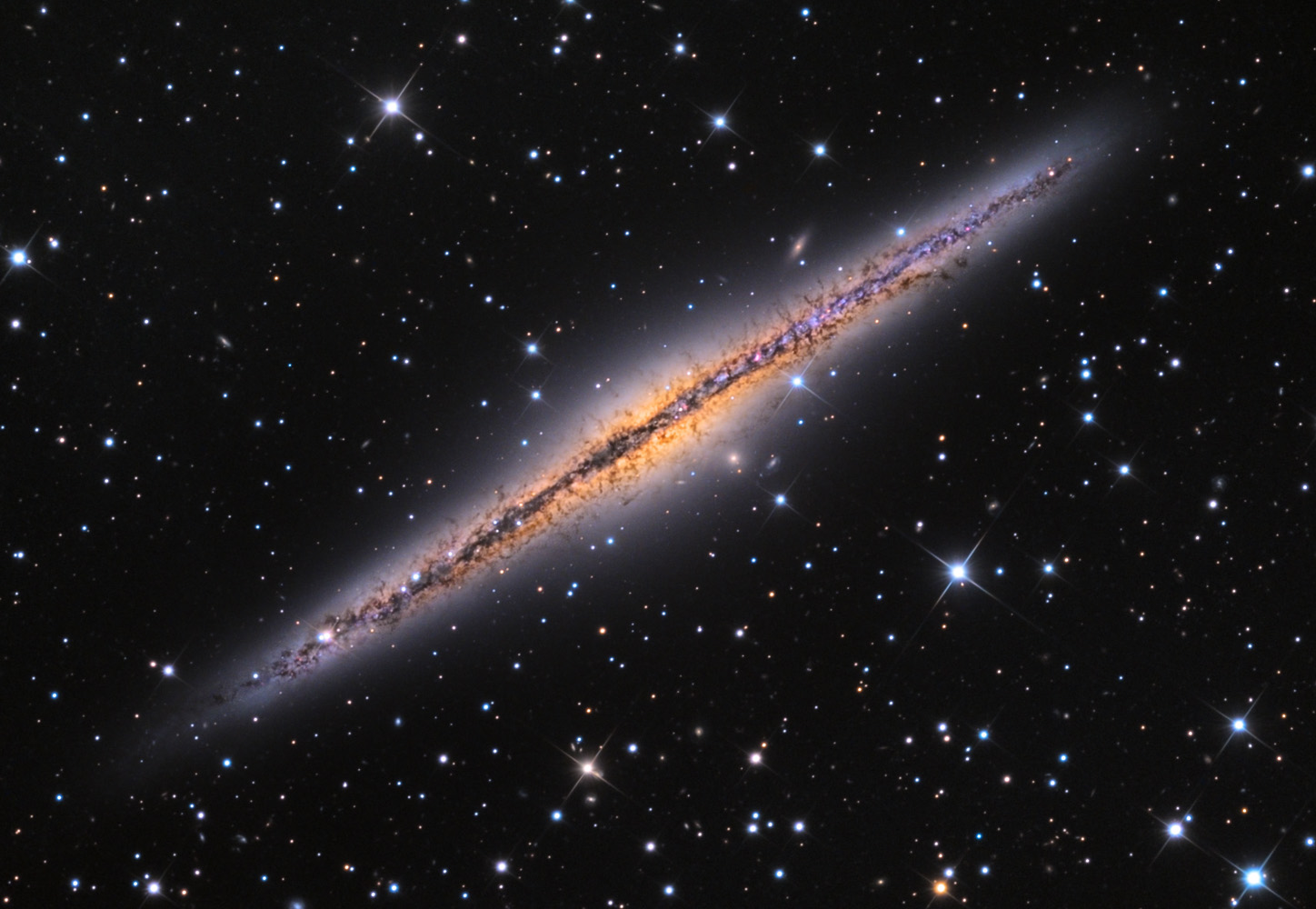
巨大な渦巻銀河NGC 891は、約10万光年にわたって広がり、地球から見るとほぼ真横から見ることができます。実際、アンドロメダ座に位置し、地球から約3000万光年離れたNGC 891は、私たちの天の川銀河によく似ています。一見すると、平らで薄い銀河円盤と、中央を暗い塵の領域が横切る中心バルジが見られます。しかし、NGC 891を真横から見た画像では、中心線から上下数百光年にわたって伸びる塵のフィラメントがはっきりと確認できます。この塵は、超新星爆発や激しい星形成活動によって円盤から吹き飛ばされたものと考えられます。このNGC 891の深宇宙像では、真横から見た円盤付近に、より暗い銀河も見られます。(編集者注:本日のAPOD投稿で使用されたNGC 891の画像は差し替えられ、クレジットも元の作品の作者を示すように修正されました。)
原文(English)
Large spiral galaxy NGC 891 spans about 100 thousand light-years and is seen almost exactly edge-on from our perspective. In fact, about 30 million light-years distant in the constellation Andromeda, NGC 891 looks a lot like our Milky Way. At first glance, it has a flat, thin, galactic disk of stars and a central bulge cut along the middle by regions of dark obscuring dust. But remarkably apparent in NGC 891's edge-on presentation are filaments of dust that extend hundreds of light-years above and below the center line. The dust has likely been blown out of the disk by supernova explosions or intense star formation activity. Fainter galaxies can also be seen near the edge-on disk in this deep portrait of NGC 891. (Editor's Note: The NGC 891 image used in today's APOD posting has been replaced and the credit corrected to indicate the author of the original work.)
\ この感動を宇宙仲間にシェア /
宇宙をXでシェア
© Adam Block / APOD