
🚀 宇宙の記憶・カレンダー検索
🚀 象徴的な写真:
APOD第1回
🚀 創造の柱
🚀 スピリット火星着陸
🚀 ハッブル超深宇宙
🚀 地球へようこそ|ブルー・マーブル
🚀 エンケラドス
🚀 ベテルギウス
🚀 火星着陸
🚀 青い夕焼け
🚀 冥王星のハート
🚀 皆既日食
🚀 アースライズ再構築
🚀 ブラックホール
🚀 ウェッブ初画像
🚀 アポロ11着陸
APOD30周年(2025年6月16日)
ハッブル宇宙望遠鏡で撮影されたヒョウタン星雲
The Calabash Nebula from Hubble
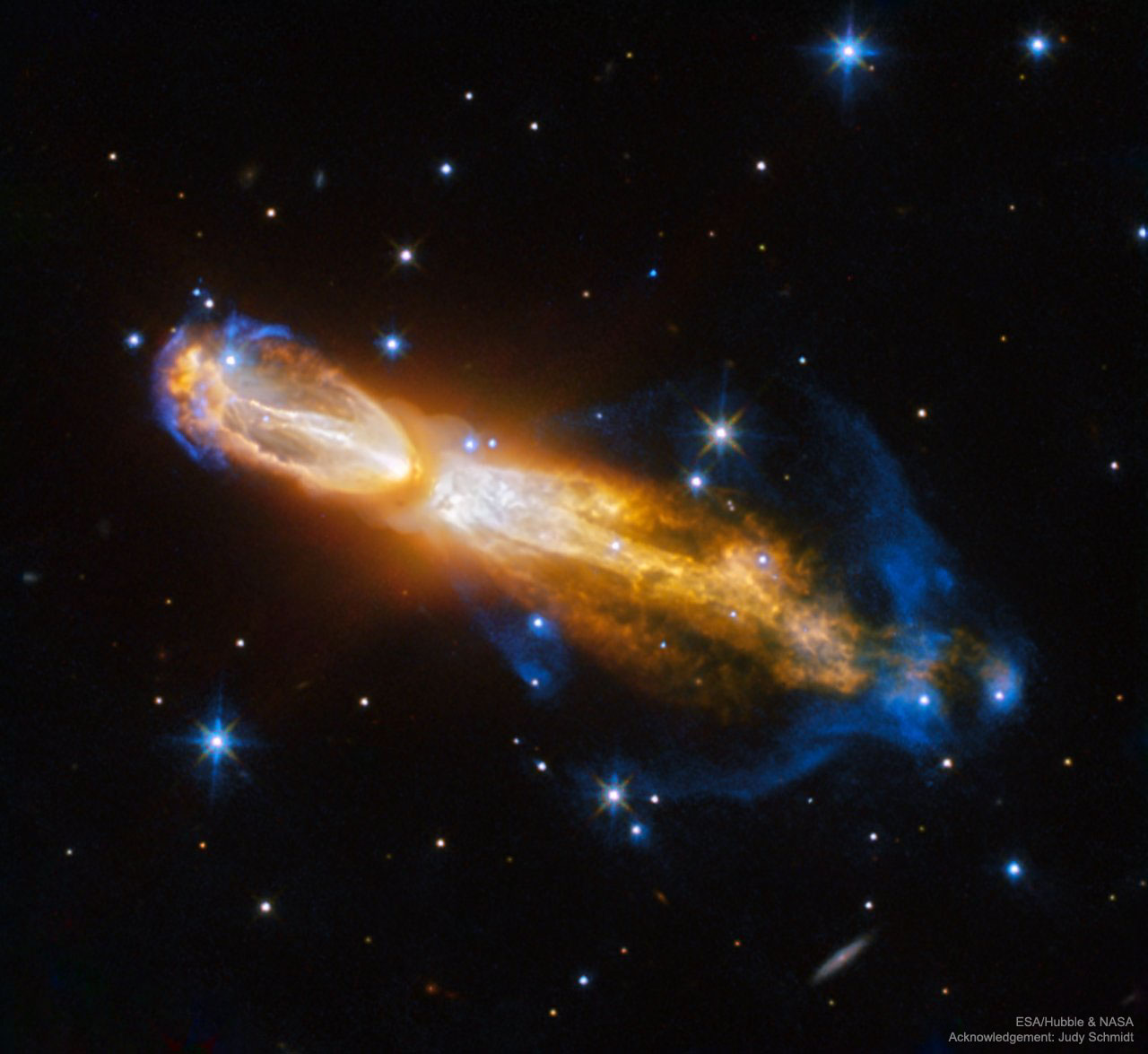
カラバッシュ星雲の中心星は、急速に膨張するガス雲によって終焉を迎えています。かつては普通の星だったこの星は核燃料を使い果たし、中心領域が収縮して白色矮星へと変化しました。放出されたエネルギーの一部は、星の外層を膨張させ、その結果、写真映えする原始惑星状星雲が形成されました。時速100万キロメートルもの速度でガスが周囲の星間ガスに衝突すると、超音速の衝撃波面が形成され、そこで電離した水素と窒素が青く輝きます。厚いガスと塵が、死にゆく中心星を覆い隠しています。カラバッシュ星雲(腐卵星雲、OH231.8+4.2とも呼ばれる)は、今後1000年かけて完全な双極性惑星状星雲へと発達すると考えられています。ここに掲載されている星雲は、直径約1.4光年で、とも座の方向に約5000光年離れた場所に位置しています。
原文(English)
Fast expanding gas clouds mark the end for a central star in the Calabash Nebula. The once-normal star has run out of nuclear fuel, causing the central regions to contract into a white dwarf. Some of the liberated energy causes the outer envelope of the star to expand. In this case, the result is a photogenic proto-planetary nebula. As the million-kilometer per hour gas rams into the surrounding interstellar gas, a supersonic shock front forms where ionized hydrogen and nitrogen glow blue. Thick gas and dust hide the dying central star. The Calabash Nebula, also known as the Rotten Egg Nebula and OH231.8+4.2, will likely develop into a full bipolar planetary nebula over the next 1000 years. The nebula, featured here, is about 1.4 light-years in extent and located about 5000 light-years away toward the constellation of Puppis.
\ この感動を宇宙仲間にシェア /
宇宙をXでシェア
© NASA / APOD