
🚀 宇宙の記憶・カレンダー検索
🚀 象徴的な写真:
APOD第1回
🚀 創造の柱
🚀 スピリット火星着陸
🚀 ハッブル超深宇宙
🚀 地球へようこそ|ブルー・マーブル
🚀 エンケラドス
🚀 ベテルギウス
🚀 火星着陸
🚀 青い夕焼け
🚀 冥王星のハート
🚀 皆既日食
🚀 アースライズ再構築
🚀 ブラックホール
🚀 ウェッブ初画像
🚀 アポロ11着陸
APOD30周年(2025年6月16日)
ハッブル宇宙望遠鏡で撮影された円錐星雲
The Cone Nebula from Hubble
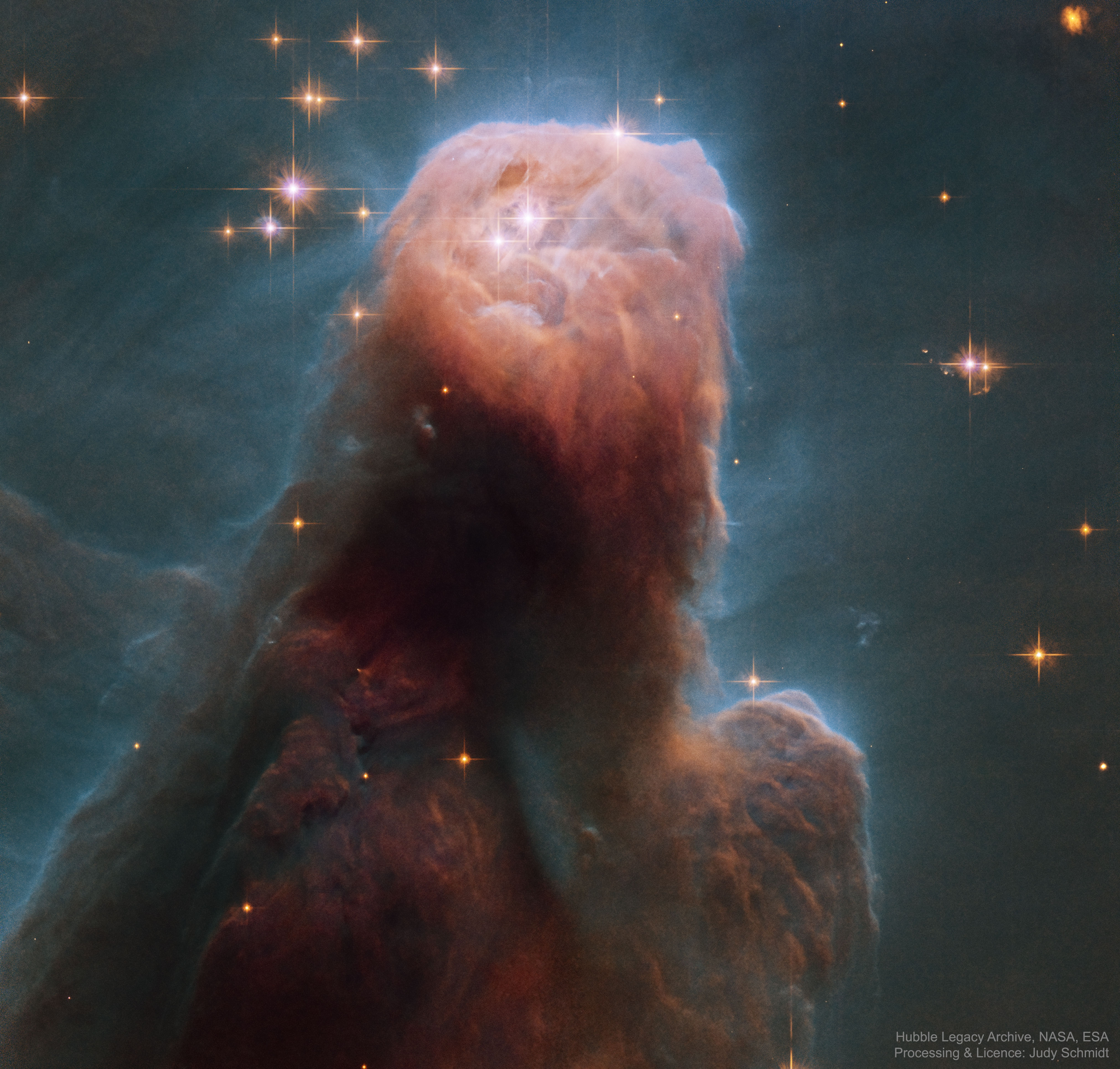
コーン星雲と呼ばれる巨大な塵の柱の中で星が形成されています。円錐、柱、そして雄大な流れるような形は、生まれたばかりのガスと塵の雲が生まれたばかりの星からの強力な風に吹きさらされる星形成領域に溢れています。よく知られた例であるコーン星雲は、明るい銀河の星形成領域NGC 2264の中にあります。地球を周回するハッブル宇宙望遠鏡による複数の観測を合成したこのクローズアップ画像では、コーン星雲がかつてないほど詳細に捉えられています。いっかくじゅう座の約2,500光年離れたところにあるコーン星雲は、長さが約7光年ですが、ここに写っている円錐の鈍い頭部の周りの領域は、わずか2.5光年の幅しかありません。私たちの銀河の領域では、この距離は太陽から最も近い恒星であるアルファ・ケンタウリ星系までの距離のちょうど半分強です。 1997年にハッブル宇宙望遠鏡の赤外線カメラで観測された巨大な恒星NGC 2264 IRSは、円錐星雲を形作る恒星風の発生源である可能性が高く、画像の上部に位置しています。円錐星雲の赤みがかったベールは、輝く水素ガスによって生成されています。
原文(English)
Stars are forming in the gigantic dust pillar called the Cone Nebula. Cones, pillars, and majestic flowing shapes abound in stellar nurseries where natal clouds of gas and dust are buffeted by energetic winds from newborn stars. The Cone Nebula, a well-known example, lies within the bright galactic star-forming region NGC 2264. The Cone was captured in unprecedented detail in this close-up composite of several observations from the Earth-orbiting Hubble Space Telescope. While the Cone Nebula, about 2,500 light-years away in Monoceros, is around 7 light-years long, the region pictured here surrounding the cone's blunted head is a mere 2.5 light-years across. In our neck of the galaxy that distance is just over half way from our Sun to its nearest stellar neighbors in the Alpha Centauri star system. The massive star NGC 2264 IRS, seen by Hubble's infrared camera in 1997, is the likely source of the wind sculpting the Cone Nebula and lies off the top of the image. The Cone Nebula's reddish veil is produced by glowing hydrogen gas.
\ この感動を宇宙仲間にシェア /
宇宙をXでシェア
© NASA / APOD