
🚀 宇宙の記憶・カレンダー検索
🚀 象徴的な写真:
APOD第1回
🚀 創造の柱
🚀 スピリット火星着陸
🚀 ハッブル超深宇宙
🚀 地球へようこそ|ブルー・マーブル
🚀 エンケラドス
🚀 ベテルギウス
🚀 火星着陸
🚀 青い夕焼け
🚀 冥王星のハート
🚀 皆既日食
🚀 アースライズ再構築
🚀 ブラックホール
🚀 ウェッブ初画像
🚀 アポロ11着陸
APOD30周年(2025年6月16日)
キャッスルアイビュー
Castle Eye View
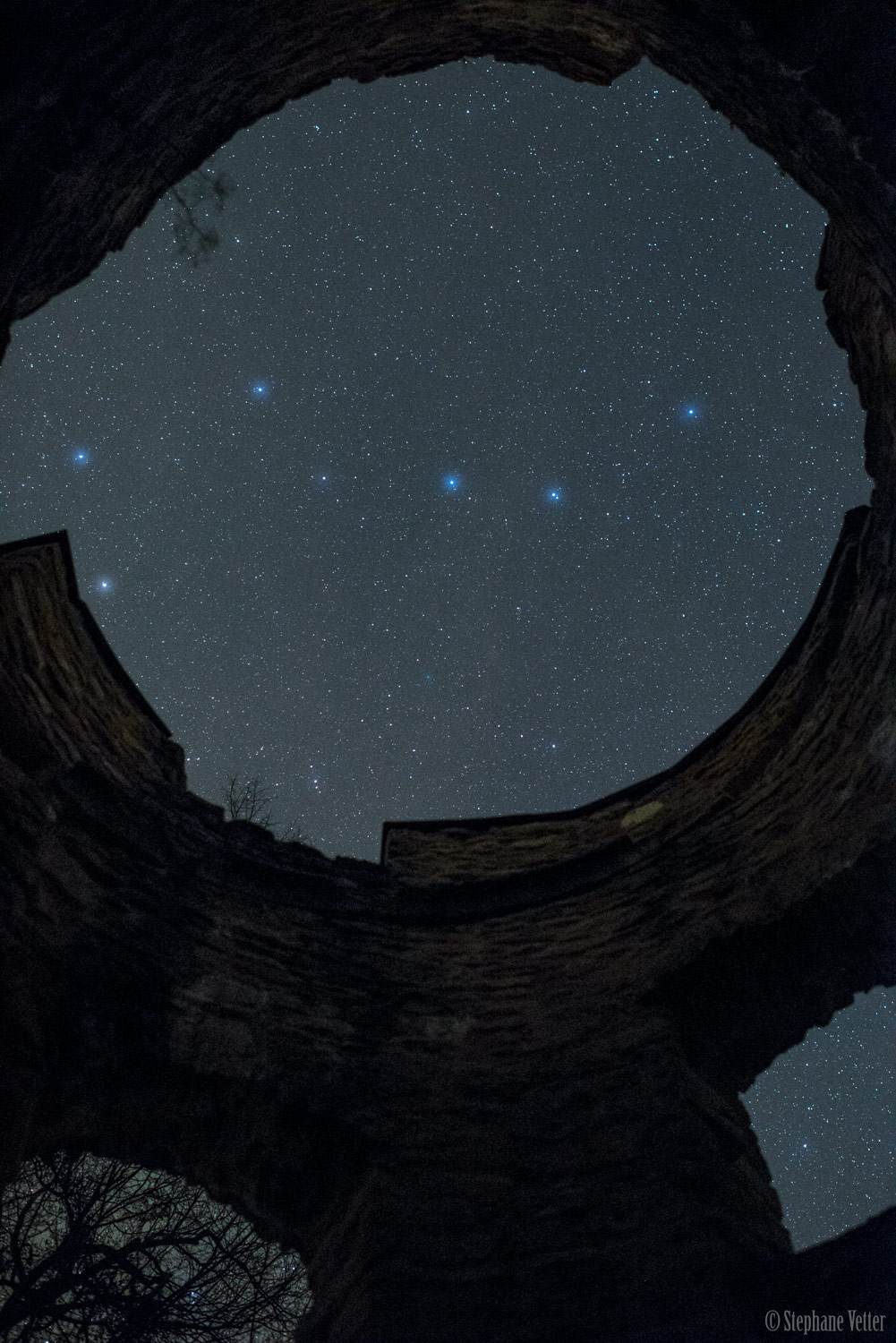
北の空で最もよく知られている星群である北斗七星は、逆さまに見ても簡単に認識できますが、人によっては鋤や荷車に見えるかもしれません。カーソルを画像の上にスライドさせるか、このリンクをクリックすると、星の名前と見慣れた輪郭がフランスのシャトー・デュ・モリモンの廃墟となった塔の壁で囲まれているのが見えます。北斗七星の親星座であるおおぐま座のアルファ星であるドゥベは左下にあります。ベータ星メラクとともに、この2つは北極星と北天の極への方向を示す線を形成していますが、石に隠れて見えません。この画像は3月30日に撮影されたものなので、北斗七星のフェクダとメグレズを結ぶ線をたどると、中央下、城の視界内にまだ収まっている彗星41P/タットル・ジャコビニ・クレサクのかすかな緑色の光を見つけることができます。この周期彗星は4月1日に地球に驚くほど接近しました。
原文(English)
The best known asterism in northern skies, The Big Dipper is easy to recognize, even when viewed upside down, though some might see a plough or wagon. The star names and the familiar outlines appear framed in the ruined tower walls of the French Chateau du Morimont if you just slide your cursor over the image or follow this link. Dubhe, alpha star of the dipper's parent constellation Ursa Major is at the lower left. Together with beta star Merak the two form a line pointing the way to Polaris and the North Celestial Pole, hidden from view by the stones. Since the image was captured on March 30, you can follow a line from dipper stars Phecda and Megrez to spot the faint greenish glow of Comet 41P/Tuttle-Giacobini-Kresak below center, still within the castle eye view. The periodic comet made a remarkable close approach to planet Earth on April 1.
\ この感動を宇宙仲間にシェア /
宇宙をXでシェア
© TWAN / APOD