
🚀 宇宙の記憶・カレンダー検索
🚀 象徴的な写真:
APOD第1回
🚀 創造の柱
🚀 スピリット火星着陸
🚀 ハッブル超深宇宙
🚀 地球へようこそ|ブルー・マーブル
🚀 エンケラドス
🚀 ベテルギウス
🚀 火星着陸
🚀 青い夕焼け
🚀 冥王星のハート
🚀 皆既日食
🚀 アースライズ再構築
🚀 ブラックホール
🚀 ウェッブ初画像
🚀 アポロ11着陸
APOD30周年(2025年6月16日)
ラグーン星雲の中心
In the Center of the Lagoon Nebula
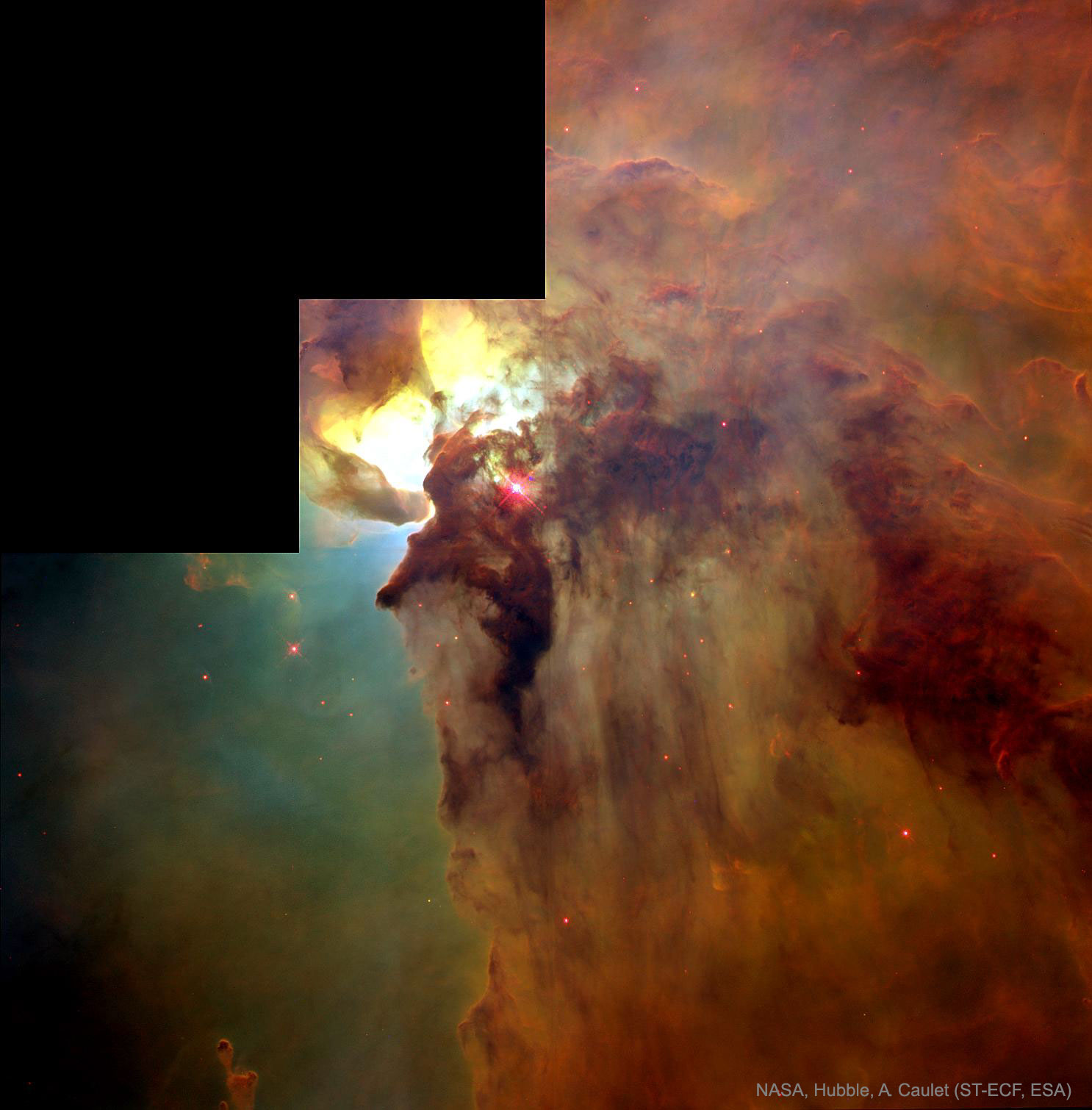
ラグーン星雲の中心部は、壮大な星形成の渦巻く場所です。左下に見える少なくとも2つの長い漏斗状の雲は、それぞれ約0.5光年の長さがあり、極端な恒星風と強烈な星光によって形成されています。非常に明るい近くの星、ハーシェル36がこの領域を照らしています。広大な塵の壁が他の高温の若い星を覆い隠し、赤く見せています。これらの星からのエネルギーが冷たい塵やガスに流れ込むと、隣接する領域に大きな温度差が生じ、せん断風が発生し、それが漏斗状の雲を形成する可能性があります。この画像は、約5光年の範囲を捉えたもので、1995年にハッブル宇宙望遠鏡によって撮影されました。ラグーン星雲(M8としても知られる)は、いて座の方向に約5000光年離れた場所に位置しています。APODをフォローするには、Facebook、Google Plus、Instagram、またはTwitterをご覧ください。
原文(English)
The center of the Lagoon Nebula is a whirlwind of spectacular star formation. Visible on the lower left, at least two long funnel-shaped clouds, each roughly half a light-year long, have been formed by extreme stellar winds and intense energetic starlight. The tremendously bright nearby star, Hershel 36, lights the area. Vast walls of dust hide and redden other hot young stars. As energy from these stars pours into the cool dust and gas, large temperature differences in adjoining regions can be created generating shearing winds which may cause the funnels. This picture, spanning about 5 light years, was taken in 1995 by the orbiting Hubble Space Telescope. The Lagoon Nebula, also known as M8, lies about 5000 light years distant toward the constellation of Sagittarius. Follow APOD on: Facebook, Google Plus, Instagram, or Twitter
\ この感動を宇宙仲間にシェア /
宇宙をXでシェア
© NASA / APOD