
🚀 宇宙の記憶・カレンダー検索
🚀 象徴的な写真:
APOD第1回
🚀 創造の柱
🚀 スピリット火星着陸
🚀 ハッブル超深宇宙
🚀 地球へようこそ|ブルー・マーブル
🚀 エンケラドス
🚀 ベテルギウス
🚀 火星着陸
🚀 青い夕焼け
🚀 冥王星のハート
🚀 皆既日食
🚀 アースライズ再構築
🚀 ブラックホール
🚀 ウェッブ初画像
🚀 アポロ11着陸
APOD30周年(2025年6月16日)
水素、酸素、硫黄で見たハート星雲
The Heart Nebula in Hydrogen, Oxygen, and Sulfur
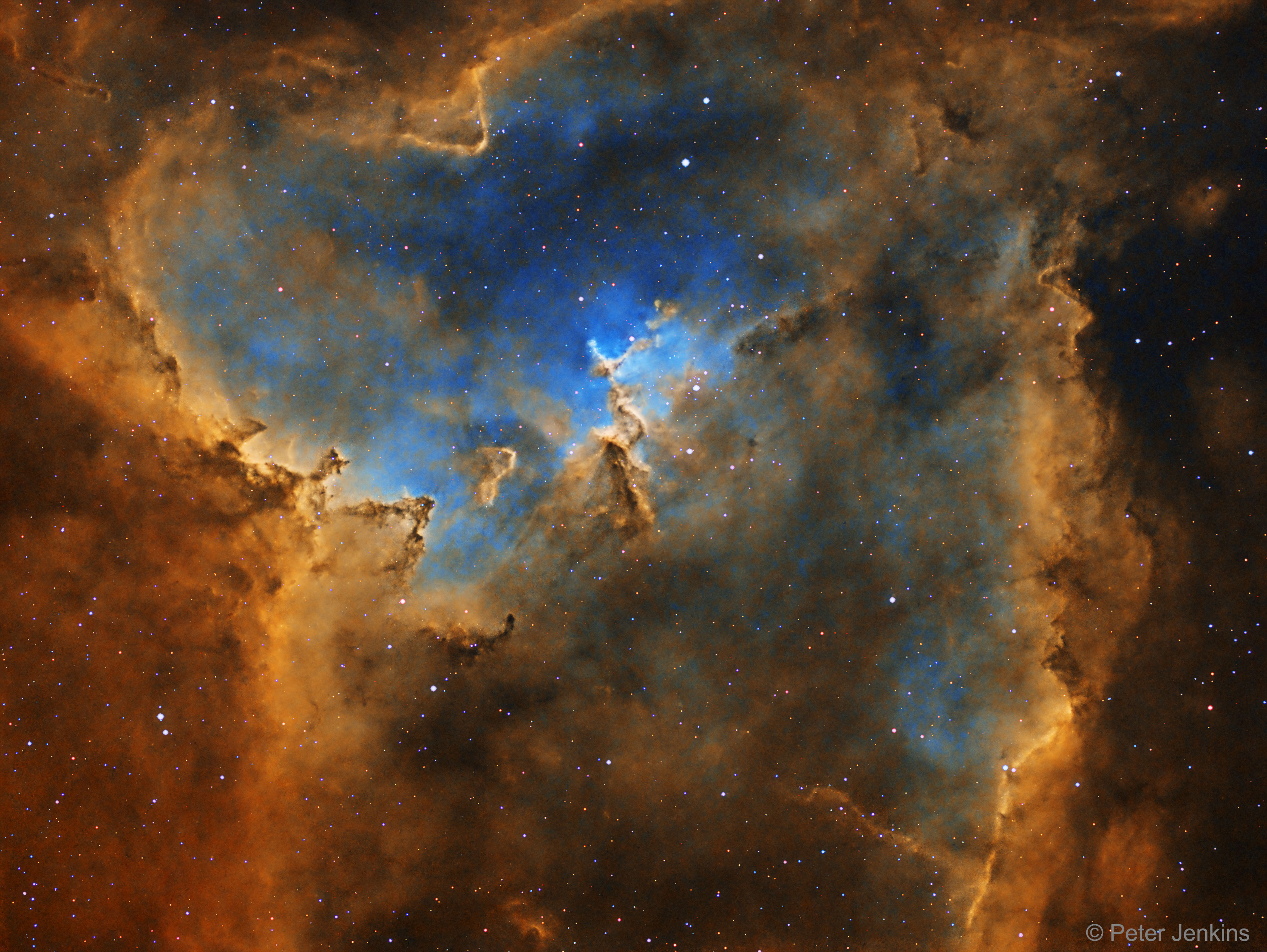
ハート星雲のエネルギー源は何か? IC 1805 と呼ばれるこの大きな輝線星雲は、全体としてハートの形をしている。星雲の輝き、そしてガスと塵の雲の形状は、星雲の生まれたばかりの星団 Melotte 15 にある巨大な高温の星からの恒星風と放射によって生み出されている。この望遠鏡による深宇宙画像は、星雲内の水素、酸素、硫黄の原子からの狭い輝線による遍在する光をマッピングしている。視野は空の 2 度強に及ぶため、満月の直径の 4 倍以上の大きさに見える。宇宙のハートは、エチオピアの自慢屋の神話上の女王カシオペヤ座にある。
原文(English)
What powers the Heart Nebula? The large emission nebula dubbed IC 1805 looks, in whole, like a heart. The nebula's glow -- as well as the shape of the gas and dust clouds -- is powered by by stellar winds and radiation from massive hot stars in the nebula's newborn star cluster Melotte 15. This deep telescopic image maps the pervasive light of narrow emission lines from atoms of hydrogen, oxygen, and sulfur in the nebula. The field of view spans just over two degrees on the sky, so that it appears larger than four times the diameter of a full moon. The cosmic heart is found in the constellation of Cassiopeia, the boastful mythical Queen of Aethiopia .
\ この感動を宇宙仲間にシェア /
宇宙をXでシェア
© Peter Jenkins / APOD