
🚀 宇宙の記憶・カレンダー検索
🚀 象徴的な写真:
APOD第1回
🚀 創造の柱
🚀 スピリット火星着陸
🚀 ハッブル超深宇宙
🚀 地球へようこそ|ブルー・マーブル
🚀 エンケラドス
🚀 ベテルギウス
🚀 火星着陸
🚀 青い夕焼け
🚀 冥王星のハート
🚀 皆既日食
🚀 アースライズ再構築
🚀 ブラックホール
🚀 ウェッブ初画像
🚀 アポロ11着陸
APOD30周年(2025年6月16日)
ベール星雲:爆発した星の残骸
Veil Nebula: Wisps of an Exploded Star
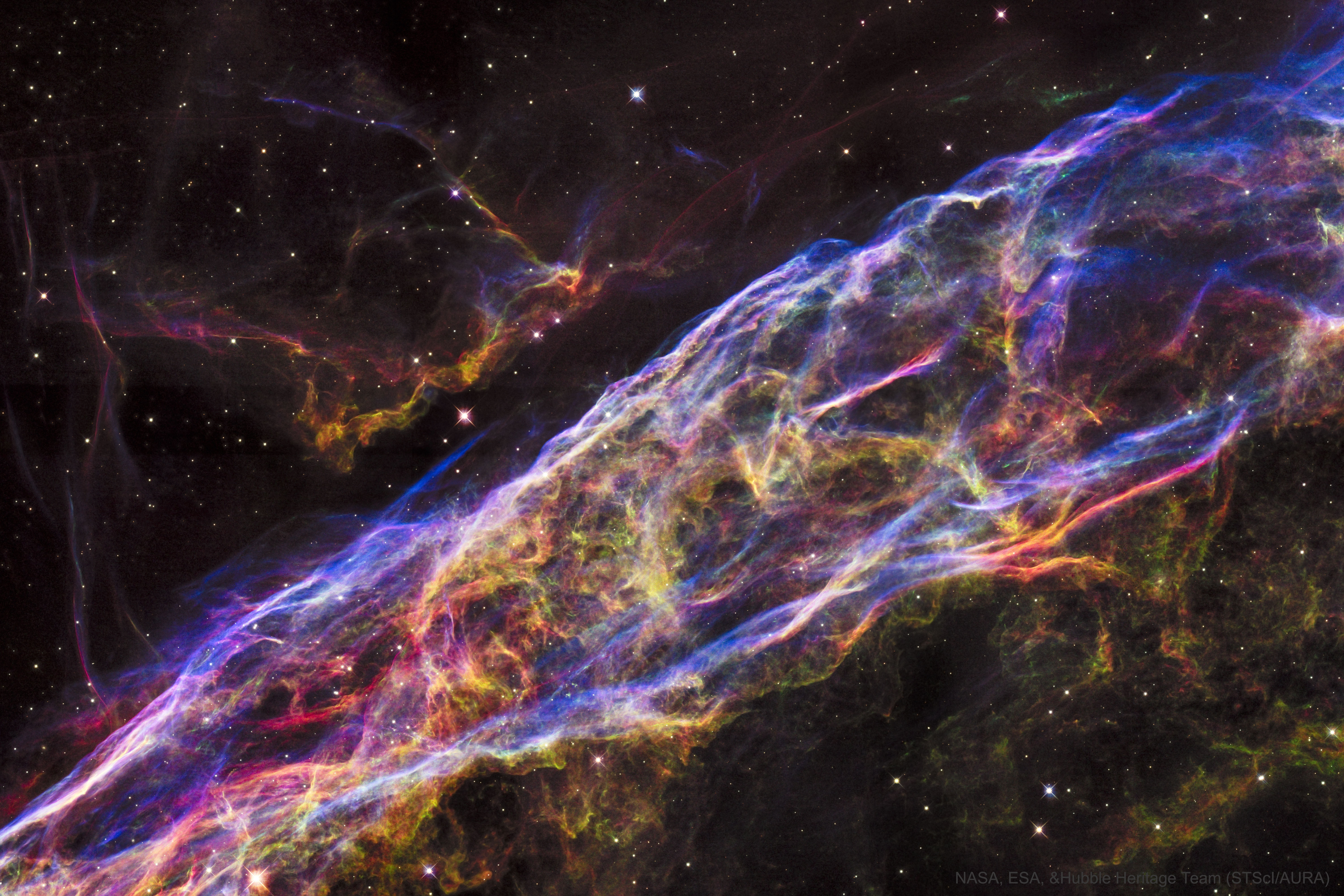
このようなかすかな筋は、天の川銀河の星の残骸として今もなお見える唯一のものです。約7000年前、この星は超新星爆発を起こし、ベール星雲を残しました。当時、膨張する星雲は三日月ほどの明るさで、記録された歴史の黎明期に生きていた人々には数週間見えていたと考えられています。現在、白鳥座ループとしても知られるこの超新星残骸は薄れ、白鳥座(はくちょう座)の方向を向いた小型望遠鏡でしか見ることができません。しかし、残されたベール星雲は物理的に巨大で、約1400光年離れているにもかかわらず、満月の5倍以上の大きさを覆っています。掲載されている写真は、ハッブル宇宙望遠鏡が撮影した6枚の画像を合成したもので、わずか約2光年の範囲を捉えており、広大な超新星残骸のごく一部です。ベール星雲全体の画像では、熱心な読者でさえ、このかすかな筋を識別することはできないかもしれません。
原文(English)
Wisps like this are all that remain visible of a Milky Way star. About 7,000 years ago that star exploded in a supernova leaving the Veil Nebula. At the time, the expanding cloud was likely as bright as a crescent Moon, remaining visible for weeks to people living at the dawn of recorded history. Today, the resulting supernova remnant, also known as the Cygnus Loop, has faded and is now visible only through a small telescope directed toward the constellation of the Swan (Cygnus). The remaining Veil Nebula is physically huge, however, and even though it lies about 1,400 light-years distant, it covers over five times the size of the full Moon. The featured picture is a Hubble Space Telescope mosaic of six images together covering a span of only about two light years, a small part of the expansive supernova remnant. In images of the complete Veil Nebula, even studious readers might not be able to identify the featured filaments.
\ この感動を宇宙仲間にシェア /
宇宙をXでシェア
© NASA / APOD