
🚀 宇宙の記憶・カレンダー検索
🚀 象徴的な写真:
APOD第1回
🚀 創造の柱
🚀 スピリット火星着陸
🚀 ハッブル超深宇宙
🚀 地球へようこそ|ブルー・マーブル
🚀 エンケラドス
🚀 ベテルギウス
🚀 火星着陸
🚀 青い夕焼け
🚀 冥王星のハート
🚀 皆既日食
🚀 アースライズ再構築
🚀 ブラックホール
🚀 ウェッブ初画像
🚀 アポロ11着陸
APOD30周年(2025年6月16日)
冬の空のハイライト
Highlights of the Winter Sky
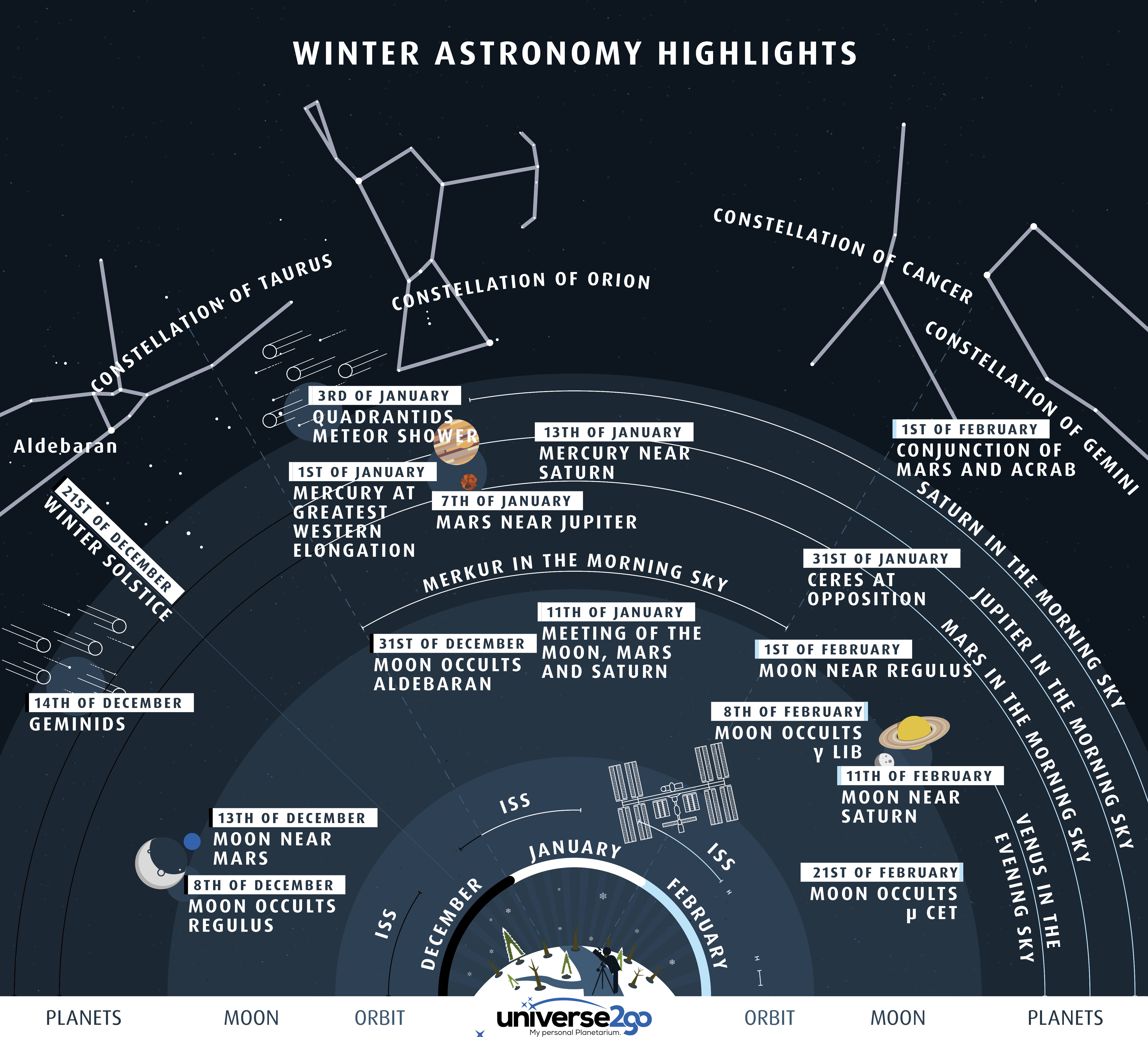
この冬、空には何が見えるでしょうか?掲載されている図は、地球の北半球で見られるいくつかの見どころを示しています。下部に時計盤を中央として見た場合、初冬の天文現象は左に向かって広がり、晩冬の天文現象は右に向かって投影されます。地球に比較的近い天体は、一般的に下部中央にある望遠鏡を持った漫画の人物に近い位置で描かれていますが、描かれているもののほとんどは望遠鏡を使わなくても見ることができます。この冬の空の見どころとしては、今週ピークを迎えるふたご座流星群、夕方の空で目立つようになるオリオン座、そして2月の日の出前に見える多くの惑星などが挙げられます。どの季節にも言えることですが、いつどこを見ればいいかを知っていれば、国際宇宙ステーション(ISS)が空を横切っていくのを見かけることができるかもしれません。
原文(English)
What's up in the sky this winter? The featured graphic gives a few highlights for Earth's northern hemisphere. Viewed as a clock face centered at the bottom, early winter sky events fan out toward the left, while late winter events are projected toward the right. Objects relatively close to Earth are illustrated, in general, as nearer to the cartoon figure with the telescope at the bottom center -- although almost everything pictured can be seen without a telescope. Highlights of this winter's sky include the Geminids meteor shower peaking this week, the constellation of Orion becoming notable in the evening sky, and many planets being visible before sunrise in February. As true in every season, the International Space Station (ISS) can be sometimes be found drifting across your sky if you know just when and where to look.
\ この感動を宇宙仲間にシェア /
宇宙をXでシェア
© Universe2go.com / APOD