
🚀 宇宙の記憶・カレンダー検索
🚀 象徴的な写真:
APOD第1回
🚀 創造の柱
🚀 スピリット火星着陸
🚀 ハッブル超深宇宙
🚀 地球へようこそ|ブルー・マーブル
🚀 エンケラドス
🚀 ベテルギウス
🚀 火星着陸
🚀 青い夕焼け
🚀 冥王星のハート
🚀 皆既日食
🚀 アースライズ再構築
🚀 ブラックホール
🚀 ウェッブ初画像
🚀 アポロ11着陸
APOD30周年(2025年6月16日)
夏至の太陽と天の川
Solstice Sun and Milky Way
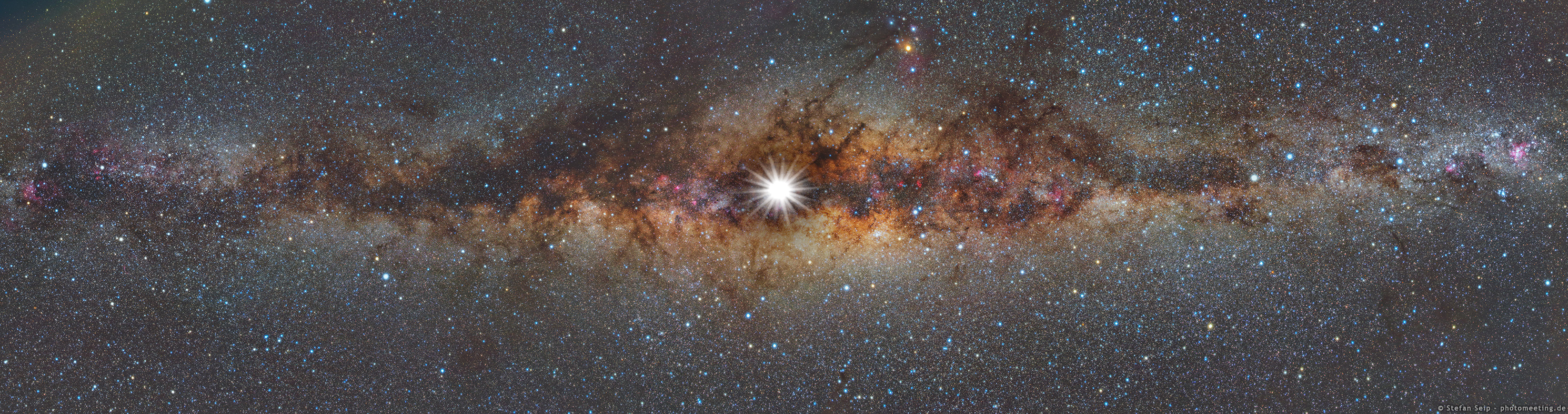
12月の冬至へようこそ。北半球では冬の始まり、南半球では夏の始まりです。季節の天文学的な指標である夏至と冬至、春分と秋分の日付は、地球の空を黄道に沿って一周する太陽の位置に基づいています。この夏至では、太陽は本日16時28分(UTC)に南緯-23.5度という最大赤緯に達し、天球上の赤経は18時間です。これにより、太陽は射手座に位置し、天の川銀河の中心付近にあります。実際、今日の夏至の太陽を、かすかな背景の星や星雲を背景に見ることができれば(特に昼間は、これは非常に難しいことですが…)、この合成パノラマのような光景が見られるかもしれません。このパノラマを作成するために、美しい銀河の画像がナミビアの暗い夜空の下で撮影され、パノラマビューに合成されました。 2015年12月21日に撮影された画像から、太陽が今日の北半球の冬至の位置、天の川銀河の中心付近に輝く星としてデジタル合成された。
原文(English)
Welcome to December's solstice, first day of winter in the north and summer for the southern hemisphere. Astronomical markers of the seasons, solstice and equinox dates are based on the Sun's place in its annual journey along the ecliptic, through planet Earth's sky. At this solstice, the Sun reaches its maximum southern declination of -23.5 degrees today at 16:28 UTC, while its right ascension coordinate on the celestial sphere is 18 hours. That puts the Sun in the constellation Sagittarius in a direction near the center of our Milky Way galaxy. In fact, if you could see today's Solstice Sun against faint background stars and nebulae (that's really hard to do, especially in the daytime ...) your view might look something like this composited panorama. To make it, images of our fair galaxy were taken under dark Namibian night skies, then stitched together in a panoramic view. From a snapshot made on December 21, 2015, the Sun was digitally overlayed as a brilliant star at today's northern winter solstice position, close to the center of the Milky Way.
\ この感動を宇宙仲間にシェア /
宇宙をXでシェア
© Stefan Seip / APOD