
🚀 宇宙の記憶・カレンダー検索
🚀 象徴的な写真:
APOD第1回
🚀 創造の柱
🚀 スピリット火星着陸
🚀 ハッブル超深宇宙
🚀 地球へようこそ|ブルー・マーブル
🚀 エンケラドス
🚀 ベテルギウス
🚀 火星着陸
🚀 青い夕焼け
🚀 冥王星のハート
🚀 皆既日食
🚀 アースライズ再構築
🚀 ブラックホール
🚀 ウェッブ初画像
🚀 アポロ11着陸
APOD30周年(2025年6月16日)
巨大渦巻銀河NGC 1232
Grand Spiral Galaxy NGC 1232
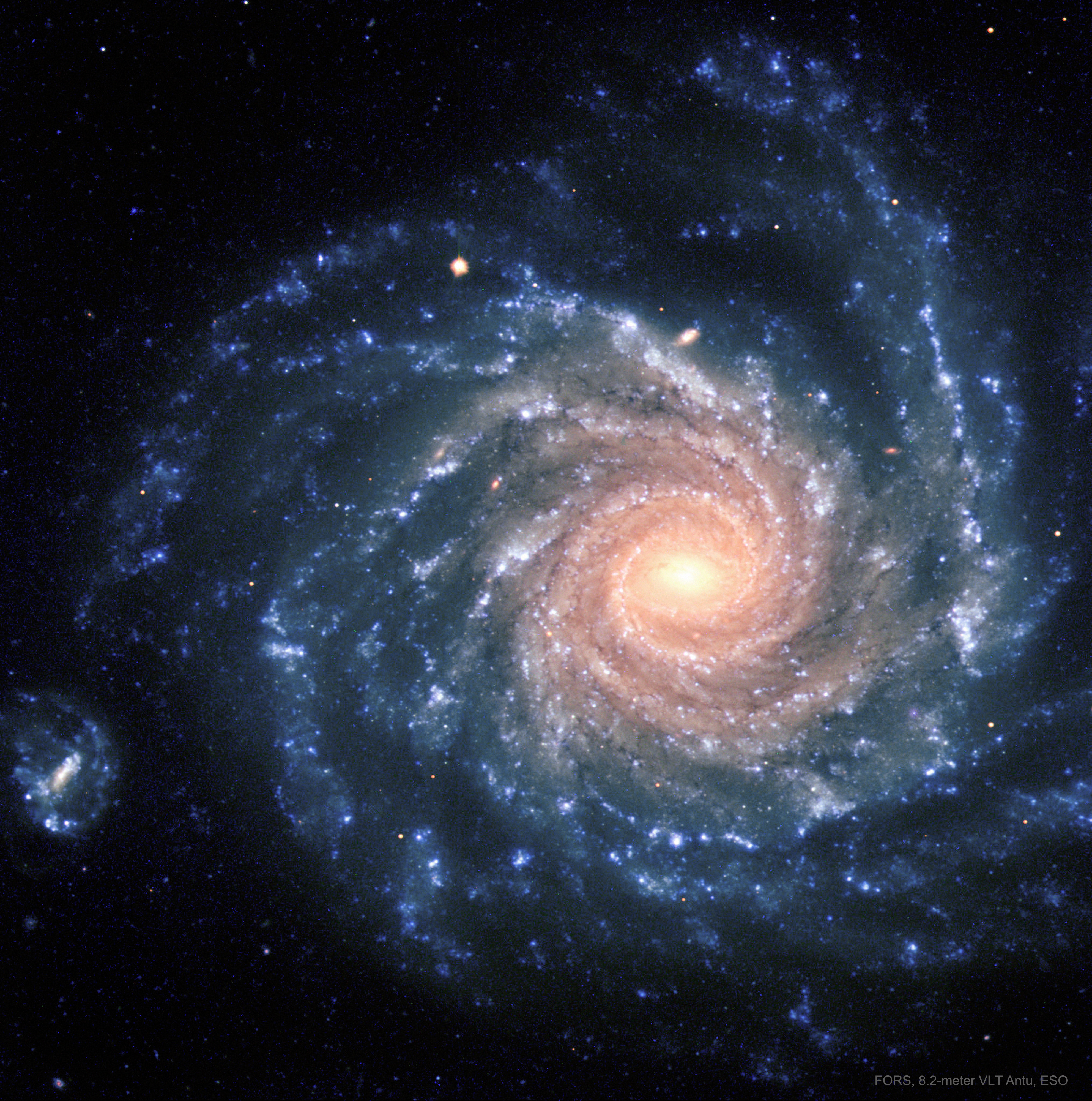
銀河は、目に見えるものだけでなく、目に見えないものにおいても魅力的です。超大型望遠鏡(VLT)の一つによって詳細に捉えられた巨大な渦巻銀河NGC 1232は、その好例です。目に見える部分は、中心を回転する渦状腕の重力渦に巻き込まれた数百万個の明るい星と暗い塵によって支配されています。これらの渦状腕に沿って、明るい青い星を含む散開星団が点在しているのが見られ、その間には密度の高い星間塵の暗い帯が点在しています。目には見えにくいものの検出可能なのは、数十億個の暗い通常の星と広大な星間ガスの領域で、これらを合わせると非常に大きな質量を持ち、銀河中心部の力学を支配しています。有力な理論では、さらに多くの物質が目に見えない形で存在し、その形態はまだ解明されていないとされています。この遍在する暗黒物質は、銀河の外縁部における目に見える物質の運動を説明するために提唱されています。無料APOD講演会:1月5日ニューヨーク、1月9日ワシントンD.C.
原文(English)
Galaxies are fascinating not only for what is visible, but for what is invisible. Grand spiral galaxy NGC 1232, captured in detail by one of the Very Large Telescopes, is a good example. The visible is dominated by millions of bright stars and dark dust, caught up in a gravitational swirl of spiral arms revolving about the center. Open clusters containing bright blue stars can be seen sprinkled along these spiral arms, while dark lanes of dense interstellar dust can be seen sprinkled between them. Less visible, but detectable, are billions of dim normal stars and vast tracts of interstellar gas, together wielding such high mass that they dominate the dynamics of the inner galaxy. Leading theories indicate that even greater amounts of matter are invisible, in a form we don't yet know. This pervasive dark matter is postulated, in part, to explain the motions of the visible matter in the outer regions of galaxies. Free APOD Lectures: January 5 in NYC & January 9 in DC
\ この感動を宇宙仲間にシェア /
宇宙をXでシェア
© NASA / APOD