
🚀 宇宙の記憶・カレンダー検索
🚀 象徴的な写真:
APOD第1回
🚀 創造の柱
🚀 スピリット火星着陸
🚀 ハッブル超深宇宙
🚀 地球へようこそ|ブルー・マーブル
🚀 エンケラドス
🚀 ベテルギウス
🚀 火星着陸
🚀 青い夕焼け
🚀 冥王星のハート
🚀 皆既日食
🚀 アースライズ再構築
🚀 ブラックホール
🚀 ウェッブ初画像
🚀 アポロ11着陸
APOD30周年(2025年6月16日)
LLオリとオリオン星雲
LL Ori and the Orion Nebula
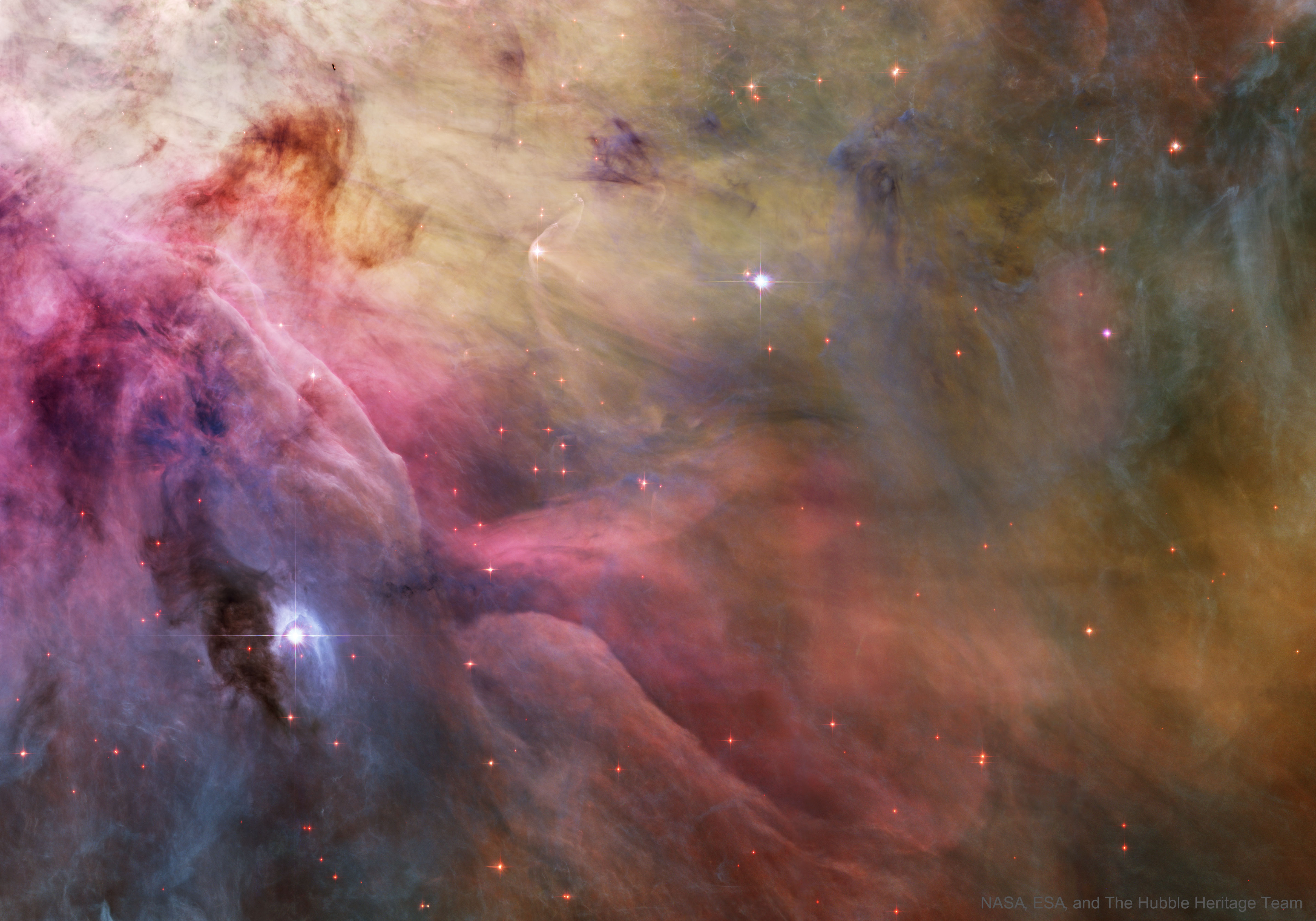
星々はオリオン星雲のガスと塵の海に波を起こすことがあります。この宇宙の雲と恒星風の美しいクローズアップ写真には、オリオン星雲の流れと相互作用するLLオリオン星が写っています。オリオン座の星形成領域を漂い、まだ形成期にある変光星LLオリオン星は、私たちの太陽の恒星風よりもエネルギーの高い風を生み出しています。高速の恒星風が低速のガスにぶつかると、衝撃波面が形成されます。これは、水面を進むボートや超音速で飛行する飛行機の船首波に似ています。画面中央の左上にある小さく弧を描く優美な構造は、LLオリオン星の宇宙の船首衝撃波で、直径は約0.5光年です。低速のガスは、画面左上隅にあるオリオン星雲の中心にある高温の星団、トラペジウムから流れ出ています。 LLオリオン座の周囲を覆う衝撃波面は、三次元的に見るとボウルのような形をしており、底辺に沿って見ると最も明るく見えます。この絵画のような美しい写真は、オリオン座の複雑な星形成領域を捉えた大きなモザイク画像の一部であり、星形成に関連する無数の流動的な形状で満たされています。
原文(English)
Stars can make waves in the Orion Nebula's sea of gas and dust. This esthetic close-up of cosmic clouds and stellar winds features LL Orionis, interacting with the Orion Nebula flow. Adrift in Orion's stellar nursery and still in its formative years, variable star LL Orionis produces a wind more energetic than the wind from our own middle-aged Sun. As the fast stellar wind runs into slow moving gas a shock front is formed, analogous to the bow wave of a boat moving through water or a plane traveling at supersonic speed. The small, arcing, graceful structure just above and left of center is LL Ori's cosmic bow shock, measuring about half a light-year across. The slower gas is flowing away from the Orion Nebula's hot central star cluster, the Trapezium, located off the upper left corner of the picture. In three dimensions, LL Ori's wrap-around shock front is shaped like a bowl that appears brightest when viewed along the "bottom" edge. This beautiful painting-like photograph is part of a large mosaic view of the complex stellar nursery in Orion, filled with a myriad of fluid shapes associated with star formation.
\ この感動を宇宙仲間にシェア /
宇宙をXでシェア
© NASA / APOD