
🚀 宇宙の記憶・カレンダー検索
🚀 象徴的な写真:
APOD第1回
🚀 創造の柱
🚀 スピリット火星着陸
🚀 ハッブル超深宇宙
🚀 地球へようこそ|ブルー・マーブル
🚀 エンケラドス
🚀 ベテルギウス
🚀 火星着陸
🚀 青い夕焼け
🚀 冥王星のハート
🚀 皆既日食
🚀 アースライズ再構築
🚀 ブラックホール
🚀 ウェッブ初画像
🚀 アポロ11着陸
APOD30周年(2025年6月16日)
NGC 1999付近の弧状構造、ジェット、衝撃波
Arcs, Jets, and Shocks near NGC 1999
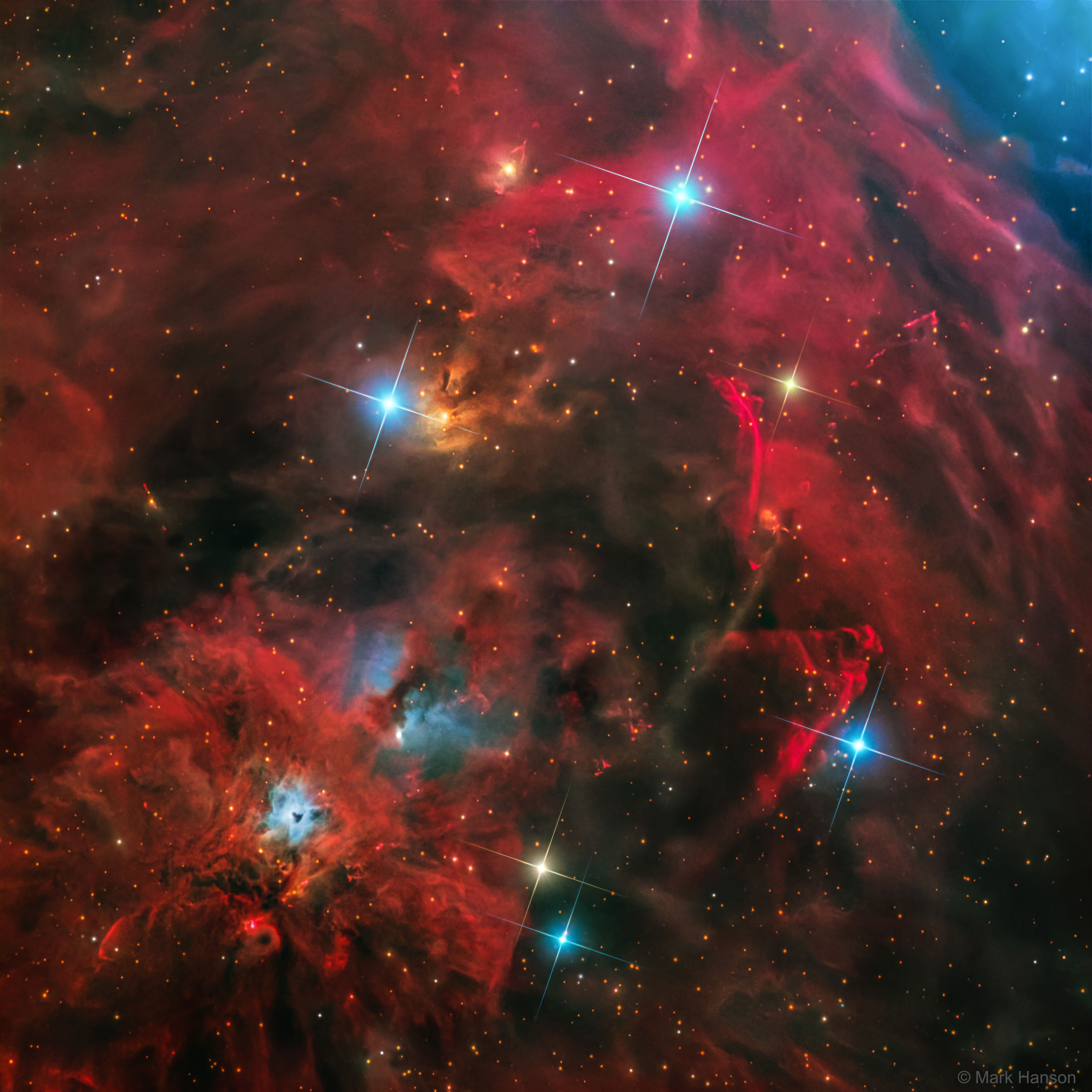
この魅惑的な星雲と星の配列は、有名な星形成領域であるオリオン星雲の南約2度に位置しています。この領域には、ジェットやアウトフローを噴出する活発な若い星が数多く存在し、周囲の物質を毎秒数百キロメートルの速度で押し進めています。この相互作用によって、ハービッグ・ハロー(HH)天体として知られる明るい衝撃波が生成されます。例えば、中心のすぐ右にある優美で流れるような弧は、HH 222、別名「滝星雲」としてカタログ化されています。滝星雲の下に見えるHH 401は、特徴的な円錐形をしています。中心の左下にある明るい青みがかった星雲はNGC 1999で、内部に埋め込まれた変光星からの光を反射する塵の雲です。この宇宙の景観全体は、約1,500光年離れたオリオン分子雲複合体の端近く、30光年以上にわたって広がっています。オープンサイエンス:天体物理学ソースコードライブラリで1,600以上のコードを閲覧できます。
原文(English)
This tantalizing array of nebulas and stars can be found about two degrees south of the famous star-forming Orion Nebula. The region abounds with energetic young stars producing jets and outflows that push through the surrounding material at speeds of hundreds of kilometers per second. The interaction creates luminous shock waves known as Herbig-Haro (HH) objects. For example, the graceful, flowing arc just right of center is cataloged as HH 222, also called the Waterfall Nebula. Seen below the Waterfall, HH 401 has a distinctive cone shape. The bright bluish nebula below and left of center is NGC 1999, a dusty cloud reflecting light from an embedded variable star. The entire cosmic vista spans over 30 light-years, near the edge of the Orion Molecular Cloud Complex some 1,500 light-years distant. Open Science: Browse 1,600+ codes in the Astrophysics Source Code Library
\ この感動を宇宙仲間にシェア /
宇宙をXでシェア
© Mark Hanson;
Annotation: Sakib Rasool
(StarSurfin) / APOD