
🚀 宇宙の記憶・カレンダー検索
🚀 象徴的な写真:
APOD第1回
🚀 創造の柱
🚀 スピリット火星着陸
🚀 ハッブル超深宇宙
🚀 地球へようこそ|ブルー・マーブル
🚀 エンケラドス
🚀 ベテルギウス
🚀 火星着陸
🚀 青い夕焼け
🚀 冥王星のハート
🚀 皆既日食
🚀 アースライズ再構築
🚀 ブラックホール
🚀 ウェッブ初画像
🚀 アポロ11着陸
APOD30周年(2025年6月16日)
タランチュラ星雲の中心で
In the Heart of the Tarantula Nebula
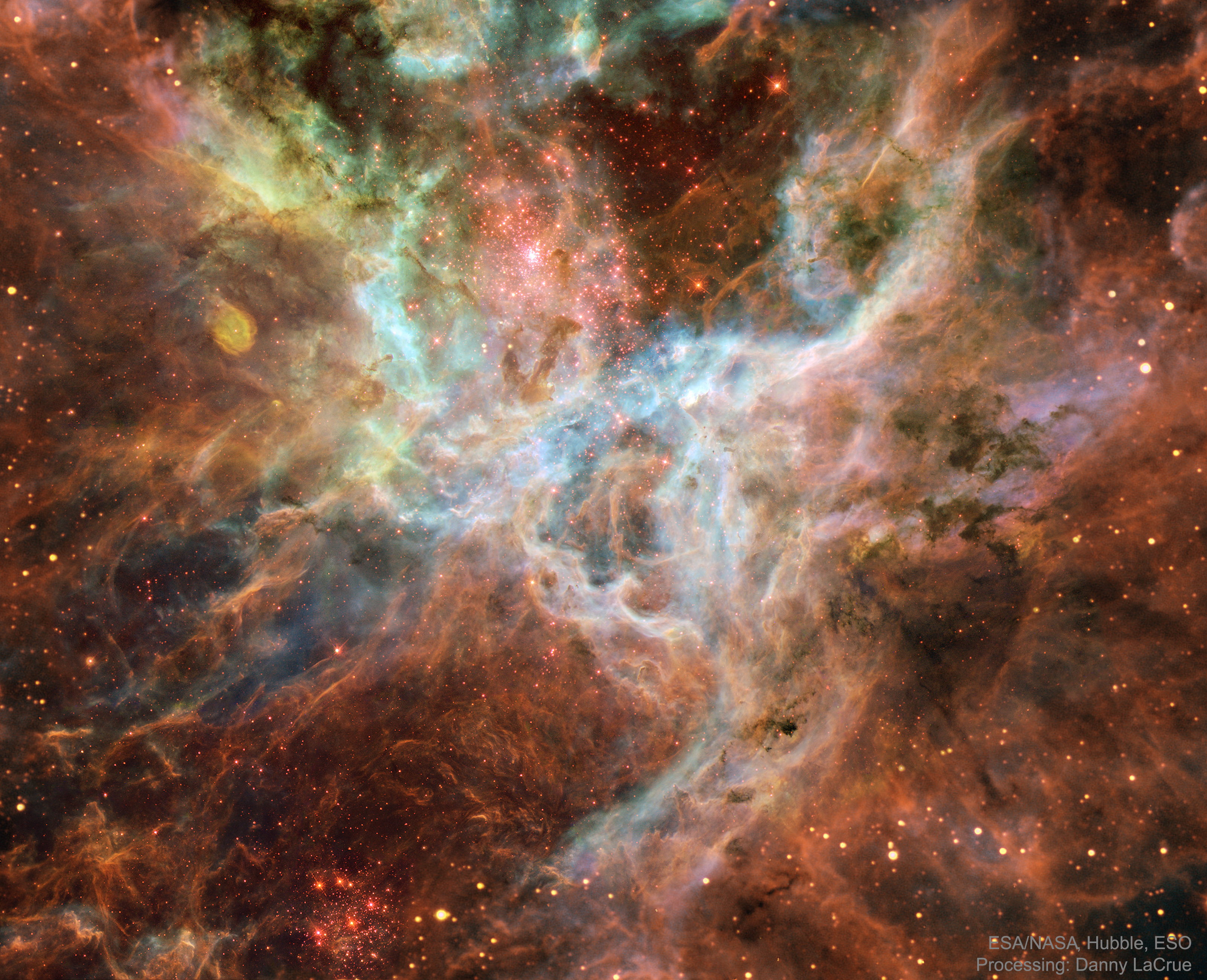
巨大なタランチュラ星雲の中心部には、高エネルギーガスの巨大な泡、暗黒塵の長いフィラメント、そして異常に質量の大きい星々が存在します。この中心部には、かつては単一の星だと考えられていたほど高密度の星の集まりがあります。R136またはNGC 2070と名付けられたこの星団は、特集画像の中央のすぐ上に見え、多数の高温の若い星々が集まっています。これらの星々からの高エネルギー光は星雲のガスを絶えず電離させ、その高エネルギー粒子風は泡を吹き飛ばし、複雑なフィラメントを形成します。NASA/ESAのハッブル宇宙望遠鏡とESOの地上望遠鏡であるニューテクノロジー望遠鏡の画像をデジタル合成した代表的なカラー画像は、大マゼラン雲の激動の中心部の細部まで鮮明に捉えています。タランチュラ星雲(別名:30ドラドゥス星雲)は、既知の星形成領域の中で最大級のものであり、数百万年ごとに異常に活発な星形成活動を引き起こしている。
原文(English)
In the heart of monstrous Tarantula Nebula lies huge bubbles of energetic gas, long filaments of dark dust, and unusually massive stars. In the center of this heart, is a knot of stars so dense that it was once thought to be a single star. This star cluster, labeled as R136 or NGC 2070, is visible just above the center of the featured image and home to a great number of hot young stars. The energetic light from these stars continually ionizes nebula gas, while their energetic particle wind blows bubbles and defines intricate filaments. The representative-color picture, a digital synthesis of images from the NASA/ESA orbiting Hubble Space Telescope and ESO's ground-based New Technology Telescope, shows great details of the LMC nebula's tumultuous center. The Tarantula Nebula, also known as the 30 Doradus nebula, is one of the largest star-formation regions known, and has been creating unusually strong episodes of star formation every few million years.
\ この感動を宇宙仲間にシェア /
宇宙をXでシェア
© NASA / APOD