
🚀 宇宙の記憶・カレンダー検索
🚀 象徴的な写真:
APOD第1回
🚀 創造の柱
🚀 スピリット火星着陸
🚀 ハッブル超深宇宙
🚀 地球へようこそ|ブルー・マーブル
🚀 エンケラドス
🚀 ベテルギウス
🚀 火星着陸
🚀 青い夕焼け
🚀 冥王星のハート
🚀 皆既日食
🚀 アースライズ再構築
🚀 ブラックホール
🚀 ウェッブ初画像
🚀 アポロ11着陸
APOD30周年(2025年6月16日)
NGC 3256の衝突
The Clash of NGC 3256
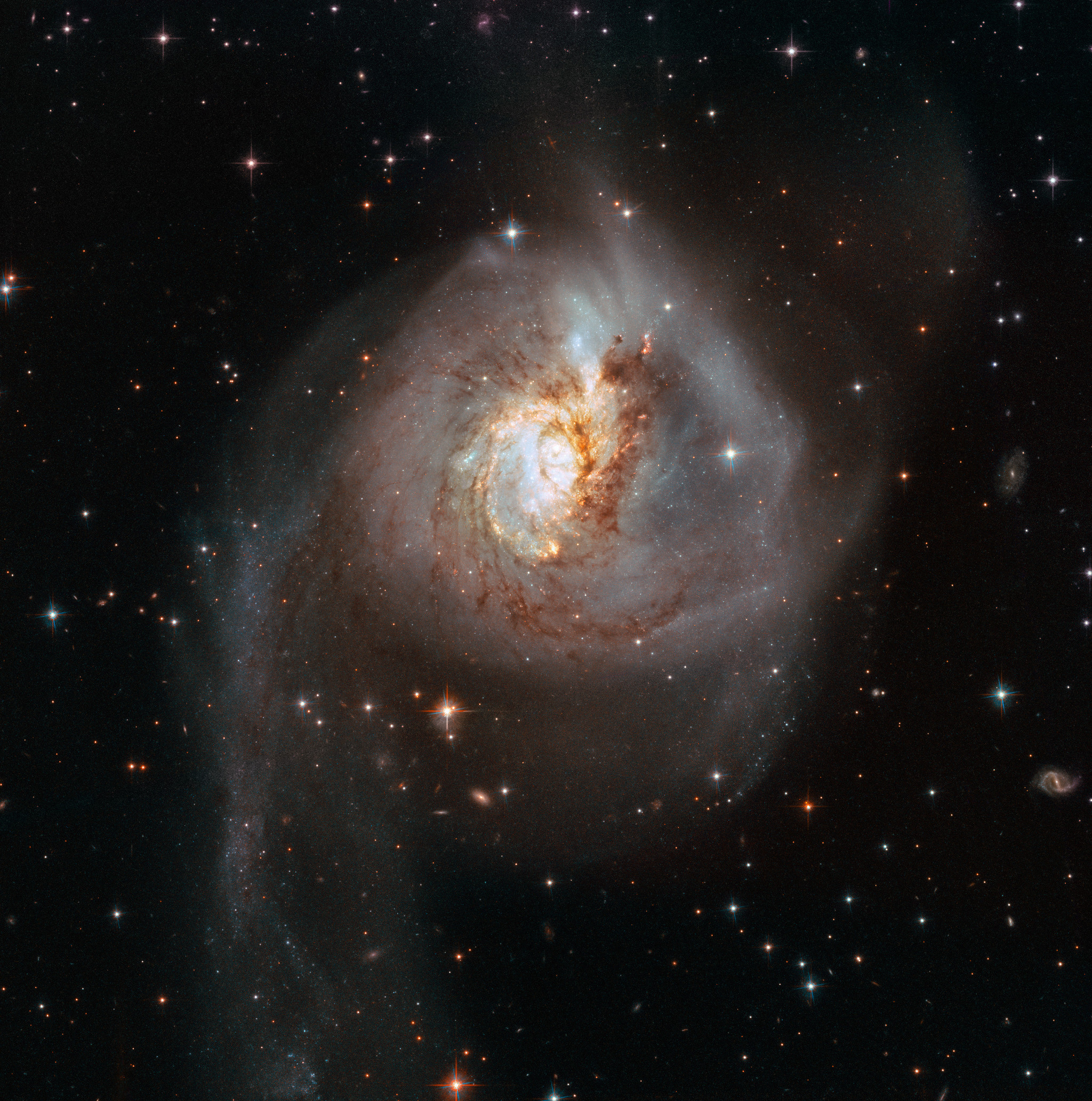
異常に明るい中心領域、渦巻く塵の帯、遠くまで伸びる潮汐尾が特徴的な特異なNGC 3256は、まさに宇宙規模の衝突の余波です。5億年前に2つの別々の銀河が衝突し、ハッブル宇宙望遠鏡によるこの鮮明な画像では約10万光年に及ぶ範囲に広がっています。もちろん、2つの銀河が衝突しても、個々の星が衝突することはめったにありません。しかし、巨大な銀河の分子ガスと塵の雲は相互作用し、壮大な星形成の爆発を引き起こします。この銀河の衝突では、2つの元の渦巻銀河は質量が似ていました。それらの円盤はもはや区別がつかず、2つの銀河核は塵によって隠されています。数億年の時間スケールでは、NGC 3256が1つの大きな楕円銀河になるにつれて、核も融合する可能性が高いです。 NGC 3256自体は、南天の星座であるほ座の方向に約1億光年離れたところに位置しています。この画像には、さらに遠くにある多くの銀河や、前景にある尖った星々も写っています。
原文(English)
Marked by an unusually bright central region, swirling dust lanes, and far flung tidal tails, peculiar NGC 3256 is the aftermath of a truly cosmic collision. The 500 million year old clash of two separate galaxies spans some 100 thousand light-years in this sharp Hubble view. Of course when two galaxies collide, individual stars rarely do. Giant galactic clouds of molecular gas and dust do interact though, and produce spectacular bursts of star formation. In this galaxy clash, the two original spiral galaxies had similar masses. Their disks are no longer distinct and the two galactic nuclei are hidden by obscuring dust. On the timescale of a few hundred million years the nuclei will likely also merge as NGC 3256 becomes a single large elliptical galaxy. NGC 3256 itself is nearly 100 million light-years distant toward the southern sailing constellation Vela. The frame includes many even more distant background galaxies and spiky foreground stars.
\ この感動を宇宙仲間にシェア /
宇宙をXでシェア
© NASA / APOD