
🚀 宇宙の記憶・カレンダー検索
🚀 象徴的な写真:
APOD第1回
🚀 創造の柱
🚀 スピリット火星着陸
🚀 ハッブル超深宇宙
🚀 地球へようこそ|ブルー・マーブル
🚀 エンケラドス
🚀 ベテルギウス
🚀 火星着陸
🚀 青い夕焼け
🚀 冥王星のハート
🚀 皆既日食
🚀 アースライズ再構築
🚀 ブラックホール
🚀 ウェッブ初画像
🚀 アポロ11着陸
APOD30周年(2025年6月16日)
メシエ24:いて座の星雲
Messier 24: Sagittarius Star Cloud
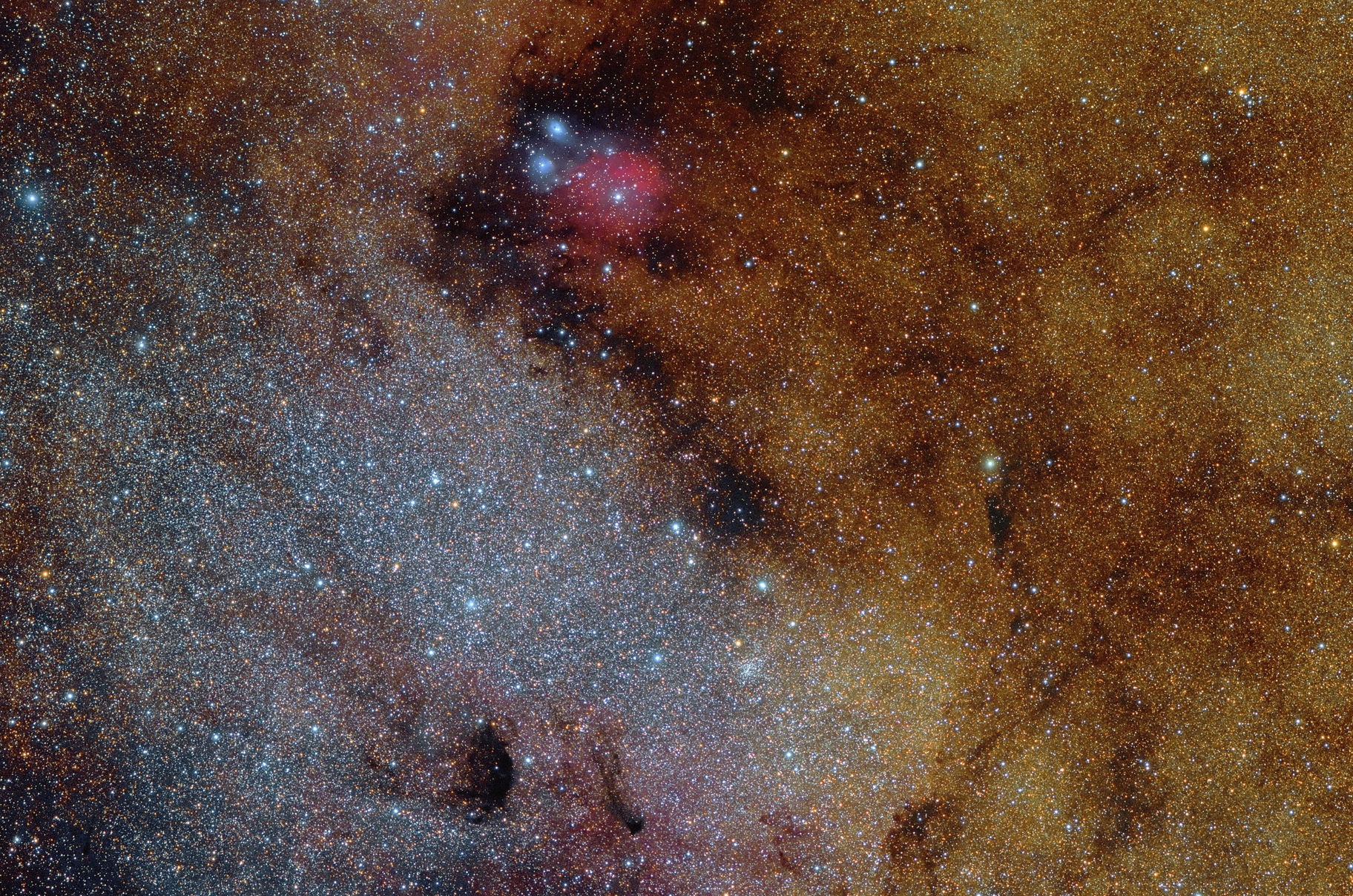
シャルル・メシエの有名な深宇宙天体カタログのほとんどの項目とは異なり、M24は明るい銀河、星団、または星雲ではありません。それは、近くにある遮蔽された星間塵の雲の隙間であり、天の川銀河のいて座の渦状腕にある遠方の星々を観測することを可能にします。双眼鏡や小型望遠鏡でこの星雲を見つめると、地球から1万光年以上離れた星々を、300光年以上の幅の窓を通して見ていることになります。小さないて座の星雲とも呼ばれるM24の明るい星々は、この美しい星景の左側を埋め尽くしています。いて座の約4度、つまり満月8個分の幅をカバーする望遠鏡の視野には、天の川の中心に向かって多くの小さな密度の高い塵の雲や星雲が含まれており、フレームの上部近くにあるIC 1284からの赤みがかった放射も含まれています。
原文(English)
Unlike most entries in Charles Messier's famous catalog of deep sky objects, M24 is not a bright galaxy, star cluster, or nebula. It's a gap in nearby, obscuring interstellar dust clouds that allows a view of the distant stars in the Sagittarius spiral arm of our Milky Way galaxy. When you gaze at the star cloud with binoculars or small telescope you are looking through a window over 300 light-years wide at stars some 10,000 light-years or more from Earth. Sometimes called the Small Sagittarius Star Cloud, M24's luminous stars fill the left side of this gorgeous starscape. Covering about 4 degrees or the width of 8 full moons in the constellation Sagittarius, the telescopic field of view contains many small, dense clouds of dust and nebulae toward the center of the Milky Way, including reddish emission from IC 1284 near the top of the frame.
\ この感動を宇宙仲間にシェア /
宇宙をXでシェア
© Roberto
Colombari / APOD