
🚀 宇宙の記憶・カレンダー検索
🚀 象徴的な写真:
APOD第1回
🚀 創造の柱
🚀 スピリット火星着陸
🚀 ハッブル超深宇宙
🚀 地球へようこそ|ブルー・マーブル
🚀 エンケラドス
🚀 ベテルギウス
🚀 火星着陸
🚀 青い夕焼け
🚀 冥王星のハート
🚀 皆既日食
🚀 アースライズ再構築
🚀 ブラックホール
🚀 ウェッブ初画像
🚀 アポロ11着陸
APOD30周年(2025年6月16日)
横から見た紡錘状銀河
The Edge-On Spindle Galaxy
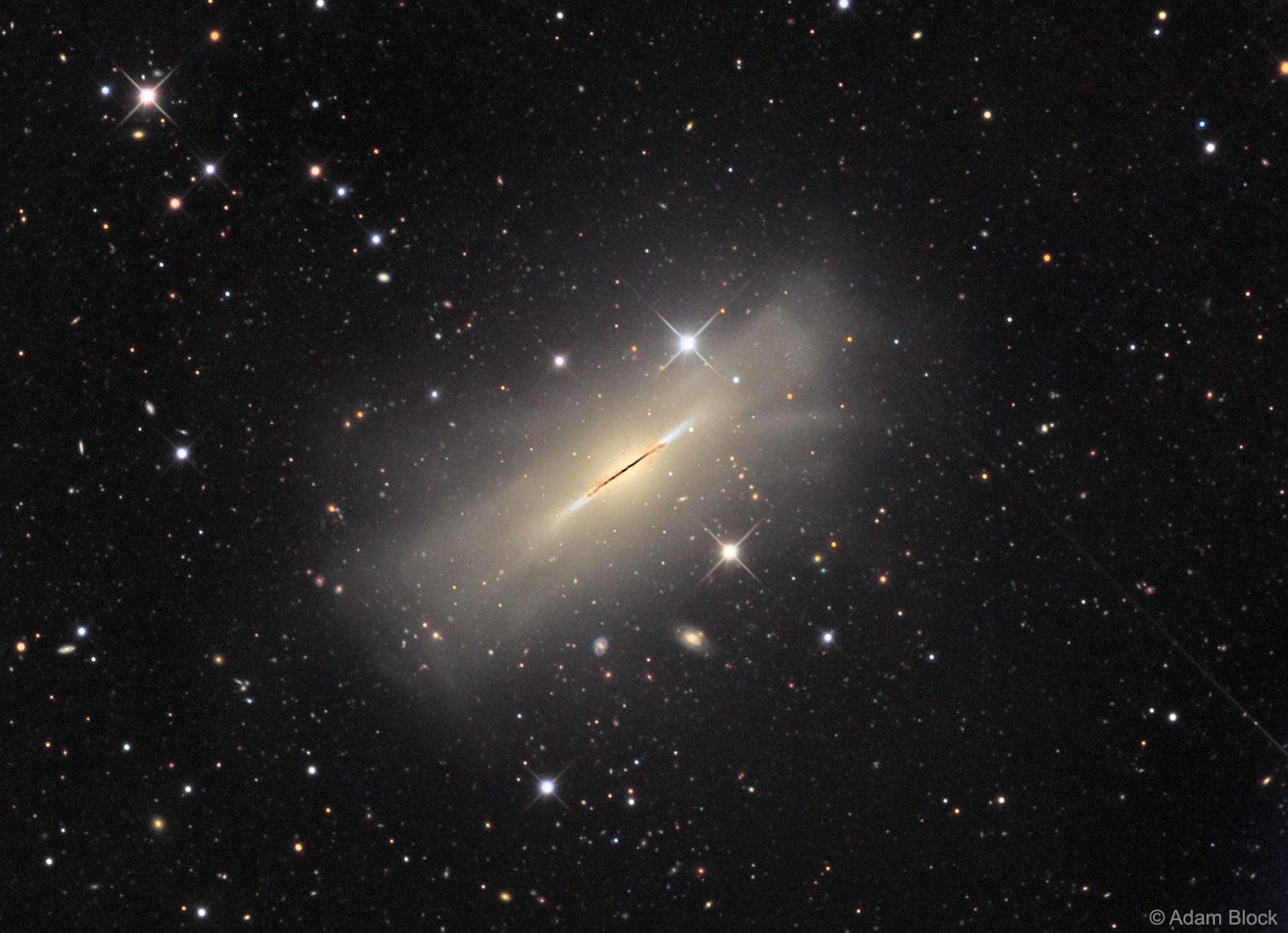
これはどのような天体でしょうか? 比較的普通の銀河ですが、端から見たものです。多くの円盤銀河は、ここに掲載されているNGC 5866と同じくらい薄いのですが、私たちの視点からは端から見た形にはなりません。端から見た銀河として、おそらくより馴染み深いのは、私たちの天の川銀河でしょう。M102およびNGC 5866としてカタログ化されている紡錘銀河は、暗く赤く見える多数の複雑なダストレーンを持ち、円盤内の多くの明るい星は、より青みがかった色合いを与えています。若い星の青い円盤は、極めて薄い銀河面のダストを超えて広がっているのが見えます。紡錘銀河は、過去10億年ほどの間に、複数の暗い星の流れ、主銀河面から広がる暗いダスト、周囲の銀河群(図示されていません)など、より小さな銀河を吸収してきた証拠があります。一般的に、円盤銀河の多くは、それを構成するガスが重力中心の周りを回転する際に互いに衝突するため、薄くなっていく。紡錘銀河は、りゅう座の方向に約5000万光年離れたところに位置している。
原文(English)
What kind of celestial object is this? A relatively normal galaxy -- but seen from its edge. Many disk galaxies are actually just as thin as NGC 5866, pictured here, but are not seen edge-on from our vantage point. A perhaps more familiar galaxy seen edge-on is our own Milky Way Galaxy. Cataloged as M102 and NGC 5866, the Spindle galaxy has numerous and complex dust lanes appearing dark and red, while many of the bright stars in the disk give it a more blue underlying hue. The blue disk of young stars can be seen extending past the dust in the extremely thin galactic plane. There is evidence that the Spindle galaxy has cannibalized smaller galaxies over the past billion years or so, including multiple streams of faint stars, dark dust that extends away from the main galactic plane, and a surrounding group of galaxies (not shown). In general, many disk galaxies become thin because the gas that forms them collides with itself as it rotates about the gravitational center. The Spindle galaxy lies about 50 million light years distant toward the constellation of the Dragon (Draco).
\ この感動を宇宙仲間にシェア /
宇宙をXでシェア
© Adam Block / APOD