
🚀 宇宙の記憶・カレンダー検索
🚀 象徴的な写真:
APOD第1回
🚀 創造の柱
🚀 スピリット火星着陸
🚀 ハッブル超深宇宙
🚀 地球へようこそ|ブルー・マーブル
🚀 エンケラドス
🚀 ベテルギウス
🚀 火星着陸
🚀 青い夕焼け
🚀 冥王星のハート
🚀 皆既日食
🚀 アースライズ再構築
🚀 ブラックホール
🚀 ウェッブ初画像
🚀 アポロ11着陸
APOD30周年(2025年6月16日)
ケープカナベラルからの最初のロケット打ち上げ
The First Rocket Launch from Cape Canaveral
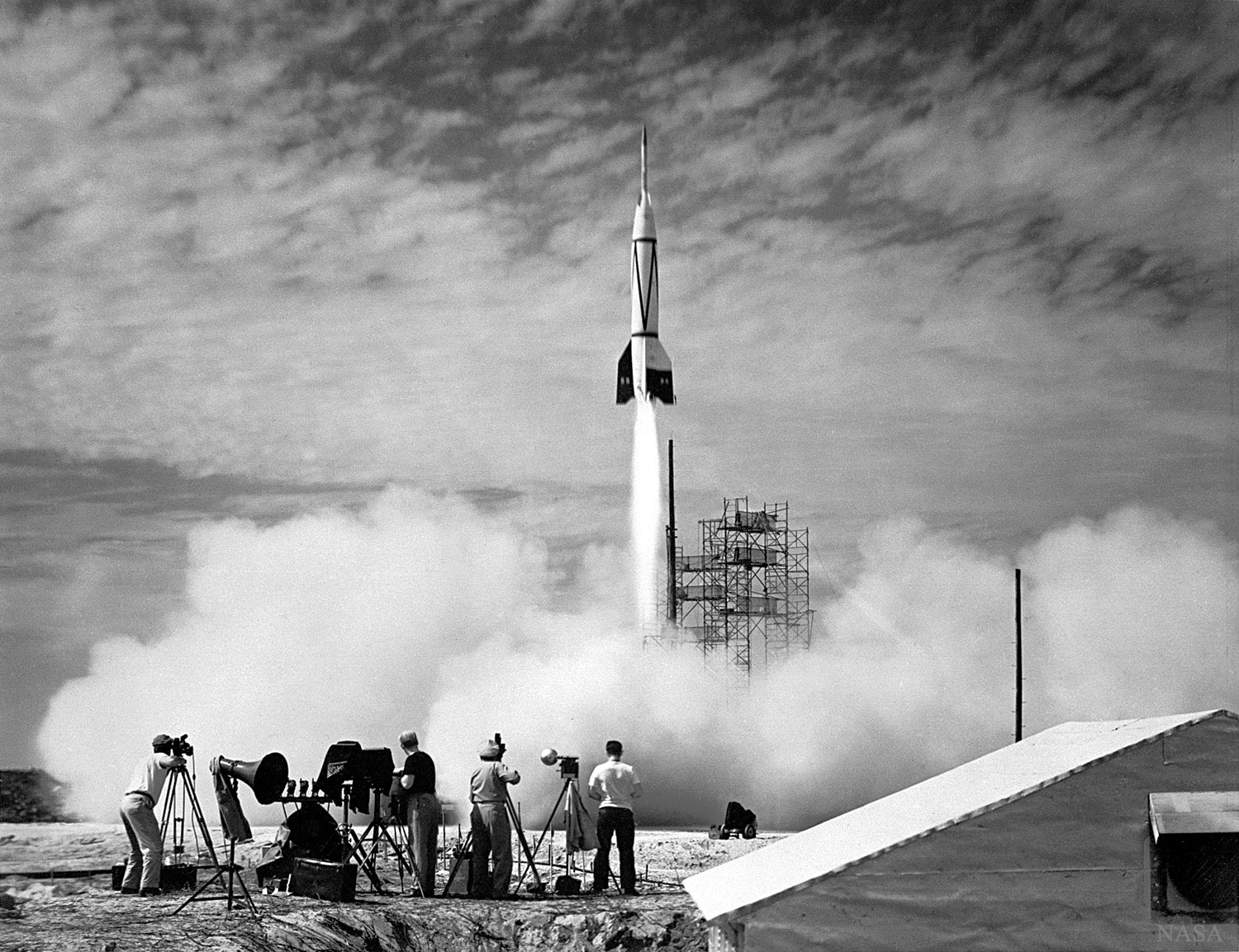
1950年、フロリダ州ケープカナベラルから初のロケット「バンパーV-2」が打ち上げられ、宇宙飛行の新たな章が幕を開けました。ここで紹介するバンパーV-2は、V-2ミサイル基地の上にWACコーポラルロケットを搭載した、野心的な2段式ロケット計画でした。上段は当時記録的な高度約400キロメートル(現代の国際宇宙ステーションの高さに相当)に到達しました。ゼネラル・エレクトリック社の指揮下で打ち上げられたバンパーV-2は、主にロケットシステムの試験と高層大気の研究に使用されました。バンパーV-2ロケットは、気温や宇宙線の影響などの特性を測定できる小型ペイロードを搭載していました。7年後、ソビエト連邦は地球軌道に初の人工衛星であるスプートニク1号とスプートニク2号を打ち上げました。これを受けて、今から60年前の1958年、米国はNASAを設立しました。記念日:NASA:60周年、そしてこれからも
原文(English)
A new chapter in space flight began in 1950 with the launch of the first rocket from Cape Canaveral, Florida: the Bumper V-2. Featured here, the Bumper V-2 was an ambitious two-stage rocket program that topped a V-2 missile base with a WAC Corporal rocket. The upper stage was able to reach then-record altitudes of almost 400 kilometers, about the height of the modern International Space Station. Launched under the direction of the General Electric Company, the Bumper V-2 was used primarily for testing rocket systems and for research on the upper atmosphere. Bumper V-2 rockets carried small payloads that allowed them to measure attributes including air temperature and cosmic ray impacts. Seven years later, the Soviet Union launched Sputnik I and Sputnik II, the first satellites into Earth orbit. In response in 1958, 60 years ago today, the USA created NASA. Anniversary: NASA: 60 Years and Counting
\ この感動を宇宙仲間にシェア /
宇宙をXでシェア
© NASA / APOD