
🚀 宇宙の記憶・カレンダー検索
🚀 象徴的な写真:
APOD第1回
🚀 創造の柱
🚀 スピリット火星着陸
🚀 ハッブル超深宇宙
🚀 地球へようこそ|ブルー・マーブル
🚀 エンケラドス
🚀 ベテルギウス
🚀 火星着陸
🚀 青い夕焼け
🚀 冥王星のハート
🚀 皆既日食
🚀 アースライズ再構築
🚀 ブラックホール
🚀 ウェッブ初画像
🚀 アポロ11着陸
APOD30周年(2025年6月16日)
ファルコン9星雲
The Falcon 9 Nebula
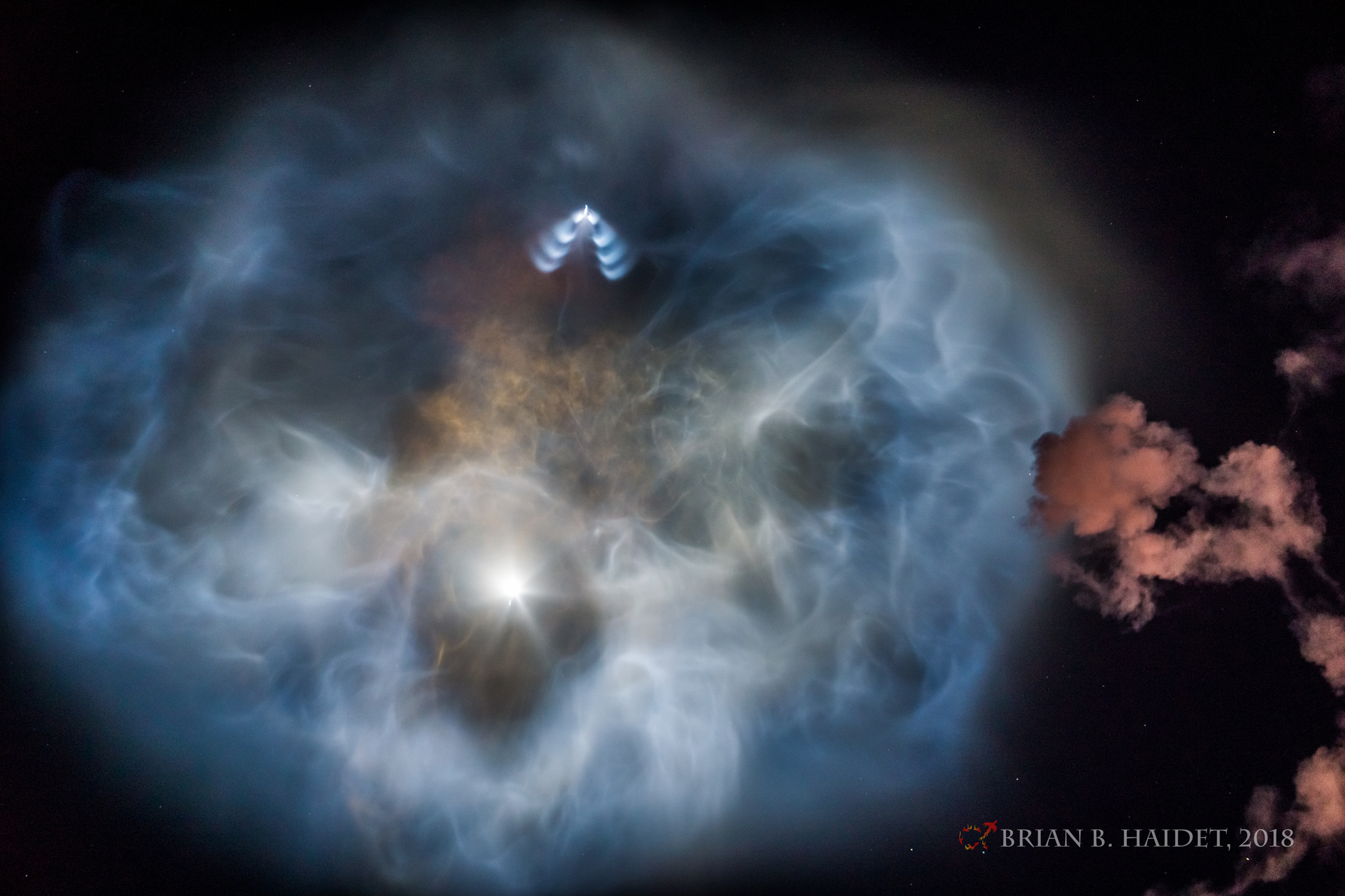
ハッブル宇宙望遠鏡が捉えた遠方の惑星状星雲の最新画像ではないが、この光り輝くガスと塵の雲は、10月7日にアメリカ西海岸の一般の空観察者をも魅了した。ヴァンデンバーグ空軍基地の北約3マイルで撮影されたこの画像は、南カリフォルニアの夕暮れ時の空を上昇するスペースXファルコン9ロケットの第1段と第2段からの噴煙と排気を捉えている。薄明かりの中、右前景に漂う赤みがかった煙は、ロケットの初期上昇によるものだ。広がる青とオレンジの糸状の噴煙は、第1段と第2段の分離、および第1段のブーストバック燃焼によるもので、極めて高い高度でまだ太陽光にさらされている。しかし、中央下の明るい点は、カメラからほぼ真正面に離れ、軌道速度まで加速してはるか遠くまで飛んでいく第2段そのものだ。パルススラスタは、再利用可能なファルコン9ロケットの第1段を着陸地点まで誘導する際に、上部に逆V字型の形状を形成する。
原文(English)
Not the Hubble Space Telescope's latest view of a distant planetary nebula, this illuminated cloud of gas and dust dazzled even casual U.S. west coast skygazers on October 7. Taken about three miles north of Vandenberg Air Force Base, the image follows plumes and exhaust from the first and second stage of a SpaceX Falcon 9 rocket rising through southern California's early evening skies. In the fading twilight, the reddish smoke drifting in the foreground at the right is from the initial ascent of the rocket. The expanding blue and orange filamentary plumes are from first and second stage separation and the first stage boostback burn, still in sunlight at extreme altitudes. But the bright spot below center is the second stage itself headed almost directly away from the camera, accelerating to orbital velocity and far downrange. Pulsed thrusters form the upside down V-shape at the top as they guide the reusable Falcon 9 first stage back to the landing site.
\ この感動を宇宙仲間にシェア /
宇宙をXでシェア
© Brian Haidet / APOD