
🚀 宇宙の記憶・カレンダー検索
🚀 象徴的な写真:
APOD第1回
🚀 創造の柱
🚀 スピリット火星着陸
🚀 ハッブル超深宇宙
🚀 地球へようこそ|ブルー・マーブル
🚀 エンケラドス
🚀 ベテルギウス
🚀 火星着陸
🚀 青い夕焼け
🚀 冥王星のハート
🚀 皆既日食
🚀 アースライズ再構築
🚀 ブラックホール
🚀 ウェッブ初画像
🚀 アポロ11着陸
APOD30周年(2025年6月16日)
赤と青のオリオン座
Orion in Red and Blue
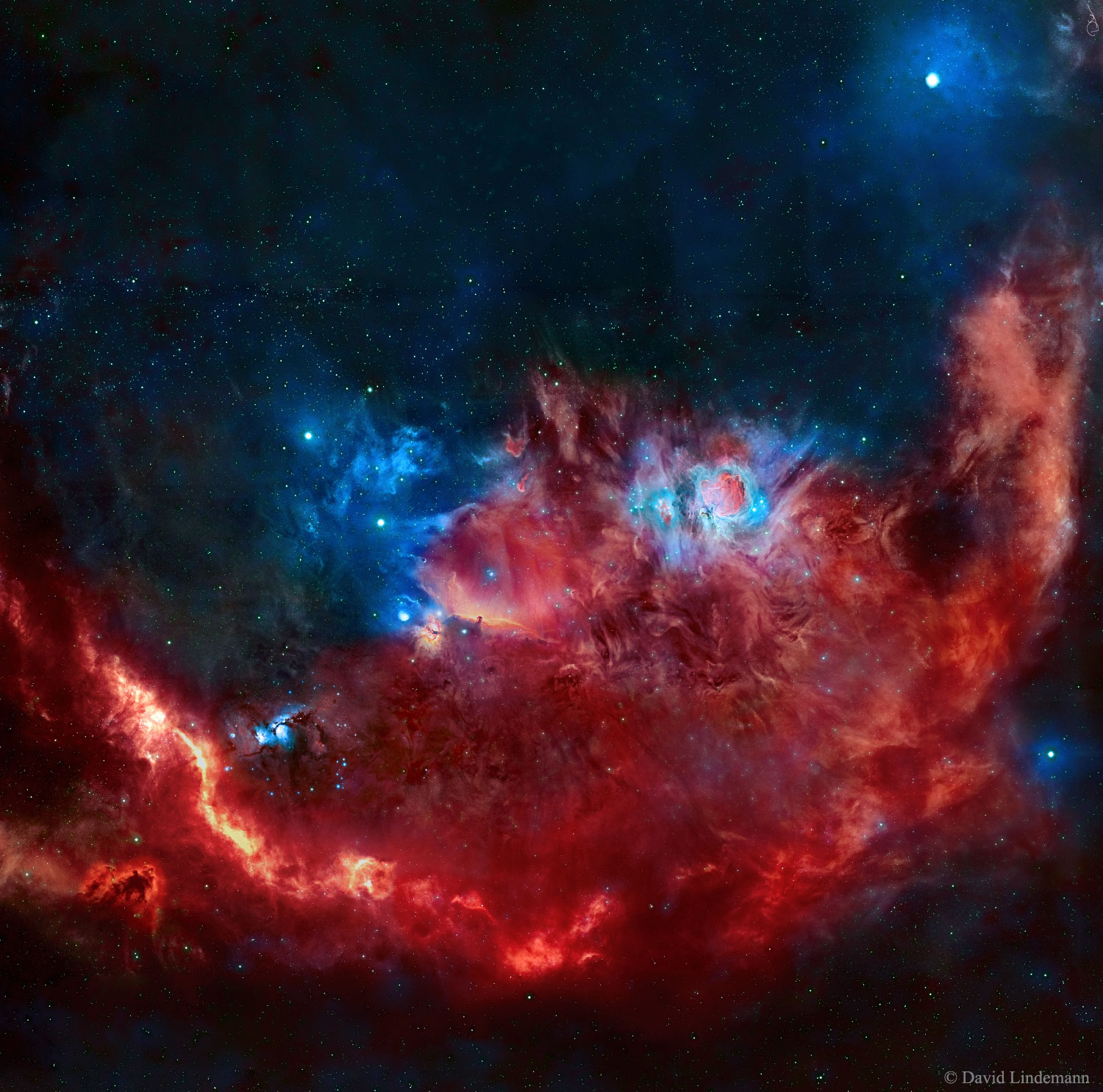
オリオン座はいつからこんなに鮮やかになったのでしょうか?オリオン座の一部を色鮮やかに表現したこの画像は、水素と硫黄(SII)から放出される赤色光と、酸素(OIII)から放出される青緑色光によって生成されています。掲載画像の色合いは、元素の起源を示すようにデジタル処理で再割り当てされ、同時に人間の目にも鮮やかに映るように調整されています。息を呑むようなこの合成画像は、約200時間かけて収集された数百枚の画像から丹念に作成されました。画像下部に写っているバーナードループは、中央右寄りに見える複雑なオリオン星雲を含む星間構造を包み込んでいるように見えます。炎星雲もすぐに見つけることができますが、暗い馬頭星雲のわずかな窪みを識別するには注意深く観察する必要があります。オリオン座の鮮やかさについては、バーナードループの起源に関する有力な説明の一つは、約200万年前に発生した超新星爆発です。Share the Sky: NASA Open API for APOD
原文(English)
When did Orion become so flashy? This colorful rendition of part of the constellation of Orion comes from red light emitted by hydrogen and sulfur (SII), and blue-green light emitted by oxygen (OIII). Hues on the featured image were then digitally reassigned to be indicative of their elemental origins -- but also striking to the human eye. The breathtaking composite was painstakingly composed from hundreds of images which took nearly 200 hours to collect. Pictured, Barnard's Loop, across the image bottom, appears to cradle interstellar constructs including the intricate Orion Nebula seen just right of center. The Flame Nebula can also be quickly located, but it takes a careful eye to identify the slight indentation of the dark Horsehead Nebula. As to Orion's flashiness -- a leading explanation for the origin of Barnard's Loop is a supernova blast that occurred about two million years ago. Share the Sky: NASA Open API for APOD
\ この感動を宇宙仲間にシェア /
宇宙をXでシェア
© David Lindemann / APOD