
🚀 宇宙の記憶・カレンダー検索
🚀 象徴的な写真:
APOD第1回
🚀 創造の柱
🚀 スピリット火星着陸
🚀 ハッブル超深宇宙
🚀 地球へようこそ|ブルー・マーブル
🚀 エンケラドス
🚀 ベテルギウス
🚀 火星着陸
🚀 青い夕焼け
🚀 冥王星のハート
🚀 皆既日食
🚀 アースライズ再構築
🚀 ブラックホール
🚀 ウェッブ初画像
🚀 アポロ11着陸
APOD30周年(2025年6月16日)
キャッツアイの光輪
Halo of the Cat's Eye
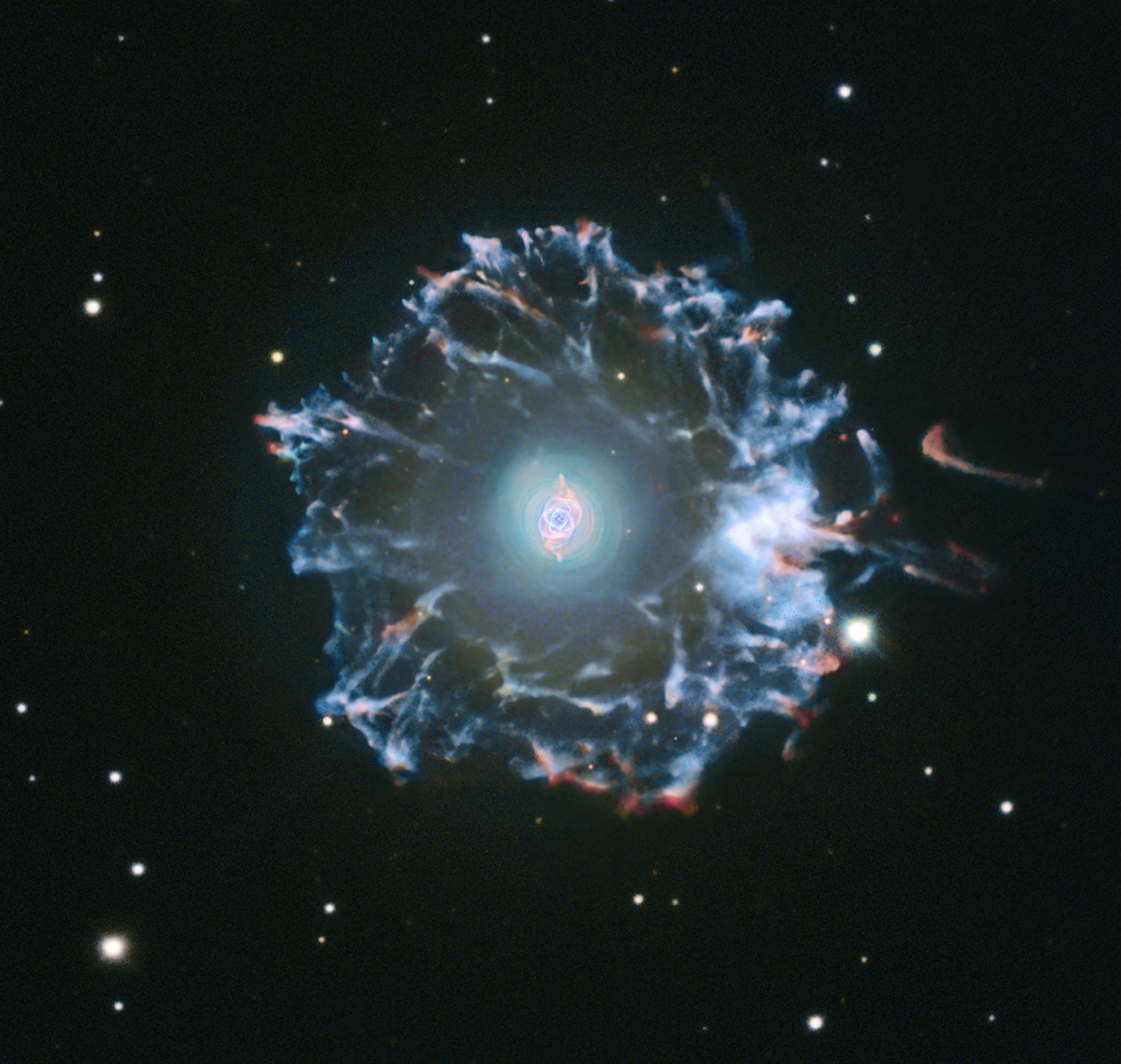
日没後のファルコン9ロケットの打ち上げではなく、キャッツアイ星雲(NGC 6543)は、空で最もよく知られている惑星状星雲の1つです。この合成画像の非常に中央の領域には、その魅惑的な対称性が見られ、処理によって、3光年以上にわたる巨大だが極めて淡いガス状物質のハローが明らかになっています。地上および宇宙望遠鏡からのデータを使用して作成されたこの画像は、より明るく馴染みのある惑星状星雲を取り囲む広範囲にわたる放射を示しています。惑星状星雲は、太陽のような恒星の生涯の最終段階として長い間認識されてきました。しかし、最近になって、いくつかの惑星状星雲が、恒星の進化の初期の活動期に剥ぎ取られた物質で形成されたと思われる、このようなハローを持っていることが発見されました。惑星状星雲の段階は約1万年続くと考えられているが、天文学者たちはこのハローの外側のフィラメント状の部分は5万年から9万年前のものだと考えている。
原文(English)
Not a Falcon 9 rocket launch after sunset, the Cat's Eye Nebula (NGC 6543) is one of the best known planetary nebulae in the sky. Its haunting symmetries are seen in the very central region of this composited picture, processed to reveal an enormous but extremely faint halo of gaseous material, over three light-years across. Made with data from ground- and space-based telescopes it shows the extended emission which surrounds the brighter, familiar planetary nebula. Planetary nebulae have long been appreciated as a final phase in the life of a sun-like star. But only more recently have some planetaries been found to have halos like this one, likely formed of material shrugged off during earlier active episodes in the star's evolution. While the planetary nebula phase is thought to last for around 10,000 years, astronomers estimate the outer filamentary portions of this halo to be 50,000 to 90,000 years old.
\ この感動を宇宙仲間にシェア /
宇宙をXでシェア
© West Mountain Observatory / APOD