
🚀 宇宙の記憶・カレンダー検索
🚀 象徴的な写真:
APOD第1回
🚀 創造の柱
🚀 スピリット火星着陸
🚀 ハッブル超深宇宙
🚀 地球へようこそ|ブルー・マーブル
🚀 エンケラドス
🚀 ベテルギウス
🚀 火星着陸
🚀 青い夕焼け
🚀 冥王星のハート
🚀 皆既日食
🚀 アースライズ再構築
🚀 ブラックホール
🚀 ウェッブ初画像
🚀 アポロ11着陸
APOD30周年(2025年6月16日)
タランチュラ星雲
The Tarantula Nebula
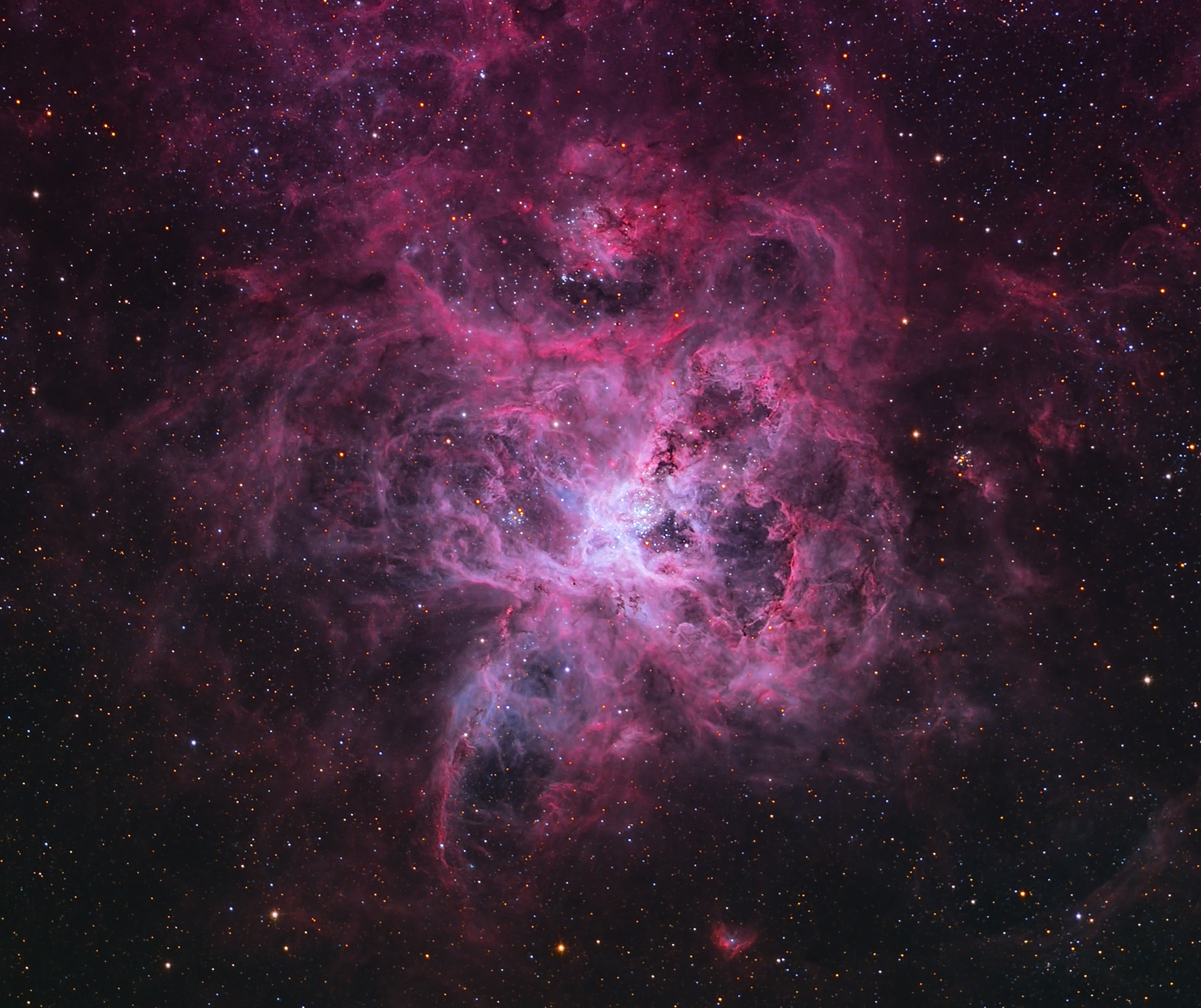
タランチュラ星雲(30 Doradusとしても知られる)は、直径が1000光年以上にも及ぶ巨大な星形成領域で、近傍の伴銀河である大マゼラン雲の中にあります。約18万光年離れたこの星形成領域は、局所銀河群全体で知られている中で最大かつ最も活発な星形成領域です。この宇宙のクモは、電離水素原子からの放射を中心とした狭帯域フィルターデータで構成されたこの壮大な画像に広がっています。タランチュラ(NGC 2070)内部では、中心にある大質量星の若い星団(R136としてカタログ化されている)からの強烈な放射線、恒星風、超新星の衝撃波が星雲の輝きを活性化させ、クモの巣状のフィラメントを形成しています。タランチュラの周囲には、若い星団、フィラメント、吹き飛ばされた泡状の雲を持つ他の星形成領域があります。実際、この画像には、現代において最も近い超新星SN 1987Aの位置が中央左に写っている。視野は南天の星座であるかじき座の約1度、つまり満月2個分ほどに及ぶ。しかし、もしタランチュラ星雲がもっと近ければ、例えばオリオン星雲を形成する星のように1500光年も離れていれば、空の半分を占めるだろう。まだ続いている:しし座流星群
原文(English)
The Tarantula Nebula, also known as 30 Doradus, is more than a thousand light-years in diameter, a giant star forming region within nearby satellite galaxy the Large Magellanic Cloud. About 180 thousand light-years away, it's the largest, most violent star forming region known in the whole Local Group of galaxies. The cosmic arachnid sprawls across this spectacular view, composed with narrowband filter data centered on emission from ionized hydrogen atoms. Within the Tarantula (NGC 2070), intense radiation, stellar winds and supernova shocks from the central young cluster of massive stars, cataloged as R136, energize the nebular glow and shape the spidery filaments. Around the Tarantula are other star forming regions with young star clusters, filaments, and blown-out bubble-shaped clouds. In fact, the frame includes the site of the closest supernova in modern times, SN 1987A, left of center. The rich field of view spans about 1 degree or 2 full moons, in the southern constellation Dorado. But were the Tarantula Nebula closer, say 1,500 light-years distant like the local star forming Orion Nebula, it would take up half the sky. Still going on: Leonid Meteor Shower
\ この感動を宇宙仲間にシェア /
宇宙をXでシェア
© Barden Ridge Observatory / APOD