
🚀 宇宙の記憶・カレンダー検索
🚀 象徴的な写真:
APOD第1回
🚀 創造の柱
🚀 スピリット火星着陸
🚀 ハッブル超深宇宙
🚀 地球へようこそ|ブルー・マーブル
🚀 エンケラドス
🚀 ベテルギウス
🚀 火星着陸
🚀 青い夕焼け
🚀 冥王星のハート
🚀 皆既日食
🚀 アースライズ再構築
🚀 ブラックホール
🚀 ウェッブ初画像
🚀 アポロ11着陸
APOD30周年(2025年6月16日)
バイカル湖でメタンガスの泡が凍結
Methane Bubbles Frozen in Lake Baikal
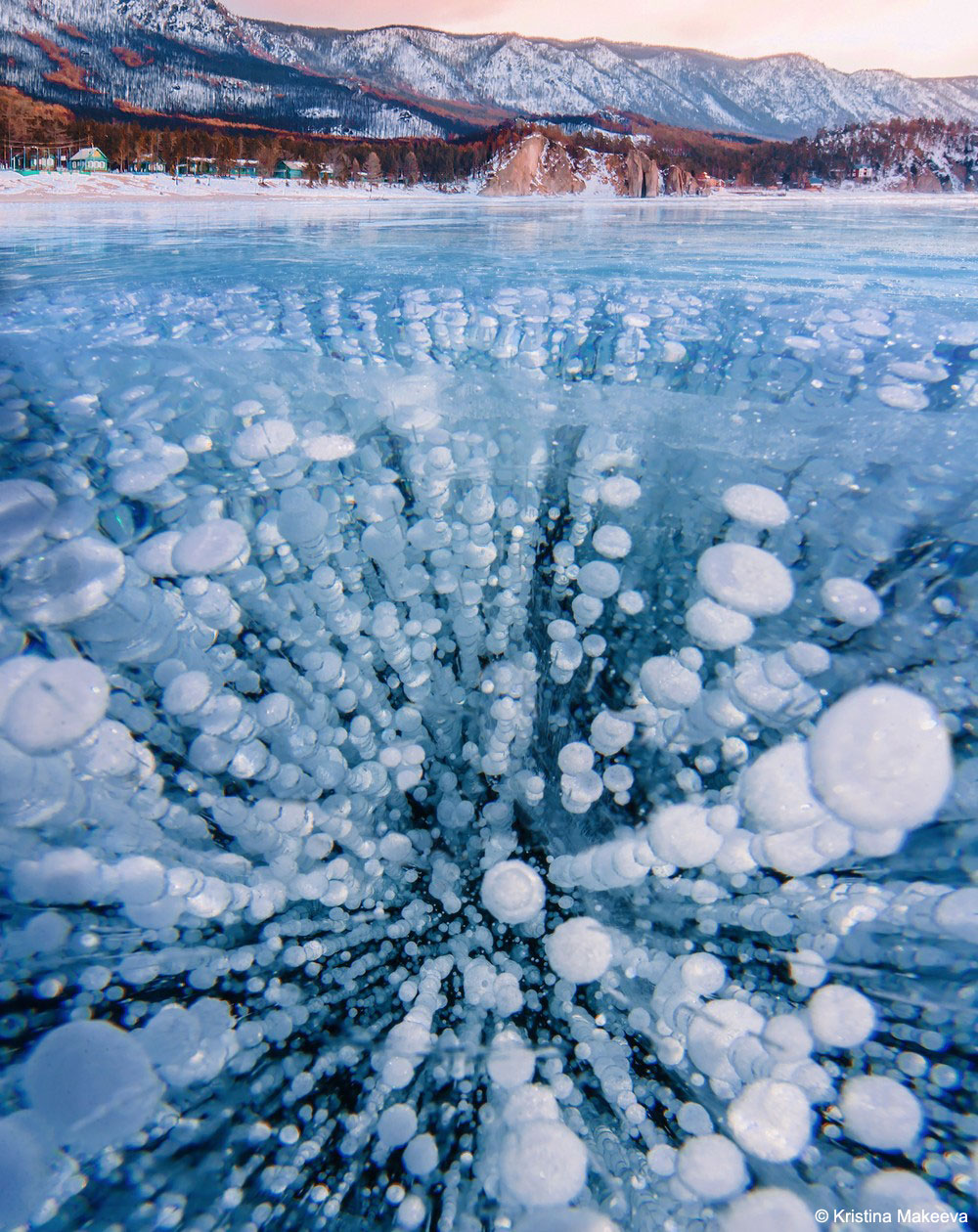
バイカル湖に凍り付いたこれらの泡は何でしょう?メタンです。ロシアにあるユネスコ世界遺産のバイカル湖は、世界最大(体積)、最古、最深の湖であり、世界の淡水の20%以上を蓄えています。この湖はまた、温室効果ガスであるメタンの巨大な貯蔵庫でもあります。メタンが放出されると、地球の大気が吸収する赤外線の量が増加し、地球全体の平均気温が上昇する可能性があります。幸いなことに、現在放出されているメタンの量は気候学的に重要ではありません。しかし、この地域の気温が大幅に上昇した場合、またはバイカル湖の水位が低下した場合、何が起こるかは明らかではありません。写真には、上昇するメタンの泡が冬の間、湖を覆う非常に透明な氷に凍り付いた様子が写っています。
原文(English)
What are these bubbles frozen into Lake Baikal? Methane. Lake Baikal, a UNESCO World Heritage Site in Russia, is the world's largest (by volume), oldest, and deepest lake, containing over 20% of the world's fresh water. The lake is also a vast storehouse of methane, a greenhouse gas that, if released, could potentially increase the amount of infrared light absorbed by Earth's atmosphere, and so increase the average temperature of the entire planet. Fortunately, the amount of methane currently bubbling out is not climatologically important. It is not clear what would happen, though, were temperatures to significantly increase in the region, or if the water level in Lake Baikal were to drop. Pictured, bubbles of rising methane froze during winter into the exceptionally clear ice covering the lake.
\ この感動を宇宙仲間にシェア /
宇宙をXでシェア
© Kristina Makeeva / APOD